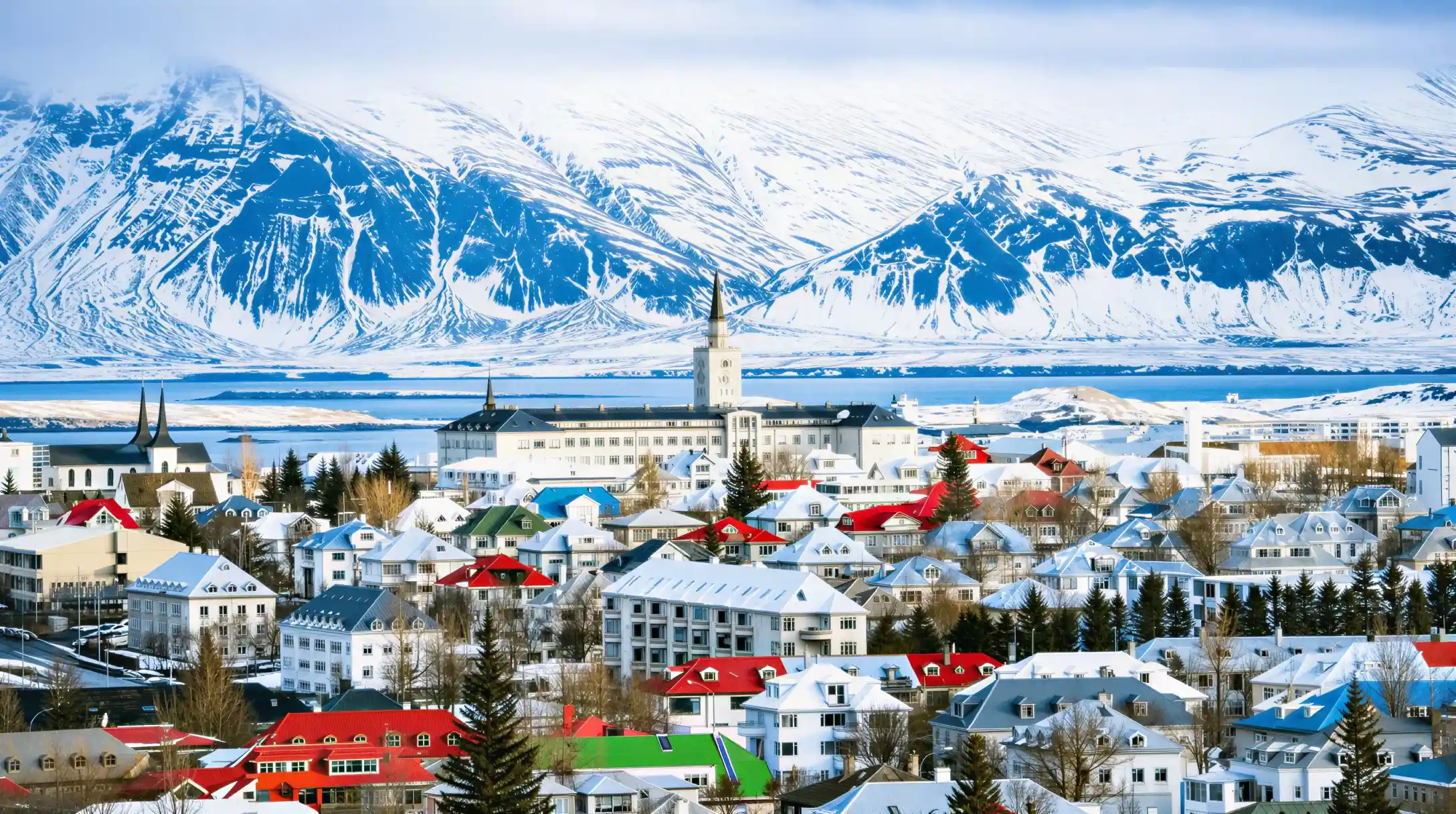
Most people planning a trip to Reykjavik in winter assume the season is a write-off: dark, cold, and closed. Some of that is true, and some of it is exactly why the season is worth booking. Between November and March the city runs on far less daylight than the rest of the year, several outdoor day trips depend on roads that only open when weather allows, and two things exist on this itinerary that do not exist in summer at all: natural ice caves and a real chance at the northern lights. The decision is not whether winter is worse than summer. It is whether a shorter, slower, more weather-dependent trip is the one worth having.
Winter day trips worth comparing
 Our pick
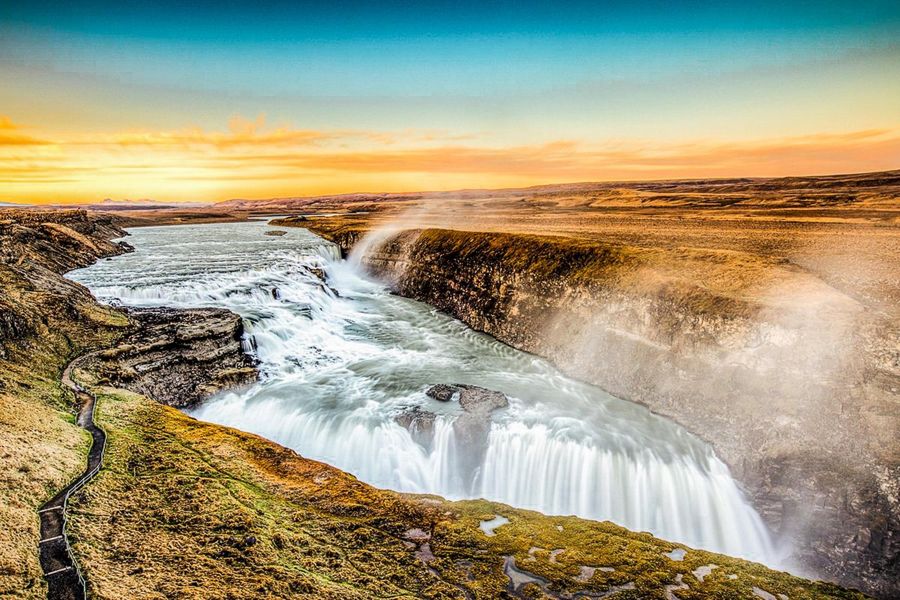
Golden Circle Full-Day Tour with Kerid Crater
4.76/5 (26,671 reviews) · A single day that fits short daylight without a long return drive · Þingvellir, Geysir, Gullfoss and Kerið in one loop
4.76/5 (26,671 reviews) · A single day that fits short daylight without a long return drive · Þingvellir, Geysir, Gullfoss and Kerið in one loop
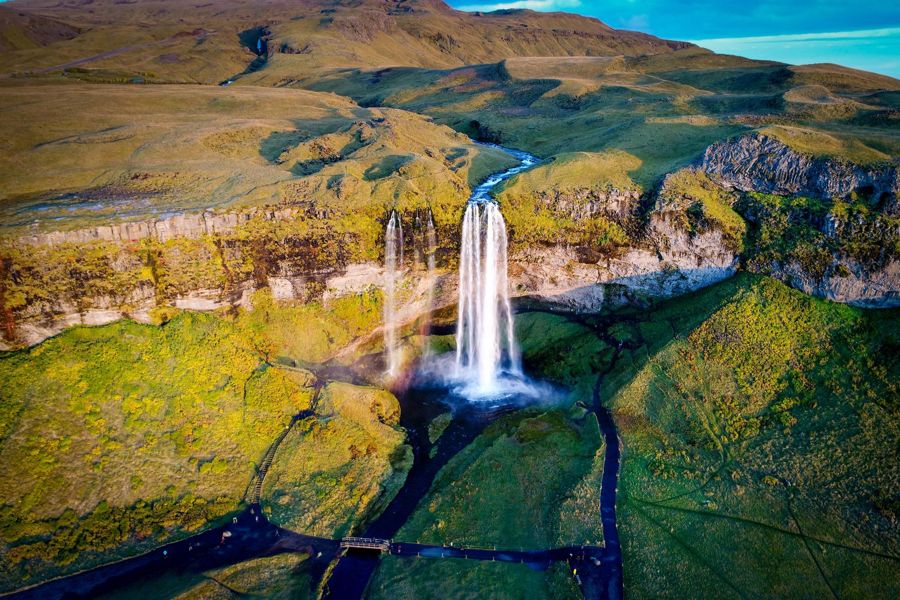
South Coast Waterfalls, Black Sand & Glacier Tour
4.76/5 (12,274 reviews) · Travellers who want waterfalls and a glacier view without self-driving · Seljalandsfoss, Skógafoss and a glacier stop on the south coast
4.76/5 (12,274 reviews) · Travellers who want waterfalls and a glacier view without self-driving · Seljalandsfoss, Skógafoss and a glacier stop on the south coast
What the short days actually rule out
A common mistake is planning a winter day the way a summer one would run, with a full day trip followed by an evening out. In December, daylight runs to about 4.1 hours around the solstice, sunrise near 11:22 and sunset near 15:29. That leaves a narrow window for anything outdoors, and it means a day trip to a site with a long drive, such as Þingvellir at 47 minutes each way or Gullfoss at nearly two hours each way, eats most of the light there is.
The upside is that a short day still leaves long evenings, and Reykjavik has free things to do in Reykjavik in winter that do not depend on daylight at all. Harpa's concert hall is free to enter and open into the evening, Wednesday to Saturday until 20:00, so a walk through its glass facade costs nothing and works after dark. The Hljodhimnar children's sound world on Harpa's ground floor is also free and open whenever the building is.
Walking the old town, which is about 1.5 kilometres across, costs nothing either and does not need daylight to be worthwhile. What it does need is planning: a visitor who books a full-day tour and expects to also fit in an evening at a museum with normal hours is working against the clock the season sets, not against the itinerary.
What closes, and what does not
Not every closure in winter is obvious from a summer-written itinerary. The highland F-roads, including the routes to Landmannalaugar, open only around early to mid June on average and close again well before winter, so any plan built around the interior highlands does not belong on a winter trip at all. Ferðafélag Íslands runs Landmannalaugar from roughly 20 June to 15 September, and nothing in that programme extends into winter.
Closer to the city, the picture is different. The Blue Lagoon stays open through the season, though it has closed twice in the past two years for short periods, and entry has to be booked in a timed slot in advance regardless of the month. Gullfoss remains free to visit and free to park at year round, while other well-known stops, including Þingvellir, Geysir, Skógafoss, Seljalandsfoss and Sólheimajökull, now charge a parking fee no matter the season.
The practical error is assuming a site is closed because it is quiet, or open because it was open in July. Roads and fees are decided independently of each other, and a plan built on the wrong one loses a morning rather than a memory.
What the ground and roads look like
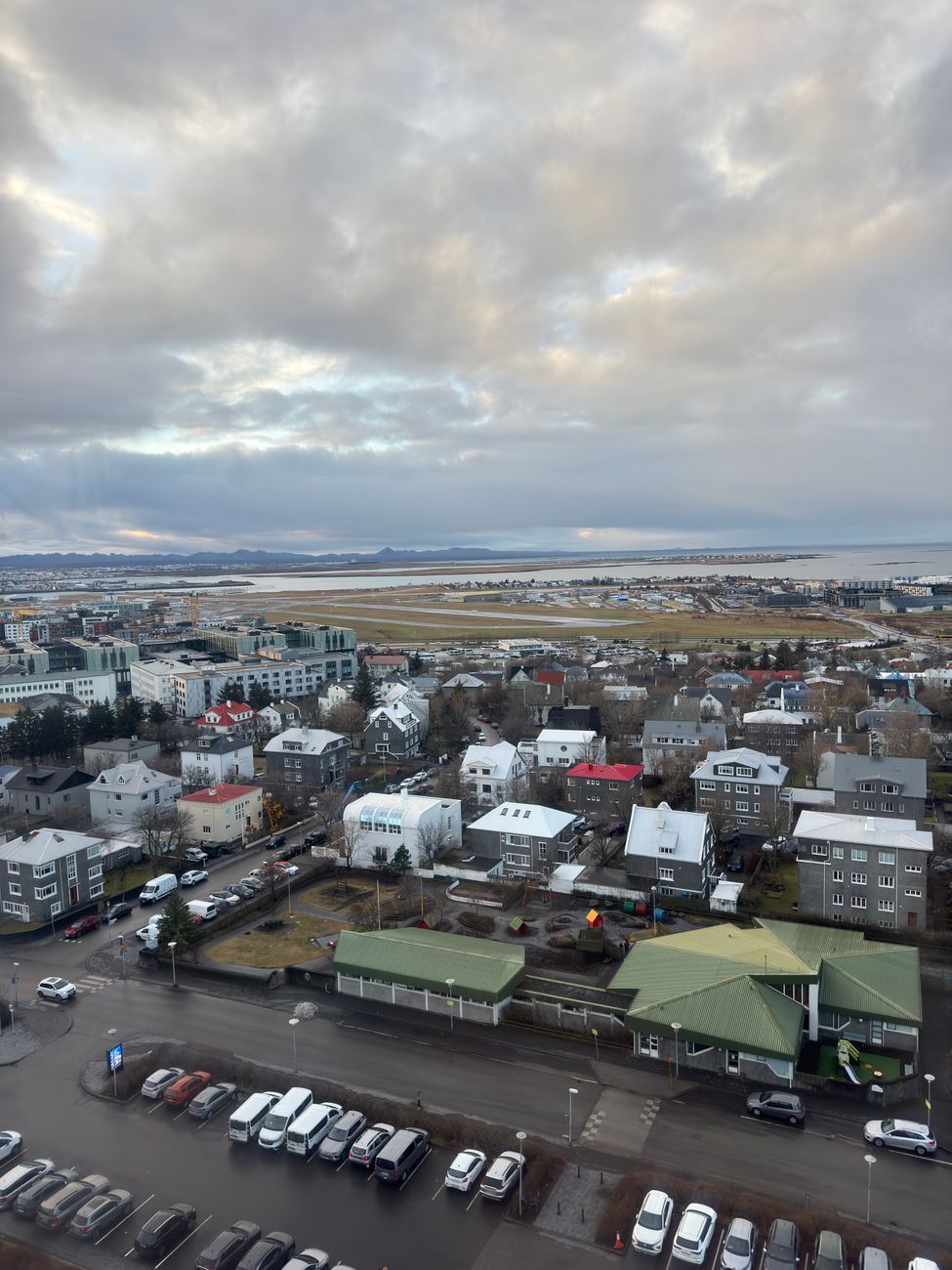
Visitors arriving with a mental picture of alpine snowbanks are usually off. Reykjavik's average high sits at 3.2°C in January, 3.3°C in February and 4.2°C in March, with lows dipping only to around -1.7°C to -1.9°C in the coldest months. That is close to freezing rather than deep winter, and it means Reykjavik winter snow tends to arrive, partly melt and refreeze rather than build up the way it does further inland or at altitude.
That freeze-thaw pattern is exactly what makes pavements and footpaths icy underfoot even when there is little snow to look at, and it is worth footwear with real grip rather than city boots. On the roads, the same pattern applies at a larger scale: routes into the interior and some coastal roads can close or slow with a single weather system, which is why Vegagerðin's own road status page is the one to check before a self-drive day, not a forecast from the day before.
Driving to Jökulsárlón and back in a single day means close to eleven and a half hours behind the wheel before a single stop, a distance that is demanding in good conditions and considerably more so with winter road conditions layered on top.
The nights this season is built around
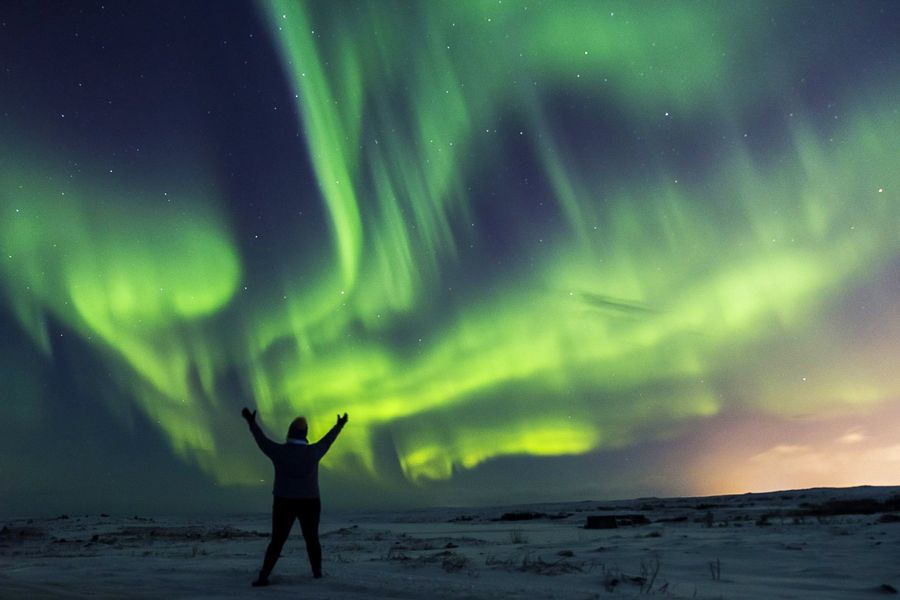
The single reason most people choose winter over summer is the dark itself. Reykjavik northern lights winter viewing depends entirely on that darkness, since the aurora season runs from late August to mid-April and is bounded by how dark the sky gets, not by how active the aurora is. In June, with 21.2 hours of daylight, no display is visible however strong it is; in December, with only 4.1 hours of daylight, the sky is dark enough for most of the day.
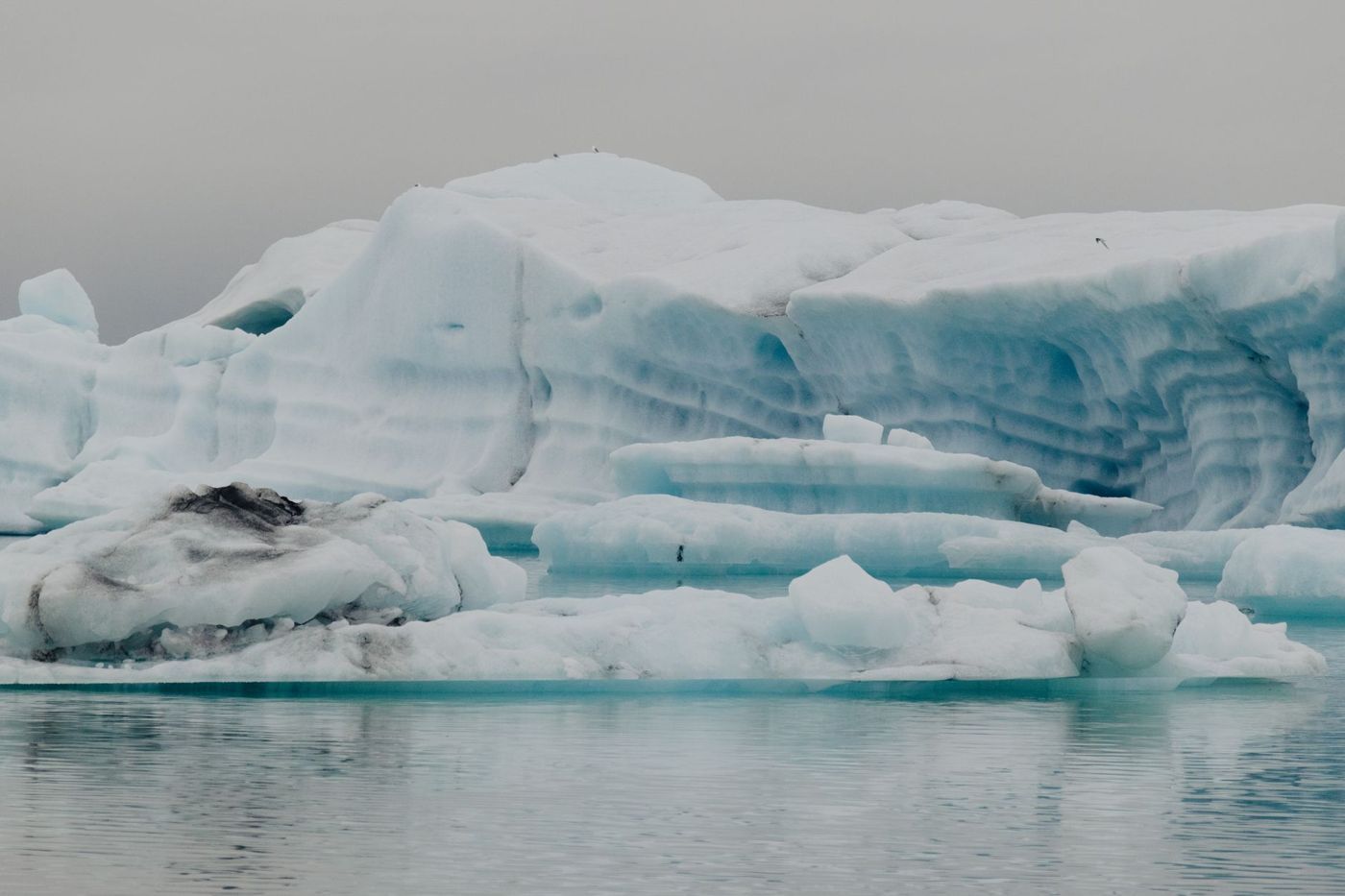
A clear sky matters as much as the season does, and a single cloudy week can mean no sighting at all despite being squarely inside the window. This is also the only season for natural ice caves, which run roughly November to March; the Langjökull ice tunnel is a separate, man-made attraction and stays open year round, so a listing has to say which one it is selling.
Booking either the aurora or an ice cave earlier in a trip rather than on the last night leaves room for a second attempt if the first one is clouded out or cancelled.
- November
- 4.7°C · -0.1°C · Shortening toward the solstice
- December
- 3.3°C · -1.6°C · 4.1 hours around the solstice
- January
- 3.2°C · -1.7°C · Lengthening from the solstice
- February
- 3.3°C · -1.9°C · Lengthening
- March
- 4.2°C · -1.3°C · Lengthening toward equinox
Getting from the airport in winter
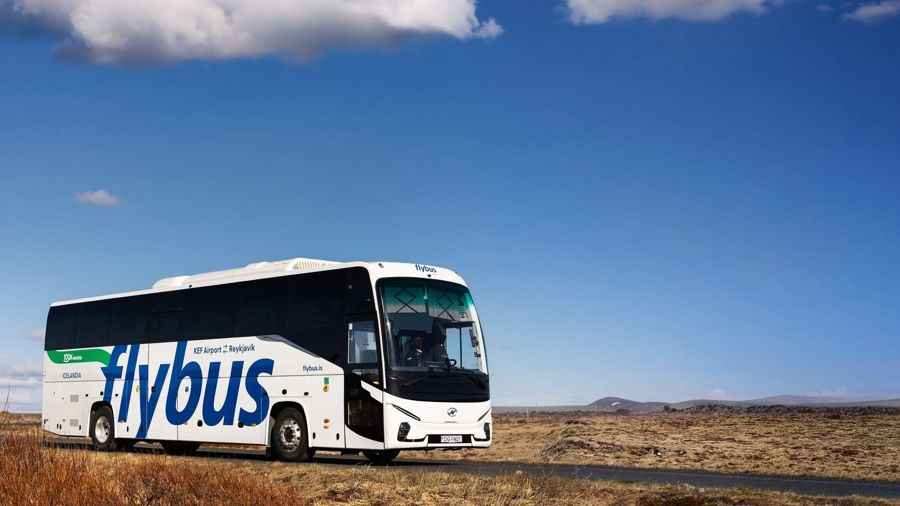
Keflavík International Airport, 50 kilometres southwest of the city, handles nearly all international arrivals, and the drive to downtown Reykjavik normally takes about 45 minutes, whether by car or by the Flybus airport bus, though the same drive can take longer once winter weather is added. The US State Department's Iceland page and the UK FCDO's travel advice for Iceland both cover entry rules and general road safety for the trip, and are worth reading before a winter arrival specifically because conditions can change the plan on short notice.
A one-way Flybus ticket costs from 3,999 ISK to the BSÍ terminal, and a taxi runs a fixed rate from 22,500 ISK for one to four passengers. Neither fare changes with the season, but delays do: a flight landing into a storm can mean a longer wait for a bus or a taxi than the schedule suggests, and building in slack for the first evening avoids missing a booked activity on day one.
None of this changes what a reader needs to decide before booking: whether the extra planning around weather and daylight is worth the trade for the aurora and ice cave season that only exists this half of the year.
Deciding whether to come at all
The choice is not really about temperature, since winter in Reykjavik sits close to freezing rather than deep cold. It is about trade-offs: shorter days that compress how much can be seen in daylight, roads that sometimes close on short notice, and a handful of attractions, ice caves among them, that exist only in this window. A traveller who wants long days for hiking and the full spread of highland roads should look at the other end of the year instead.
A traveller who wants the aurora, an ice cave, and a city that is quieter and cheaper to book than its summer peak has good reason to choose winter deliberately rather than by default. The Icelandic Meteorological Office's forecasts publish daily conditions and aurora activity, and checking them a few days out, rather than relying on a fixed date months in advance, is what actually makes a winter itinerary work.
Booking flexibility matters more in this season than in summer: tours built around weather, including aurora viewing and ice cave access, are the ones worth choosing operators who reschedule rather than simply cancel.
Packing for the season
Layering matters more than any single heavy coat. Average highs sitting between 3.2°C and 4.2°C from January through March feel colder in practice once wind off the North Atlantic is added, and the same freeze-thaw ground that makes pavements icy also makes waterproof, grippy footwear more useful than fashion boots. Gloves, a hat and a windproof outer layer cover most days; thermal base layers are worth adding for any tour that spends hours outside, such as a glacier walk or an evening aurora tour.
Pack for wet as much as for cold. Reykjavik's winter weather shifts through rain, sleet and snow within the same day, sometimes within the same hour, and a single waterproof shell does more work than several dry-weather layers. A daypack with room for wet gloves and a spare hat covers most of what a winter day actually needs, without the bulk of packing for genuinely deep cold that the city rarely sees.
Common questions
Is Reykjavik too cold to visit in winter?
Average highs run from about 3.2°C to 4.2°C between January and March, which is close to freezing rather than severe cold; wind and wet weather make it feel colder than the numbers suggest.
Can the northern lights be seen from inside the city?
A clear, dark sky is what matters most, and city lights make a dimmer display harder to see, which is why organised tours drive out from Reykjavik rather than staying downtown.
Do ice caves only exist in winter?
Natural ice caves are a winter product open roughly November to March; the Langjökull ice tunnel is man-made and stays open all year, so a booking should say which one is being sold.
Is a self-drive road trip a good idea in winter?
Roads can close or slow with a single weather system, and checking Vegagerðin's road status before setting out matters more in winter than at any other time of year.