
The distance from Keflavik airport to Reykjavik is longer than most first-time visitors expect, and the shuttle line at the terminal is not the only choice, or even always the cheapest one for a group. The drive covers 47.2 km (29.3 miles), about 47 minutes one way with no stops, and every operator on this route prices, times and drops off differently. This page compares the scheduled coach, the door-to-door shuttle, the private car, the taxi and the public bus, so the choice can be made before landing rather than at the arrivals hall.
None of the five options is wrong for every traveller. A solo arrival with one bag and a hotel near the old town wants a different answer than a family of five landing at midnight with a rental car reservation the next morning. What follows sets out the prices in USD, the pickup and drop-off points, and the timing each method actually takes once queueing and waiting are counted in, not just the drive itself.
Compare the transfer options
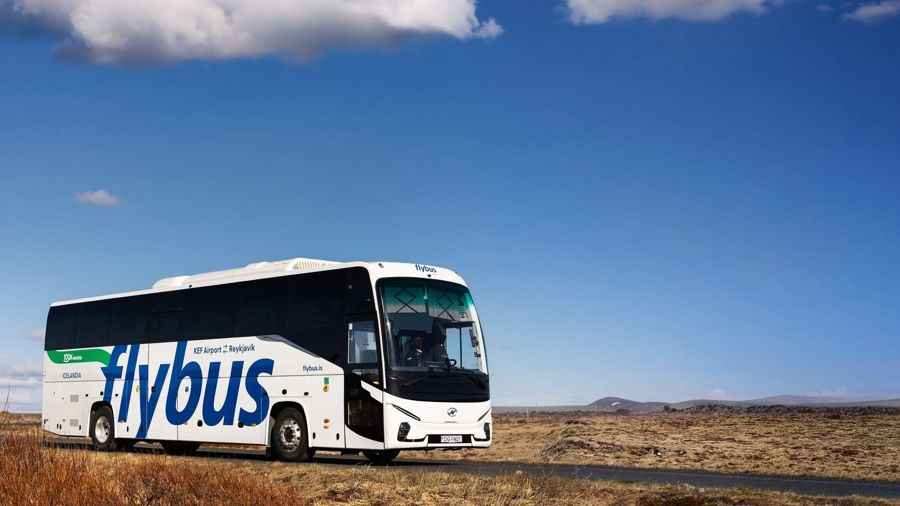 Our pick
Keflavik Airport (KEF) Bus Transfer to/from Reykjavik
Travellers who want a fixed schedule and a set price · Coach seat, luggage space, service to central Reykjavik stops
Travellers who want a fixed schedule and a set price · Coach seat, luggage space, service to central Reykjavik stops
What the transfer actually involves
Most people assume the trip from the terminal to a Reykjavik hotel is a short taxi hop, the way an airport transfer works in a city with its own airport a few kilometres out. Keflavik is not that. It sits on the Reykjanes peninsula, and the road into the city runs past lava fields with almost nothing built along it, which is part of why the coach and shuttle industry around this route is as large as it is.
The first decision is not which company to book but which kind of service to book: a shared coach on a fixed timetable, a shared shuttle that detours to individual hotels, a private car booked for one party only, a metered taxi, or the public bus that happens to run the same corridor at a public fare. Each has a different relationship between price and door-to-door time, and the cheapest option on paper is not always the fastest once a coach's other stops are counted.
Booking ahead matters more on this route than on a typical airport transfer, because Iceland's flight schedule concentrates arrivals in narrow overnight and early morning windows. A coach or shuttle seat bought in the terminal, if seats remain, usually costs more than the same seat booked before departure, and during the shoulder and summer seasons the earlier departures can sell out entirely.
Luggage is rarely a problem on the coaches and shuttles, which are built for the airport run and carry standard hold space per passenger, but a taxi at the rank will not always have room for more than two full-size suitcases without a larger vehicle being called, which adds a wait.
- Distance, one way
- 47.2 km (29.3 miles)
- Drive time, one way, no stops
- 47 min
- Round trip before any stop
- 1 h 34
Reading a transfer price correctly
A price quoted for this route is easy to misread if it is compared to a single taxi fare without accounting for how many people are travelling. The coach and shuttle prices are per person; a taxi or private car price is per vehicle, so a family or a group of three or four often finds the private option costs about the same per head as the shared coach, sometimes less, once four fares are added up.
The published price for a shared coach or shuttle almost always covers one adult one way, with a return fare sold as a discounted pair rather than double the one-way rate. A private transfer, by contrast, is quoted as a flat vehicle price regardless of how many of the seats are filled, up to the vehicle's stated capacity.
Where the fare differs most sharply is at times outside the daytime schedule. A metered taxi runs around the clock at the same rate structure, while the scheduled coaches taper their departures late at night and before dawn, so a landing on a delayed overnight flight can leave a taxi or private transfer as the only option still running on the ordinary schedule.
None of the transfer prices published for this route include an entry ticket to anything along the way. A transfer that stops near the Blue Lagoon is a ride past it, not admission: the Blue Lagoon requires pre-booked, timed entry and a transfer ticket alone does not admit anyone.
| Method | Pickup | Drop-off |
|---|---|---|
| Scheduled coach | Terminal, marked stand | BSÍ terminal, with connecting minibus to hotels on some tickets |
| Shuttle | Terminal, marked stand | Door to door at the hotel |
| Private transfer | Terminal, named driver or meeting point | Address given at booking |
| Taxi | Terminal taxi rank | Address given to driver |
| Bus 55 | Terminal, public stop | Public stops through Reykjavik, not door to door |
- Pickup
- Terminal, marked stand
- Drop-off
- BSÍ terminal, with connecting minibus to hotels on some tickets
- Pickup
- Terminal, marked stand
- Drop-off
- Door to door at the hotel
- Pickup
- Terminal, named driver or meeting point
- Drop-off
- Address given at booking
- Pickup
- Terminal taxi rank
- Drop-off
- Address given to driver
- Pickup
- Terminal, public stop
- Drop-off
- Public stops through Reykjavik, not door to door
Where the coach actually ends
A common assumption is that the scheduled coach drops passengers directly at their hotel door the way a private transfer does. The base fare for most of these services ends at a central terminal, and only a connecting minibus, sold as an add-on or bundled by some operators, continues on to the hotel itself.
That central terminal is the BSI bus terminal Reykjavik uses as its hub for this route, sitting a short distance from the old town rather than in the middle of it. Anyone whose hotel sits outside the immediate downtown grid should check whether their ticket includes the onward minibus connection or whether the walk, taxi or local bus from the terminal is left to arrange separately.
The terminal itself is a working transport hub rather than a destination, with luggage storage, ticket counters for onward travel, and connections to other coach routes around the country. Travellers connecting straight onto a multi-day tour sometimes use it as a starting point rather than continuing into the city centre at all.
Keflavik Airport (KEF) Bus Transfer to/from Reykjavik covers the coach seat with luggage space
What the fare buys
Travellers pricing this route sometimes expect a single published number to hold across the whole year, the way a flat airport shuttle fee sometimes works elsewhere. Coach and shuttle operators on this corridor adjust their fares by season and by how far ahead the ticket is bought, so the number seen in a search result in one month is not a guarantee for a booking made closer to departure.
Reading the flybus keflavik to Reykjavik price 2025 listings on an operator's own site rather than a cached or reseller page is the only way to see the current fare, since prices for this specific service move with fuel costs and demand through the year. A ticket bought in advance online is consistently priced below one bought at the counter after landing.
The fare tier also depends on whether the ticket ends at the central terminal or continues by connecting minibus to a named hotel. The hotel connection tier costs more than the terminal-only tier, and it is the more common mistake: travellers book the cheaper fare assuming it includes the hotel drop, then find the connection is a separate line item.
Round-trip tickets, bought together for the arrival and the eventual departure, are usually priced below two one-way fares bought separately, which matters for anyone who already knows their return flight time at the point of booking the outbound leg.
- Shortest one-way drive time
- 47 min, private transfer or taxi, no stops
- Cheapest fare structure
- Shared coach or bus 55, priced per person
- Best for groups of 3 or more
- Private transfer, priced per vehicle
- Runs latest at night
- Taxi, metered around the clock
Choosing the coach over other options
A traveller comparing this route for the first time often does not realise the scheduled coach is a different product from the door-to-door shuttle, even though both are buses. The bus from Keflavik airport to Reykjavik that runs on a fixed timetable to the BSÍ terminal is built for volume and speed between stops, not for weaving through residential streets to individual addresses.
The shuttle alternative, sometimes run by the same operator under a different ticket tier, adds hotel stops directly but takes longer overall because of the extra stops along the way. Choosing between the two is a trade of a few extra minutes for not having to arrange the last leg separately.
Both versions run at similar frequency through the day, tapering off late at night and starting again before the first bank of morning arrivals. Checking the specific departure times against a flight's actual landing slot, not just its scheduled one, avoids a long wait if the flight comes in early or a long line if several flights land close together.
Seating on these coaches is unassigned within the ticket's class on most tickets, so an earlier arrival at the pickup stand secures a better choice of seat, though every ticketed passenger travels on the departure they booked.
Matching the method to the trip
Choosing among these options works better as a question about the specific trip than a search for the single best method, since no one option wins on every measure at once. Transportation from Keflavik airport to Reykjavik divides cleanly by group size, luggage, arrival time and how firmly the onward plan is fixed.
A single traveller or a couple with carry-on bags and a hotel inside the downtown grid is usually best served by the coach or shuttle: the price per person is lower than a private car split two ways, and the timetable runs frequently enough in daylight hours that the wait is short. A family of four or five with hold luggage and car seats often finds a private transfer costs about the same total once the coach fares are added up, while avoiding transfers between vehicles.
Anyone landing on a red-eye or a delayed flight after the last scheduled coach should plan around the taxi rank or a pre-booked private transfer rather than counting on the timetable holding. Anyone connecting onward the same day to a multi-day tour that departs from the BSÍ terminal should check whether their transfer ticket ends there directly, since a hotel-tier ticket adds a detour that a terminal-tier ticket skips.
Comparing this route to other airport corridors
Travellers who have flown into cities where the airport sits inside or beside the built-up area sometimes underestimate what kef to Reykjavik involves by comparison, since 47.2 km (29.3 miles) is a longer haul than the airport-to-downtown distance in many cities of similar size. The peninsula road has little development along it, so there is no casual taxi rank or local bus stop to fall back on partway through the journey the way there might be on a shorter urban run.
That distance is also why almost every option on this route is priced and scheduled as a dedicated airport service rather than as an extension of the city's ordinary public transport. Bus 55 is the exception, running the corridor at a standard public fare, but it was not built primarily as an airport shuttle and its schedule and stops reflect that.
Booking a method for this specific leg, rather than assuming a generic airport transfer arrangement will apply, avoids the most common problem travellers report: arriving at the terminal without a plan and discovering the cheapest options are the ones that needed to be booked in advance.
Private cars and what they change
A private transfer from Keflavik airport to Reykjavik is sometimes assumed to be a premium version of the same shuttle, only faster, when the real difference is exclusivity rather than speed. The drive time is close to the shared shuttle's direct time once its detours are removed, but the vehicle is reserved for one party alone and does not wait on other passengers to board or disembark along the way.
The price reflects that exclusivity: it is set per vehicle rather than per seat, so it does not fall as the number of travellers in the party rises, unlike a coach ticket bought per person. For one or two travellers this usually costs more than the shared coach; for four or five sharing one vehicle it can land close to or below the per-person coach total.
A named driver or a marked meeting point inside the terminal is typical for this kind of booking, arranged in advance rather than found on arrival, and the drop-off address is fixed at the time of booking rather than limited to a central terminal.

Timetables and how they shift
The schedule published for the coach service is not fixed year round, and a traveller checking flybus Reykjavik airport departure times in one season should not assume the same frequency applies in another. Winter timetables run fewer departures through the darkest, quietest hours, while the summer schedule adds services to match the heavier flight volume of the peak months.
Checking the specific date's timetable, rather than a general frequency figure, matters most for connections. A traveller with a tight onward connection, whether to another flight, a ferry or a tour departure, should confirm the coach or shuttle departure closest to their landing time actually exists on the calendar day they are travelling, since gaps between departures widen outside the daytime block.
Delays are handled differently by each method. The scheduled coaches generally hold a buffer against ordinary flight delays and will still run passengers through on a later departure at no extra charge if the airline confirms the delay, while a taxi or private transfer booked for a set pickup time needs to be actively rescheduled if a flight lands late.

Bags, car seats and other extras
A traveller arriving with more than the standard allowance of luggage, or with equipment like skis, golf bags or a car seat, sometimes assumes any of the transfer options will accommodate it without checking first. Standard fares on the coaches and shuttles typically cover one or two items of hold luggage per passenger, with oversized items either charged as an extra or requiring the item be declared at booking so a vehicle with room is assigned.
Taxis and private transfers vary by the vehicle sent, and a large group with several oversized bags should specify this when booking a private transfer so a larger vehicle, rather than a standard sedan, is dispatched to the terminal. Turning up at the taxi rank with more luggage than a standard car can hold means waiting for a bigger vehicle to be called forward, which adds time that a booked service avoids.
Car seats for infants and young children are not guaranteed to be supplied by any of these services as standard equipment, and where a specific option provides one, it is usually as a request made at the time of booking rather than something available on demand at the rank.

Currency, cards and paying on the day
Every one of these transfer options can be paid for in advance online, and doing so in USD before departure avoids the exchange rate applied at a terminal counter or inside a taxi. Cards are accepted on the coaches, by the shuttle operators and by the taxi fleet, and cash in Icelandic krona is rarely needed anywhere along this route.
A traveller who prefers to decide on arrival rather than book ahead can still buy a coach or shuttle ticket at the terminal counter, though at a higher price than the same ticket bought online in advance, and with no guarantee of a seat on the next scheduled departure if it is already full. Taxis and, where pre-arranged, private transfers do not carry this same booking-ahead discount, since their pricing is set by the trip itself rather than by how far ahead it was reserved.
Tipping is not expected on any of these services in the way it might be for a similar transfer elsewhere, and drivers do not solicit it.

Planning the return trip
The journey back to the airport at the end of a trip is easy to treat as an afterthought, but the same seasonal and time-of-day constraints that apply on arrival apply again on departure, in reverse. A traveller flying out early in the morning needs to check that a coach, shuttle or bus departure actually exists at the hour that gets them to the terminal with enough buffer before an international flight's recommended check-in window.
Booking the return leg together with the outbound journey, where the ticket type allows it, is usually the more efficient way to lock in a lower combined fare than buying two one-way tickets separately closer to each date. For a private transfer or taxi, no such combined discount applies, since each leg is priced and booked independently regardless of how far apart the two dates fall.
Checking Iceland's own travel advisories before departure is worth doing regardless of which transfer method is chosen: the US State Department's Iceland country page and the UK FCDO's travel advice for Iceland both cover current entry rules that can affect timing at the terminal on both ends of the trip. Road conditions on the Reykjanes stretch itself are rarely a factor for private drivers, but anyone self-driving instead of taking a transfer should check current conditions on Vegagerdin's road.is before setting out, and anything volcanic or seismic along the peninsula is tracked by the Icelandic Meteorological Office.
Common questions
Questions travellers ask after comparing these options
Is the coach or the shuttle cheaper for one traveller? The scheduled coach to the BSÍ terminal is priced per person and is usually the lower of the two for a single traveller, since the shuttle's hotel-tier ticket carries the added cost of the door-to-door detour. Does any transfer ticket include entry to the Blue Lagoon? No transfer ticket alone admits anyone to the Blue Lagoon. It requires separate pre-booked, timed entry regardless of which transport method is used to reach it. Is bus 55 a realistic option with luggage? It runs the same corridor at a public fare and can carry standard luggage, but it stops at public stops rather than at the terminal's dedicated airport transfer stand or at individual hotels. Do prices change between winter and summer? Fares and timetables both shift by season on the coach and shuttle services, and checking the current listing close to the travel date gives a more accurate figure than an older one. Is a private transfer worth it for a group of four? Often close to the same total cost as four coach tickets, since the private transfer is priced per vehicle rather than per person, with the added benefit of a single door-to-door leg.