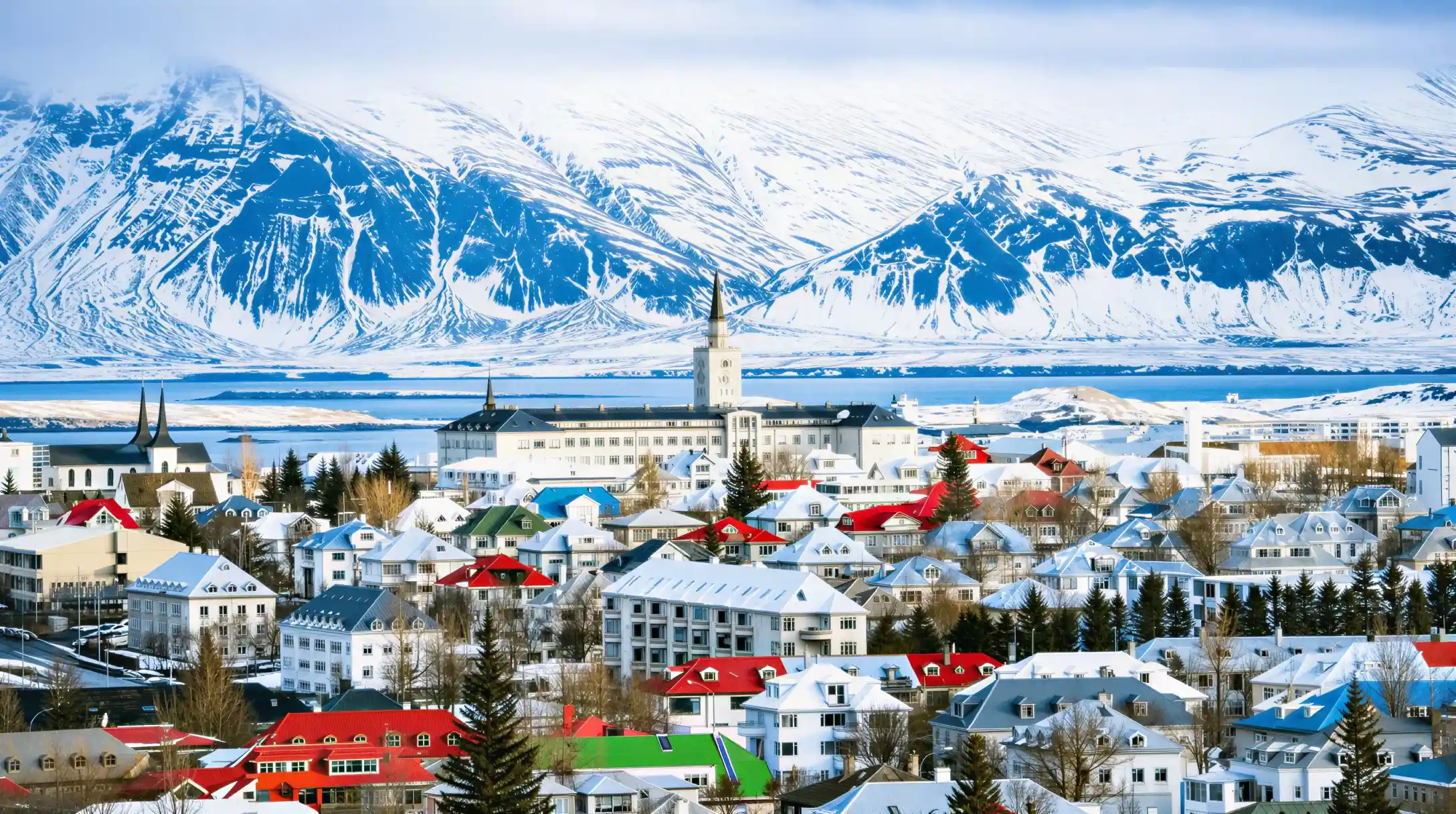
Packing for Reykjavik weather november usually goes wrong in one of two directions: readers bring a heavy parka expecting Arctic cold, or a light jacket expecting a mild autumn evening. Neither matches what the month actually delivers. Daytime temperatures sit close to freezing, the wind cuts harder than the thermometer suggests, and daylight is already short and shrinking toward the December low. What this page settles is what to wear, what the sky is doing, and which of the season's two headline draws, the northern lights and the ice caves, are realistically bookable this month. Both are, and November is the point in the calendar where they overlap with fewer visitors and lower prices than midwinter.
 Our pick
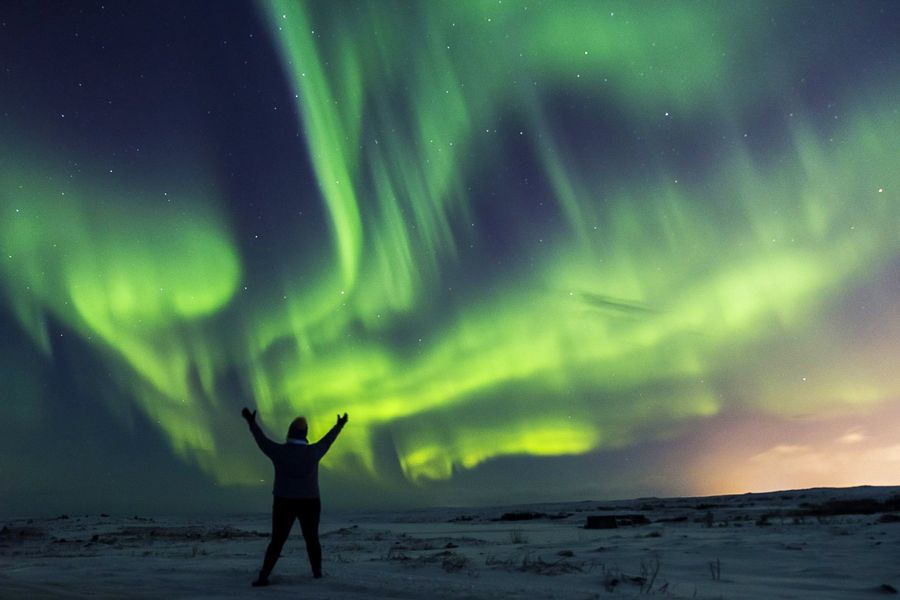
From Reykjavik: Northern Lights Bus Tour with Hot Cocoa
Guided bus tour, hot cocoa, aurora search with rebooking if none is seen
Evening visitors chasing the aurora without renting a car
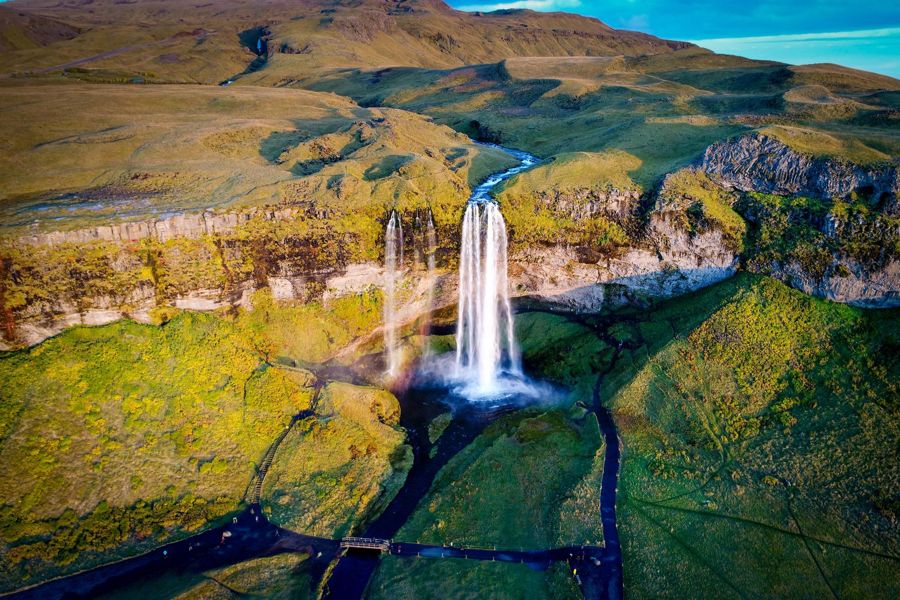
Reykjavik: South Coast Waterfalls, Black Sand & Glacier Tour
Full-day coach route to waterfalls, black sand beach and glacier viewpoint
Daylight-hour sightseeing that fits a short November day
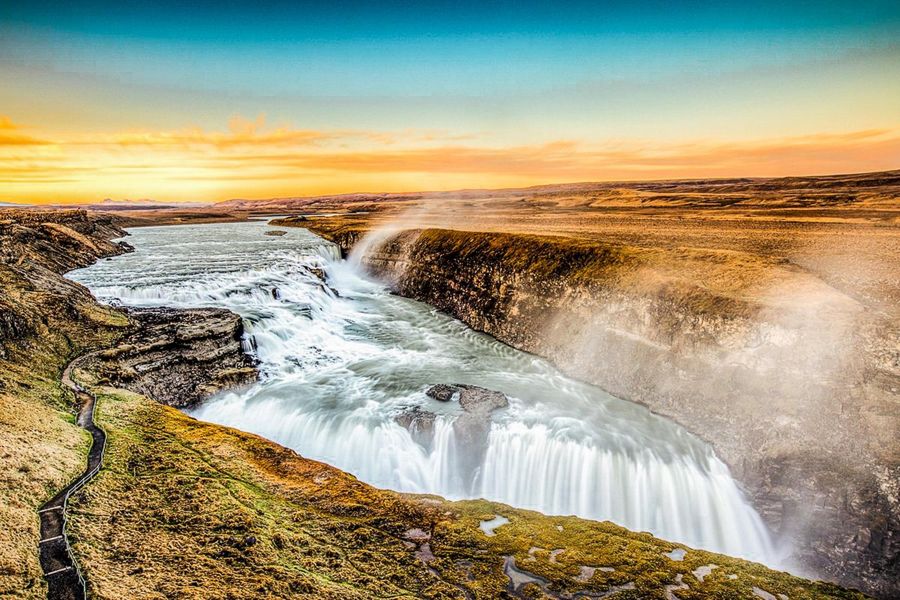
Reykjavik: Golden Circle Full-Day Tour with Kerid Crater
Þingvellir, Geysir, Gullfoss and Kerið crater on one guided day trip
First-time visitors wanting the classic route in one outing
What the month actually feels like
A reader who checks only the average high for Reykjavik in November tends to underdress, because 4.7 °C (40.5 °F) sounds like a cool autumn day rather than a genuinely cold one. The average low tells a truer story: it sits at -0.1 °C (31.8 °F), meaning many nights and early mornings hover right at freezing. Wind is the part a single-number forecast hides entirely. Reykjavik's exposed, coastal position means a still 4 °C afternoon and a windy 4 °C afternoon are two different experiences, and the wind is the more common of the two through autumn and winter.
Layering matters more than any single heavy coat. A wind-resistant outer shell over a mid layer handles most November days better than one thick jacket, because it can be adjusted as conditions shift between a sheltered street downtown and an open coastal viewpoint. Waterproof, insulated footwear with real grip matters as well: pavements ice over intermittently once temperatures dip below freezing overnight, and a slick pavement is a more common hazard for visitors than the cold itself. Gloves and a hat are not optional extras this month; with the wind chill factored in, exposed skin cools fast even when the stated temperature looks mild.
Daylight is the other adjustment worth planning around. November sits well past the autumn equinox, with the days shortening steadily toward the 4.1-hour December solstice minimum. Sunrise comes late enough that a normal breakfast hour is still dark, and sunset arrives mid-afternoon. Building a day around a shorter working window, rather than assuming a full nine-to-five span of usable light, prevents the common mistake of scheduling a full sightseeing itinerary into a daylight window that has already closed.
Where the cold and the dark actually pay off
Visitors often assume the short daylight hours of November are simply something to work around, when in fact the same darkness is what makes two of the season's biggest draws possible. The aurora season runs from late August to mid-April, bounded by how much darkness the sky gets rather than by the strength of any particular display, and November sits comfortably inside that window with long, genuinely dark evenings. Things to do in Reykjavik in November lean into this directly: an evening aurora search is a realistic booking this month in a way it simply is not in June, when the sky barely darkens at all.
The other seasonal draw is underground rather than overhead. Natural ice caves are a winter product, open roughly from November through March, and November is the opening edge of that window. A cave formed from a single winter's ice is not the same experience as the man-made Langjökull ice tunnel, which runs year-round, so it is worth being clear about which kind of cave a given tour is selling. Anyone booking in November for a genuine seasonal ice cave rather than the tunnel is booking near the very start of the window each year.
The overlap of these two things, aurora darkness and freshly opened ice caves, together with November sitting outside the busiest and most expensive weeks of winter, is what makes the month worth targeting rather than simply enduring. A visitor planning around both in the same trip gets two distinct experiences without needing to travel in the coldest, darkest core of December or January.
{'activity_id': '400599', 'name': 'Reykjavik: Sky Lagoon Entrance Pass With 7-Step Spa Ritual', 'includes': 'Lagoon entry and the multi-step Sky Lagoon ritual', 'best_for': 'Warming up after a cold day outdoors', 'rating': '4.83/5 from 7,388 reviews', 'link': '{{AFF_GYG_REYKJAVIK_WEATHER_NOVEMBER_6}}'}
Getting there and getting around
Travelers sometimes assume a specific November date and route, such as an alicante to Reykjavik flight 16 november 2025, guarantees smooth winter travel, when the flight itself is only the first half of a trip that still depends on ground transport and weather at the other end. Keflavík Airport, the main international gateway, sits about 50 km (31 miles) southwest of the city, and the drive or bus transfer into central Reykjavik takes roughly 45 minutes under normal conditions, though winter weather can extend that. Booking a fixed transfer rather than relying on a same-day connection gives more slack if a flight or the roads run late.
Once in the city, a single Strætó bus fare costs 690 ISK, valid for 75 minutes including transfers, which covers most short trips between downtown and outlying neighborhoods. For the airport route specifically, the Flybus one-way fare runs 3,999 ISK, while a fixed-price taxi from Keflavík to Reykjavik costs 22,500 ISK for one to four passengers. None of these figures move with the season, but road conditions in November can, so building in extra time around any airport transfer is worth doing even on a clear-looking forecast.
| Month | Average high | Average low |
|---|---|---|
| October | 7.6 °C (45.7 °F) | 2.7 °C (36.9 °F) |
| November | 4.7 °C (40.5 °F) | -0.1 °C (31.8 °F) |
| December | 3.3 °C (37.9 °F) | -1.6 °C (29.1 °F) |
- Average high
- 7.6 °C (45.7 °F)
- Average low
- 2.7 °C (36.9 °F)
- Average high
- 4.7 °C (40.5 °F)
- Average low
- -0.1 °C (31.8 °F)
- Average high
- 3.3 °C (37.9 °F)
- Average low
- -1.6 °C (29.1 °F)
Reading the numbers correctly
The average temperature in Reykjavik in November is easy to misread as a single mild figure if a reader only glances at the high. The 4.7 °C (40.5 °F) average high and the -0.1 °C (31.8 °F) average low together describe a much colder, damper day than either number alone suggests, especially once wind is added to the mix. Compared with October's 7.6 °C (45.7 °F) average high, November marks a real step down, not a gradual continuation of autumn.
Precipitation also plays a role in how the cold feels underfoot and on skin. Reykjavik's average annual precipitation is 875.9 mm (34.5 in), spread unevenly across the year, and the cooler months tend to bring more of it as sleet or wet snow rather than the lighter summer rain. A visitor dressed only for the stated temperature, without accounting for wind and damp, tends to feel colder than the number implies within the first hour outdoors.
None of this makes November a difficult month to visit. It makes it a month where the numbers need reading in combination rather than in isolation, and where the practical response, layered waterproof clothing and a realistic sense of how little daylight there is to plan around, matters more than the exact figure on any forecast.
{'activity_id': '400146', 'name': 'Keflavik Airport (KEF): Bus Transfer to/from Reykjavik', 'includes': 'One-way or return scheduled bus transfer between the airport and central Reykjavik', 'best_for': 'Travelers who want a fixed, pre-booked transfer instead of a taxi', 'rating': '4.66/5 from 20,988 reviews', 'link': '{{AFF_GYG_REYKJAVIK_WEATHER_NOVEMBER_10}}'}
A realistic November itinerary
A short daylight window does not mean a thin itinerary, but it does mean building the day around the light rather than against it. Outdoor sightseeing, particularly along the south coast or at any of the classic waterfall and crater stops, sits more comfortably in the late morning and early afternoon hours when the sun, such as it is, has actually risen. Evening plans shift naturally toward the aurora search, an indoor pool or lagoon session, or simply a warm meal downtown once the light has gone, often by mid-afternoon.
Roads and driving conditions deserve a second look before any self-drive plan. Road conditions and closures are tracked by Vegagerðin, and while the ring road itself generally stays open, side routes and mountain passes can close with little warning once winter weather sets in. Checking road status the same day as travel, rather than the night before, is the more reliable habit for anyone driving outside the city in November.
Footwear and outerwear aside, the single most useful preparation for the month is simply expecting less daylight than the trip length suggests, and pricing a few indoor options, a pool, a museum, a lagoon visit, into the itinerary as the natural fallback when the short afternoon runs out.
Common questions
Frequently asked questions
Does it snow in Reykjavik in November? Sleet and wet snow both occur, though a hard, settled snow cover is more typical later in winter. Average lows sit right around freezing, so precipitation can arrive as rain, sleet or snow within the same week. Is November too dark for sightseeing? Daylight is limited and shrinking toward the December minimum of 4.1 hours, but the middle of the day still offers a workable window for outdoor stops, especially if the itinerary favors mornings and early afternoons. Are the northern lights visible in November? The aurora season runs from late August to mid-April, bounded by darkness rather than by the display itself, and November's long, dark evenings sit comfortably within that window. Can I visit natural ice caves in November? Natural ice caves are a winter product open roughly from November through March, so November sits at the early edge of the season, distinct from the man-made Langjökull tunnel, which is open year-round. How should I dress for Reykjavik in November? Layered, windproof and waterproof clothing works better than one heavy coat, given the average high of 4.7 °C (40.5 °F), the average low near freezing, and the coastal wind that makes both feel colder.