A price on a travel page is often just copied from wherever it was cheapest to find, and a safety rule is often just repeated from the last article that repeated it. This site does neither. A figure printed here carries the name of the source it came from and the date it was checked, because a number without a source is a guess wearing a number's clothes. Where a fact moves with the season, the weather or a council decision, it is written as something that moves, not as a fixed truth. Where nothing is published, the sentence is left without the figure rather than filled in with one that sounds right.
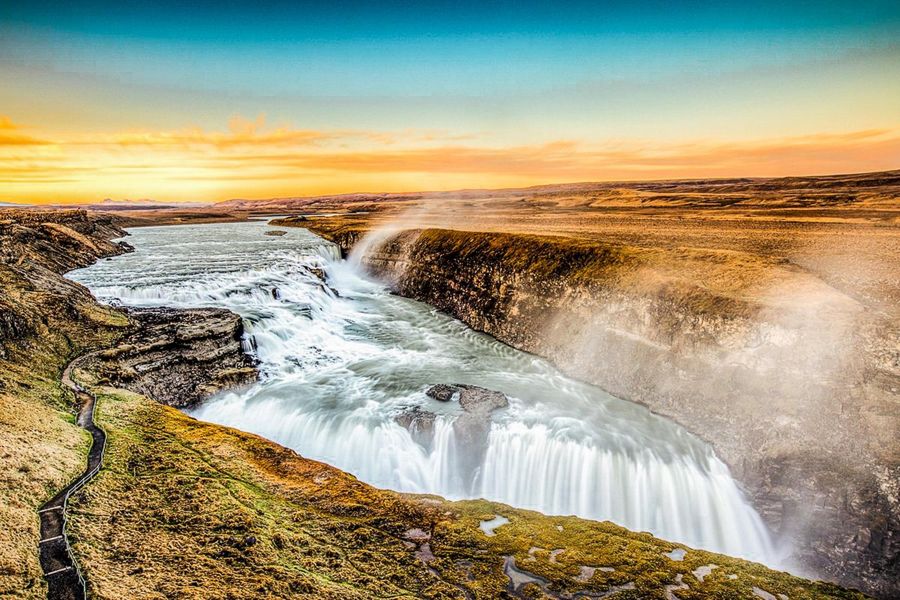
{'activity_id': '67012', 'title': 'Reykjavik: Golden Circle Full-Day Tour with Kerid Crater', 'includes': 'Full-day guided coach tour of the Golden Circle route, including Kerið crater', 'best_for': 'A first look at Þingvellir, Geysir and Gullfoss in one day', 'link': '…'}
 Our pick
Reykjavik: Golden Circle Full-Day Tour with Kerid Crater
Full-day guided coach tour of the Golden Circle route, including Kerið crater
A first look at Þingvellir, Geysir and Gullfoss in one day
Where the figures come from
A traveller reading a price online usually assumes it is current and that whoever wrote it checked. Neither assumption is safe on most travel sites, and it is worth saying plainly why this one is built differently.
A reseller's listing is never used as the source for a price, an age limit, a permit or a safety rule. A tour operator, a national park authority or a government office is asked first, because those are the parties whose numbers actually change when a rule changes. Where the ledger still leans on a secondary source for something like an entry fee or a minimum age, that gap is marked rather than smoothed over, and the figure is confirmed against the operator's own page before it is printed anywhere on the site.
Prices are written as a floor, with the word "from," rather than as a fixed number a reader might book against and then find wrong. Lagoon entry, pool fees, parking charges and tower tickets in Reykjavik all move, sometimes within the same season, so a figure that looked right in spring can be stale by autumn. Each one carries the date it was last checked so a reader can judge for themselves whether to trust it or to check again before paying.
Wikipedia is used only for measurements and dates of record, such as a founding year or a population figure, and it is named where it is used rather than linked, because a source of record is not the same thing as an authority a guide should be sending readers toward. Government travel advice such as the US State Department's Iceland page, meteorological offices such as the Icelandic Met Office and park authorities are linked directly, in the sentence that makes the claim, so the reader can go straight to the primary document.
What independence means here
A reader clicking a tour link from this site is often unsure whether the recommendation exists because it is genuinely useful or because someone gets paid when the click lands. The honest answer is both can be true at once, and the way to handle that is disclosure rather than pretending the second half does not exist.
Every page that carries a partner link says so. The site earns a commission when a reader books a tour, a hotel or a package through one of those links, and that arrangement never decides which fact gets printed or which warning gets softened. A tour operator's minimum age, a national park's diving rules or a museum's admission price is stated the same way whether or not the site earns anything from the click that follows it, because the alternative is a page that tells a reader what a partner wants said rather than what is true.
The same separation applies to the claims that get repeated across travel writing without much scrutiny: a forecast overlaid on a cloud map, a warning sign at a black sand beach, a road that opens on a date the roads authority sets and nobody else. Those are attributed to the body that actually makes the call, not to whichever operator's marketing repeats them most confidently. Where the site cannot attribute a claim to a named source, the claim is not printed, even where leaving it out makes the page shorter than the one it is competing with.
Common questions
Why do some prices on this site not show an exact figure?
Many prices in Iceland change by season or by year. Where a figure is not confirmed against the operator's own current page, it is left out rather than guessed, and prices that are shown are written as a floor rather than a promise.
Does the site earn money from the links it recommends?
Yes, through partner links disclosed on the pages that carry them. The commission does not change which facts, prices or warnings are printed.
Where do the safety and access rules on this site come from?
From the authority responsible for the place, such as a national park, a met office or a civil protection agency, rather than from a tour operator or a booking site.
Is Wikipedia used as a source?
It is used for measurements and dates of record and named where it is used. It is not linked and it is not used for prices, ages or safety rules.