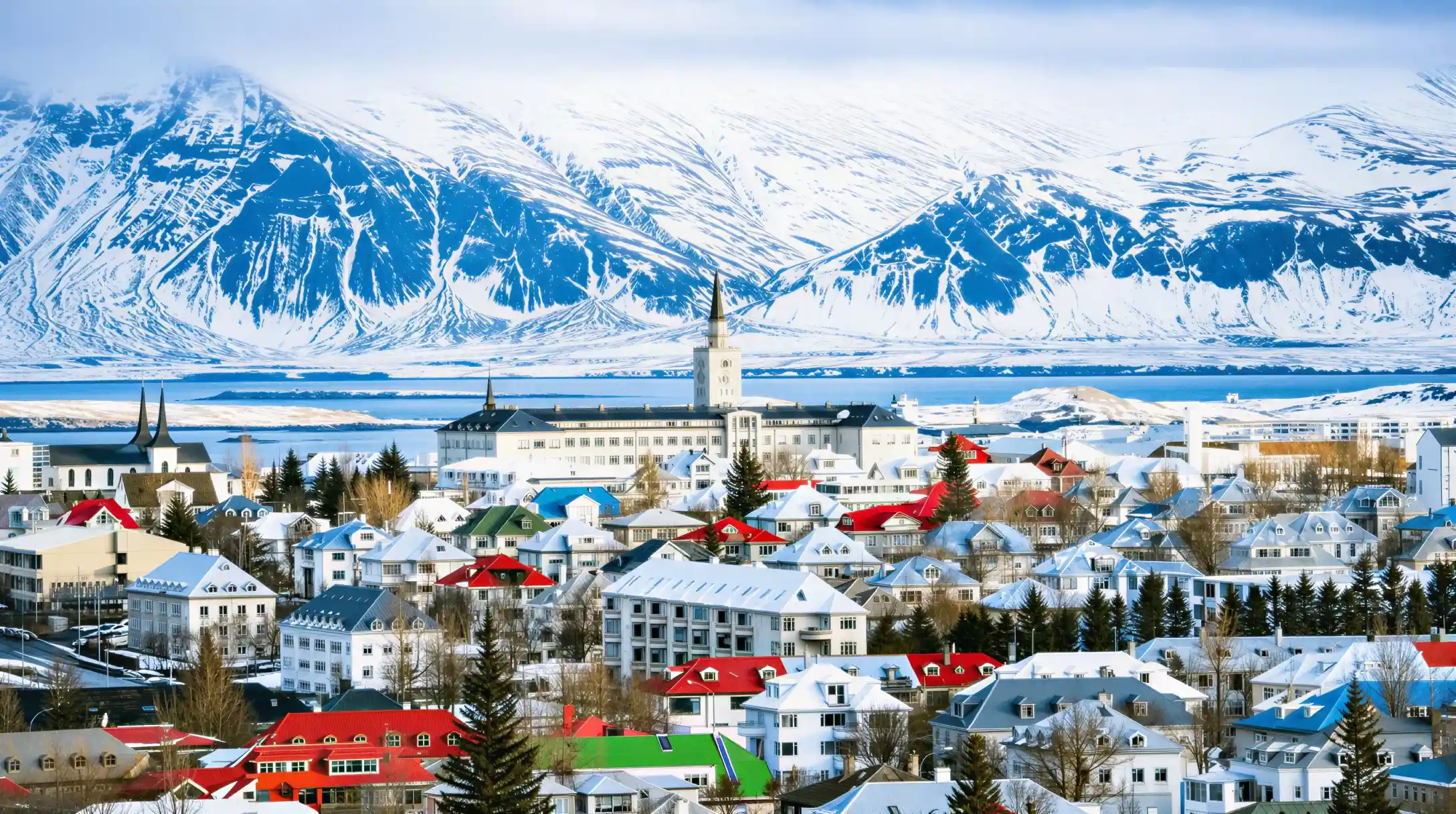
A clear night in Reykjavik does not guarantee anything overhead, and a strong forecast does not guarantee a clear night either. Most visitors find out too late that the two questions are separate, and that the city's own lights work against them the whole time they are figuring this out. The northern lights in Reykjavik are real and visible on the right nights, but seeing them means managing darkness, cloud and glare as three different problems, not one. This page settles what decides each of those, what the forecast is actually telling you, and where in the city to stand when the numbers line up.
 Our pick
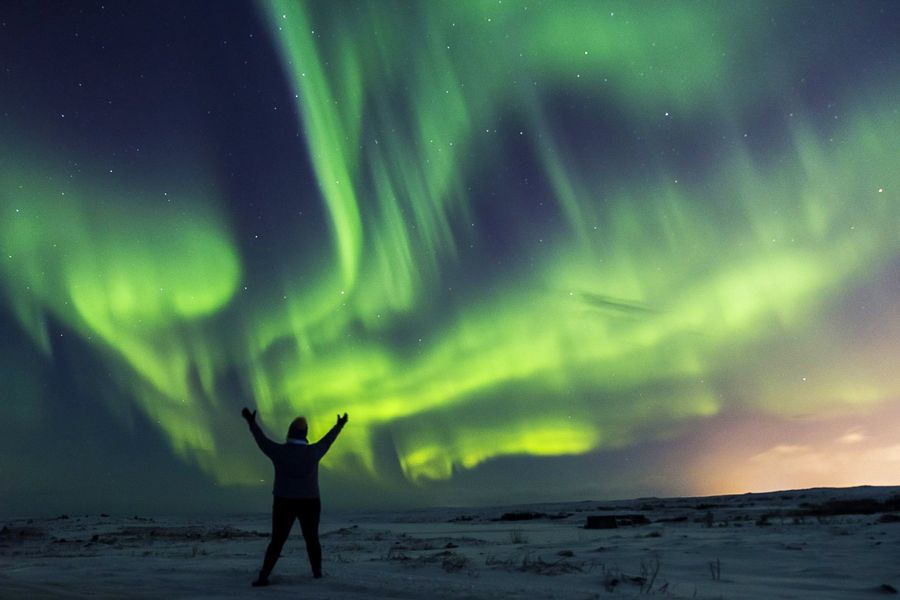
From Reykjavik: Northern Lights Bus Tour with Hot Cocoa
Guided bus tour departing Reykjavik, hot cocoa, driving to a viewing site away from city lights
Travellers without a car who want a driver watching the forecast for them
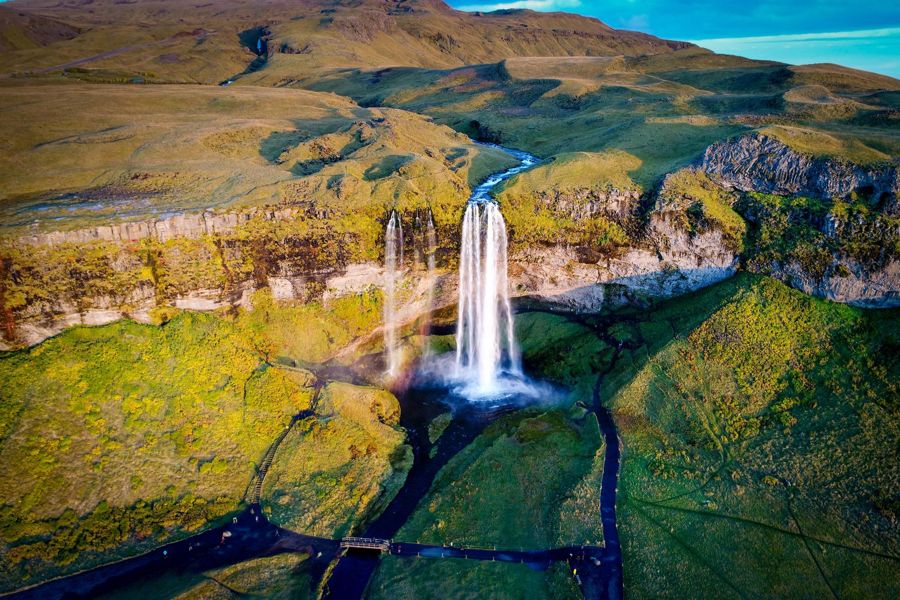
Reykjavik: South Coast Waterfalls, Black Sand & Glacier Tour
Full-day guided tour along the south coast, waterfalls, black sand beach, glacier viewpoint
Daytime sightseeing that can be paired with an evening aurora attempt on a separate night
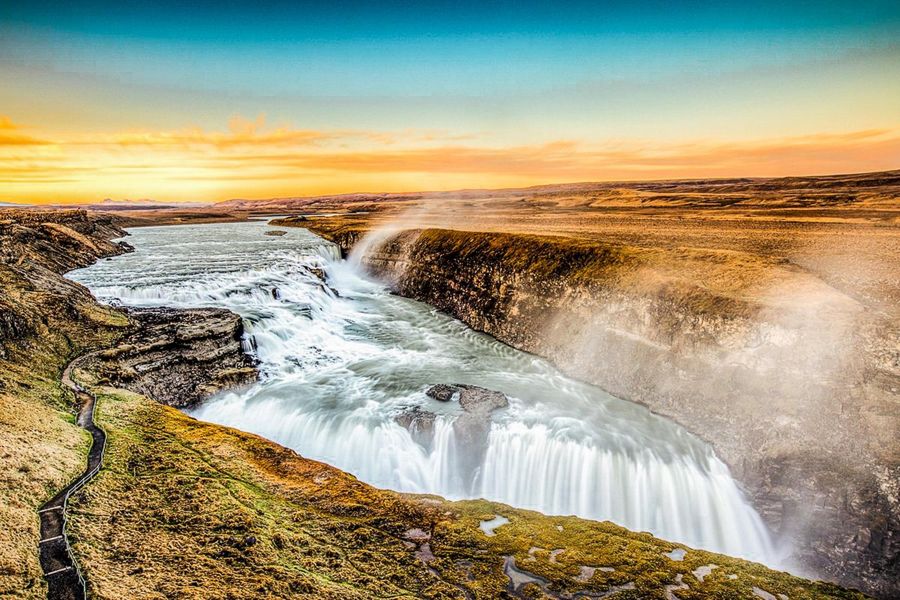
Reykjavik: Golden Circle Full-Day Tour with Kerid Crater
Full-day guided tour of Þingvellir, Geysir and Gullfoss, plus Kerið crater
Filling daylight hours before an aurora night, since the Golden Circle is a daytime route
What the city actually blocks
Streetlights, shopfronts and headlamps do not stop the aurora from happening. They stop you from seeing it. Light pollution raises the brightness of the sky itself, so a display that would be obvious over a dark field can wash out entirely over a lit street, even at the same strength overhead. This is why a forecast can read as promising and a walk downtown can still produce nothing: the display was there, and the city's own light took it away before it reached your eyes. Aurora Reykjavik viewing therefore comes down to distance from light sources as much as to the night's actual activity, and the two are easy to mix up when you are standing under a streetlamp checking your phone for a number.
The practical fix is not leaving the city, since Reykjavik has genuinely dark pockets inside its own boundary. It is choosing a spot where the horizon is open and the nearest light is behind you, not beside you. A few streets of distance from downtown's core can be the difference between a black sky and an orange-grey one, and that difference costs nothing to arrange once you know to look for it. What it does cost is patience: eyes take time to adjust to real darkness, and checking a bright phone screen resets that adjustment every time.
- Aurora season
- Late August to mid-April
- Reason for the season
- Bounded by darkness, not aurora strength
- Daylight in June
- 21.2 hours
- Daylight in December
- 4.1 hours
Fitting a viewing night into a short stay
A reykjavik northern lights city break usually runs two or three nights, which means there is rarely a spare night to lose if the first one is cloudy. The temptation is to treat the aurora as one item on a list alongside a museum and a dinner reservation, booked for a fixed evening like everything else. Weather does not work on that schedule. Cloud cover, not the aurora itself, is the single biggest reason a booked evening fails, and it can change from clear to overcast within the hours between booking a tour and boarding it.
The stays that come away with a sighting are usually the ones that keep more than one evening open rather than the ones that pick the "best" single night in advance. If your trip only allows one evening for this, treat it as a chance rather than a plan, and build the rest of the visit so that a missed night does not feel like a wasted one. A city break built around museums, food and a short coastal walk works whether or not the sky cooperates on the night you had circled, and an aurora sighting becomes something added to that rather than the one thing the whole trip depended on.
- Season starts
- Late August
- Season ends
- Mid-April
- Why it stops in summer
- Reykjavik has 21.2 hours of daylight in June
- Darkest month
- December, 4.1 hours of daylight
Whether the lights show up at all
Can you see the northern lights in Reykjavik without leaving the city. Some nights, yes, from a dark enough spot; many nights, no, regardless of location, because there is nothing overhead strong enough to register through any amount of light. The two failures look identical from a hotel window: a dark sky with nothing in it. The difference is whether the cause was the sky or the city, and that distinction only matters if you plan to try again, since a failed night for one reason calls for a different fix than a failed night for the other.
Between late August and mid-April, night is long enough in Reykjavik for a viewing window to exist most evenings. Outside that window, in the summer months, the sky itself does not go dark enough, and no amount of forecast activity will produce a visible display, since there is nothing to see it against. This is the one constraint nothing else on this page can work around. A trip booked for July can do everything correctly, choose the darkest street in the city and wait for hours, and it will not matter, because the season is set by daylight hours rather than by how active the aurora happens to be that month.
{'activity_id': '400599', 'title': 'Reykjavik: Sky Lagoon Entrance Pass With 7-Step Spa Ritual', 'rating': 4.83, 'reviews': 7388, 'includes': 'Entry to Sky Lagoon, access to the seven-step spa ritual', 'best_for': 'An evening indoors while waiting for cloud to clear or a forecast to improve', 'link': '{{AFF_GYG_NORTHERN_LIGHTS_IN_REYKJAVIK_8}}'}
Reading the forecast before you commit an evening
The northern lights centre Reykjavik points visitors to, in practice, is the Icelandic Meteorological Office's aurora forecast, which is the same page locals and tour operators check. It publishes two numbers that only mean something together: a KP-style activity index, and a cloud cover forecast for your area. A high activity number over a fully clouded sky produces nothing visible, because the display is happening above a ceiling you cannot see through. A low activity number under a completely clear sky can still produce a faint, visible display, because clear air asks less of the aurora to be seen.
Reading the forecast well means checking both figures for the same window, not treating the activity number as the whole answer. A tour operator or a local checking the same page is not applying judgement you lack; they are reading the cloud layer alongside the activity number instead of skipping straight to the more exciting figure. Before committing an evening, or a tour booking, to a particular night, look at both numbers for the hours you would actually be outside, since a forecast that improves after midnight is no help if you are booked for nine.
| Forecast reading | What it means | What to do |
|---|---|---|
| High activity, clear sky | Best combination available | Go out, get away from city lights |
| High activity, full cloud | Display likely happening, not visible | Staying out will not help |
| Low activity, clear sky | A faint display is possible | Worth a look from a dark spot |
| Low activity, full cloud | Unlikely either way | Better used as a night off |
- What it means
- Best combination available
- What to do
- Go out, get away from city lights
- What it means
- Display likely happening, not visible
- What to do
- Staying out will not help
- What it means
- A faint display is possible
- What to do
- Worth a look from a dark spot
- What it means
- Unlikely either way
- What to do
- Better used as a night off
Choosing a spot inside the city
Among the places to see northern lights in Reykjavik, two are named again and again for the same reason: they put open sky and water in front of you and buildings behind you. Grotta, at the western tip of the Seltjarnarnes peninsula, faces open sea and sits away from downtown's densest lighting. Öskjuhlíð, the wooded hill south of downtown, gains height rather than distance, putting the city's glow below the horizon line instead of level with it. Both are reachable without a car for visitors staying centrally, which matters on a night when a taxi or a long walk is the only alternative to a tour bus.
Neither spot promises darkness on its own; both simply remove more of the city's light than a downtown street does. Facing away from the direction of downtown's brightest glow, whichever spot you choose, does more for what you can see than moving a few hundred metres in any other direction. The aurora itself can appear anywhere across the sky, including low on the horizon, so an open view matters as much as a dark one. A spot with a building or a hill blocking the northern horizon can hide a display that a completely flat, open view would have shown clearly.
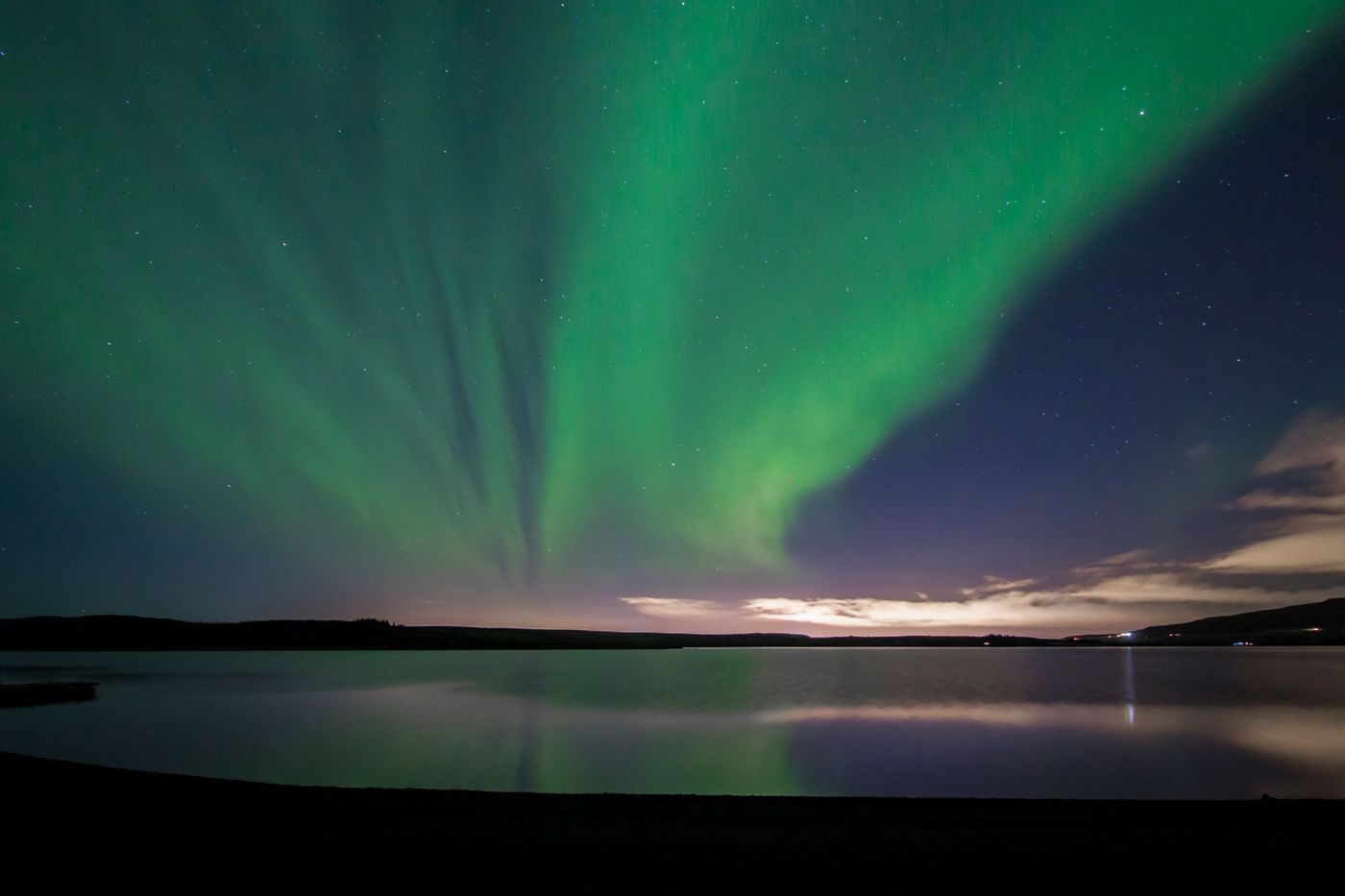
What "tonight" actually depends on
A search for northern lights Reykjavik tonight is really two separate questions collapsed into one: is the sky dark enough right now, and is anything going to show up in it. The season answers the first question for the whole evening. The forecast answers the second, but only for the hours it covers, and conditions can shift within a single night as cloud moves through or activity rises and falls. Checking once at seven in the evening and deciding the night is a write-off, or a certainty, skips the fact that both numbers can change again by ten.
There is no fixed rule for how long to wait once you are outside, but a useful boundary is this: if the sky stays fully clouded for the window the forecast covers, waiting longer in the same spot will not change the outcome, because the obstacle is the cloud layer, not your patience. If the sky is clear and the activity number is anything above the lowest reading, an hour outside is a reasonable trial before deciding the night has nothing more to offer. Giving up too early on a clear, active night and staying out too long under total cloud are the two ways this goes wrong, and both come from treating the forecast as a single glance rather than something to recheck.
Where to see northern lights in Reykjavik without a car
Not every visitor wants to drive after dark on unfamiliar roads, and Reykjavik does not require it. Grotta and Öskjuhlíð are both reachable on foot or by a short bus ride from most central accommodation, which keeps the decision to go out simple: check the forecast, walk or ride to a dark, open spot, and return whenever the night is done. This removes the added risk of driving in low light and unfamiliar conditions on top of everything else the evening already depends on.
The tradeoff is that a short walk from downtown will always be less dark than a site well outside the city, and on a night with only moderate activity that difference can be the one between seeing something faint and seeing nothing at all. Visitors weighing that tradeoff are usually deciding between a walk to a nearby dark spot and a longer trip, by tour or by car, to a genuinely dark one further out. Neither choice is wrong; it depends on how much a fainter possible display within walking distance is worth against a longer evening spent chasing a clearer one.
{'activity_id': '248622', 'title': 'Reykjavik: Whale Watching and Marine Life Cruise', 'rating': 4.5, 'reviews': 11217, 'includes': 'Guided boat tour from Reykjavik harbour, marine wildlife spotting', 'best_for': 'A daytime activity on the same trip as an evening aurora attempt', 'link': '{{AFF_GYG_NORTHERN_LIGHTS_IN_REYKJAVIK_15}}'}
Places near Reykjavik to see northern lights
For visitors willing to travel further than a city viewpoint, places near Reykjavik to see northern lights generally offer the same thing at a larger scale: more distance from artificial light, and a wider, more open horizon than any city vantage point can match. A guided tour that drives thirty or more minutes outside the city is trading convenience for darkness, and on a night with only moderate aurora activity that trade can be the difference between a clear sighting and a faint smudge fought against city glow.
This is also where a tour's real advantage sits, separate from convenience. An operator running these routes nightly is tracking the same two forecast numbers described above, for multiple nearby sites at once, and can choose among them or reroute if one area clouds over while another stays clear. Standing on a single beach and hoping is a fixed bet on one location's weather for the whole evening. A guide with several viable stops in reach is not fixed to any one of them, which is the practical difference between driving yourself to the first dark spot on a map and going with someone checking conditions across a wider area in real time.
What a guided trip actually buys
A northern lights experience Reykjavik operators sell is not, at its core, a better sky than the one over Grotta or Öskjuhlíð. It is someone else managing the two variables described earlier: reading the forecast across several possible sites, and driving to whichever one currently has the clearer view. That labour is the product, more than any equipment or vantage point a solo visitor could not otherwise reach.
What it does not buy is a guarantee. A guide with a good route and a current forecast can still be caught by a night where the whole region clouds over, or where activity never rises above the lowest reading anywhere nearby. Reviews and ratings for a given tour reflect how well it is run and how the group is treated, not whether the sky delivered on any specific night, since no operator controls that. Weighing a guided evening against standing at Grotta yourself comes down to how much the forecast-reading and rerouting is worth against the cost and schedule of a tour, not to which one has better odds of clear sky on a night neither can predict.
When the forecast is clear but the sky is not
The Icelandic Meteorological Office forecast is a prediction, made from models, and it is wrong on the small scale often enough that a clear forecast and a cloudy sky both showing up on the same night is not unusual. Cloud in Iceland moves quickly and can form or clear over an area smaller than the forecast's resolution covers. Standing outside under cloud that the forecast said would not be there is not a sign the forecast failed at everything; the activity number underneath that cloud could still be accurate, even though it is doing you no good right now.
The useful response is not to distrust the forecast generally, but to treat it as an hourly reading rather than a single verdict for the whole evening. Rechecking after an hour, especially if the cloud looks patchy rather than solid, can catch a gap opening up that the earlier forecast did not show. A short move, a few streets over or up a rise like Öskjuhlíð, can also put you under a break in the cloud that a fixed spot would have missed entirely. Neither fixes a fully overcast region, but both address the gap between a model's prediction and the specific patch of sky above your head.
{'activity_id': '400146', 'title': 'Keflavik Airport (KEF): Bus Transfer to/from Reykjavik', 'rating': 4.66, 'reviews': 20988, 'includes': 'Bus transfer between Keflavik Airport and Reykjavik', 'best_for': 'Arranging arrival timing that leaves an evening free for an aurora attempt', 'link': '{{AFF_GYG_NORTHERN_LIGHTS_IN_REYKJAVIK_21}}'}
Dressing and waiting for a display
The season that makes the aurora visible, late August to mid-April, is also Reykjavik's colder half of the year, and the coldest, clearest nights are often the ones with the best odds of a sighting. Standing still outside for an hour or more in that window is a different experience from a daytime walk through the city, and visitors who plan for a quick look often find themselves back inside within minutes, not because the sky failed them but because they were not dressed to wait it out.
Layering for standing still, rather than for walking, makes the difference between a genuine attempt and a token one. A display can take time to build from a faint band into something clearly visible, and stepping back inside to warm up partway through a promising window can mean missing exactly the part of the night worth waiting for. None of this changes what the forecast or the season already decided; it only decides whether you are still outside, and comfortable enough to keep watching, when the sky finally does something.
{'activity_id': '67019', 'title': 'From Reykjavik: Northern Lights Bus Tour with Hot Cocoa', 'rating': 4.27, 'reviews': 14847, 'includes': 'Guided bus tour departing Reykjavik, hot cocoa, driving to a viewing site away from city lights', 'best_for': 'A managed evening that covers several potential viewing sites instead of one fixed spot', 'link': '{{AFF_GYG_NORTHERN_LIGHTS_IN_REYKJAVIK_23}}'}
Planning around a trip you cannot reschedule
Most visitors are not choosing their travel dates around the aurora; they have a fixed window and are trying to make the most of whichever nights fall inside it. Within that constraint, the useful move is treating every night of the stay as a possible attempt rather than picking one night in advance and pinning all expectations on it. A traveller with three nights in Reykjavik who checks the forecast each evening has three separate chances; one who books a single tour for the first available night and does nothing else has one.
Before travelling, checking current travel advice from the US State Department or the UK FCDO is worth doing regardless of the aurora, since either can carry conditions that affect evening travel more broadly. None of that changes the two facts this page rests on: the season is set by darkness, and the forecast's two numbers only answer the question together. A trip planned around checking both, on more than one night if possible, is the version of this that gives a reader the best chance the schedule allows.
Common questions
Can you see the northern lights from downtown Reykjavik?
Sometimes, on a night with strong enough activity and little cloud, but city lighting washes out fainter displays. A short move to a darker spot such as Grotta or Öskjuhlíð improves the odds considerably.
Do I need a car to see the northern lights near Reykjavik?
No. Grotta and Öskjuhlíð are both reachable on foot or by bus from central accommodation. A car or a guided tour only becomes useful for reaching darker sites further outside the city.
How many nights should I keep free for the aurora?
As many as the schedule allows, since cloud cover changes night to night and a single booked evening can fail for reasons unrelated to aurora activity.
Is a high activity forecast enough on its own?
No. It has to be read alongside the cloud cover forecast for the same hours; high activity under full cloud produces nothing visible.
Why can't I see the northern lights in June?
Reykjavik has around 21.2 hours of daylight in June, so the sky never gets dark enough for a display to be visible, regardless of activity levels.