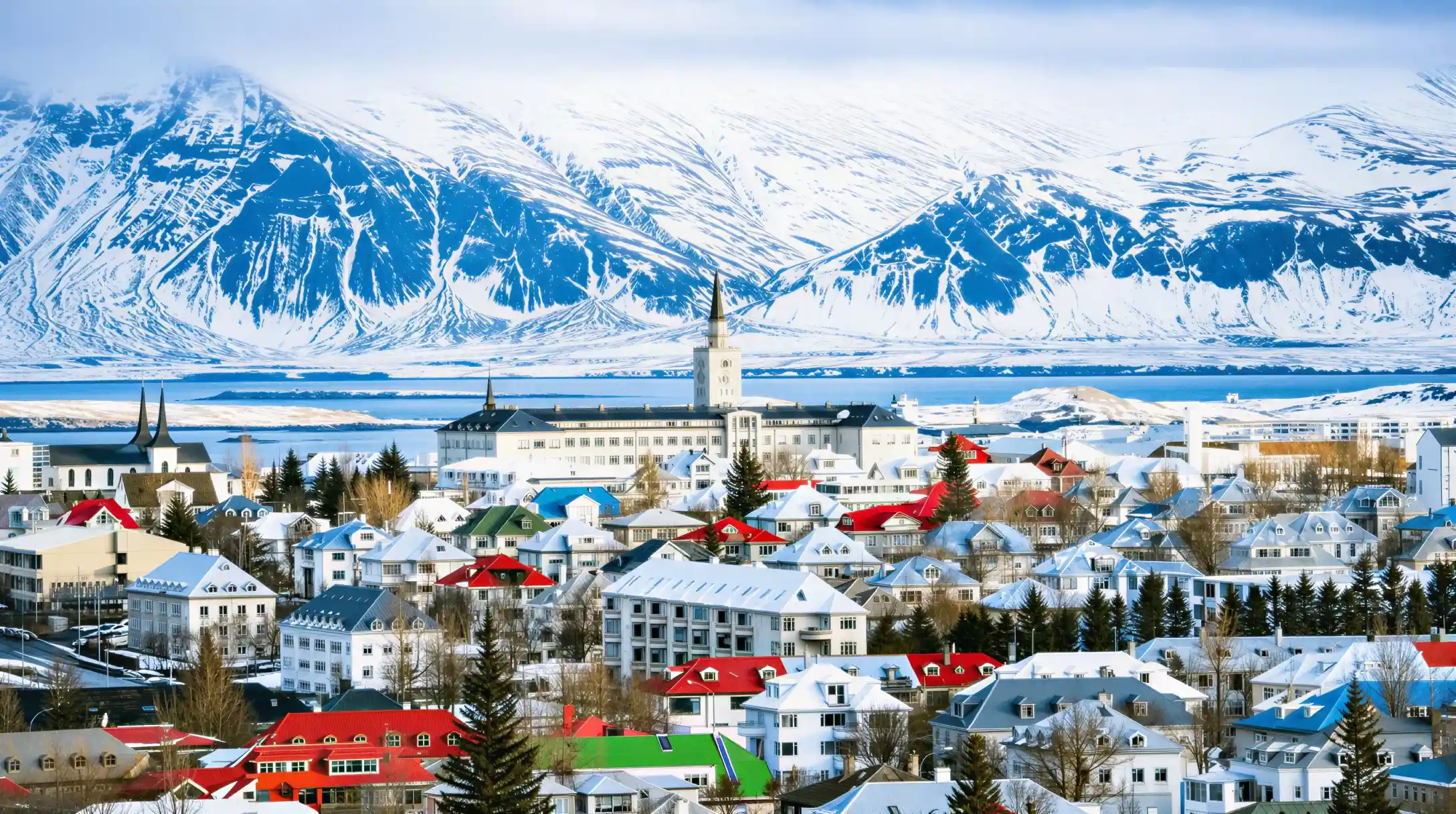
A trip built around Reykjanes right now runs into old headlines fast: search results still show fountains of lava from 2023 and 2024, and a reader has no way to tell whether that is this week or two years gone. It is not this week. No eruption is active on the peninsula, and the last one ran from 16 July to 4/5 August 2025. Planning a volcano tour from Reykjavik today means checking what is currently accessible rather than what a photo once showed. Some ground near the old crater rows is closed or restricted, some is walkable with a guide, and some sights, like the Lava Show and the lava tunnels, never depended on an eruption being active at all. The rest of this page separates the two: what depends on Reykjanes's current state, and what does not.
 Our pick
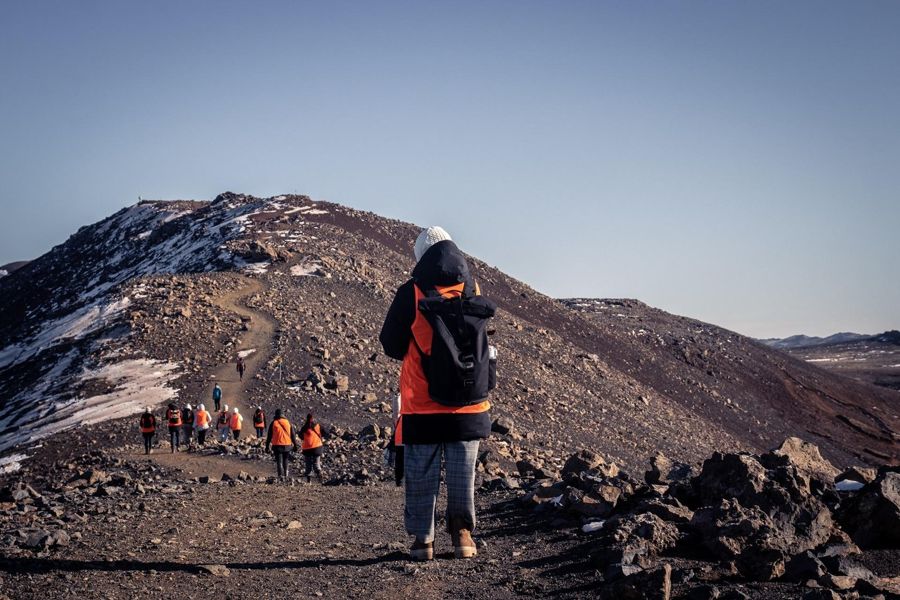
Reykjavik: Volcano Eruption Site and Reykjanes Hiking Tour
Guided hiking to the Reykjanes eruption sites
Readers who want the crater rows on foot with a guide
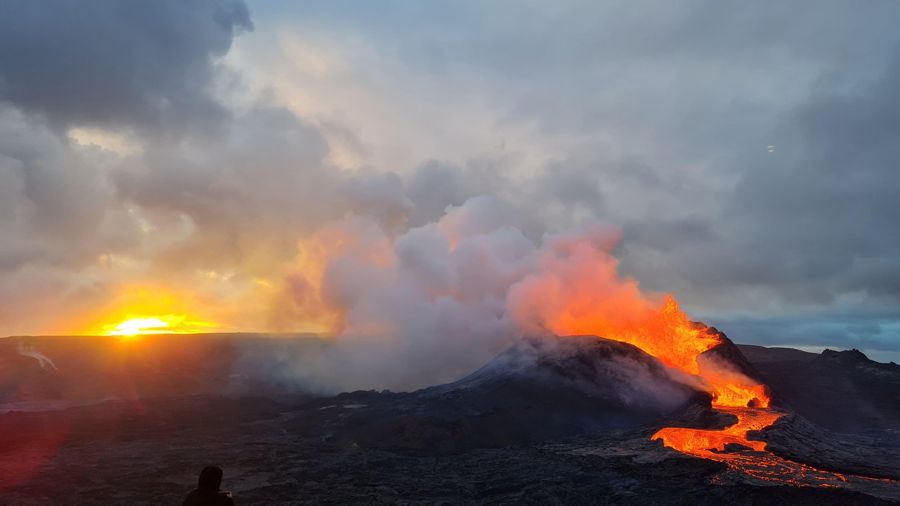
From Reykjavik: Fagradalsfjall Volcano Hike with Geologist
Guided hike to Fagradalsfjall with a geologist
Readers who want the geology explained on site
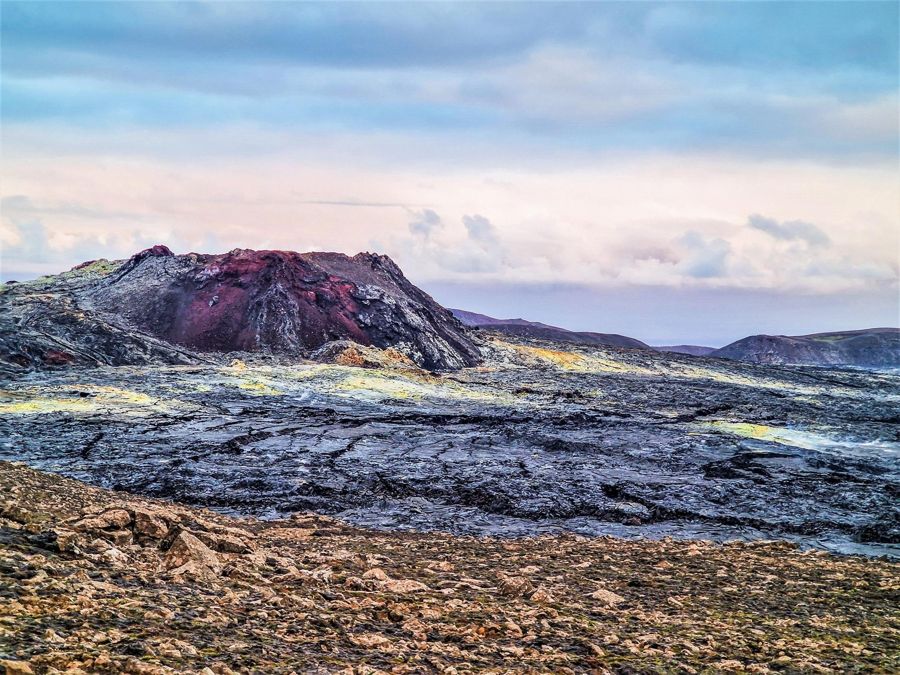
Reykjavik: Guided Afternoon Hiking Tour to New Volcano Site
Guided afternoon hike to the newest eruption site
Readers with a half day free in the afternoon
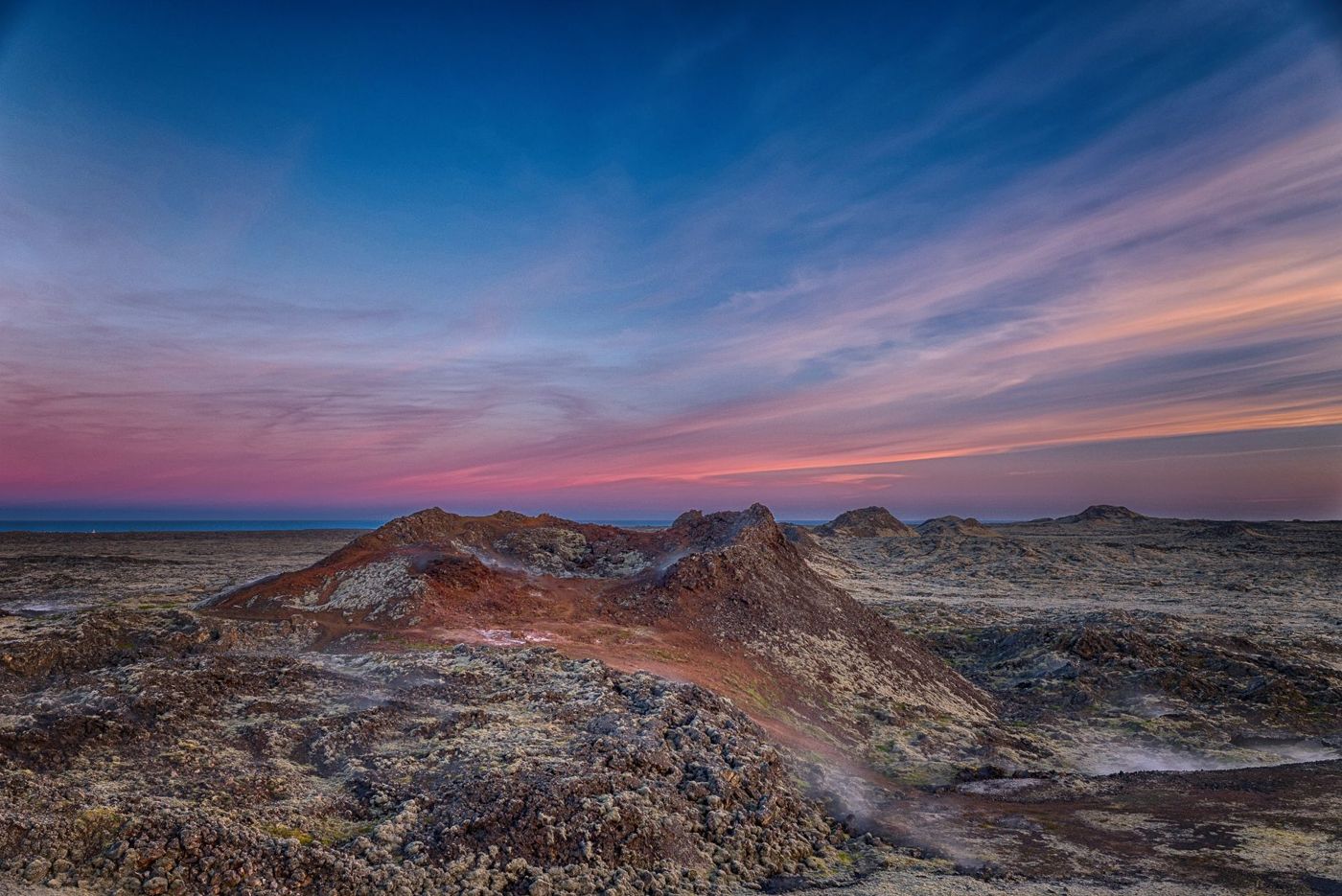
What the crater rows on Reykjanes look like today
A reader picturing an active flow is picturing the wrong month. The Sundhnúkur crater row has produced nine eruptions since December 2023, the first from 18 to 21 December 2023 and the ninth from 16 July to 4/5 August 2025. Between each one, the ground goes quiet while magma refills the chamber beneath Svartsengi, which is the state the peninsula is in now. The Icelandic Meteorological Office tracks this accumulation and issues a hazard assessment that says what is safe to approach and for how long, and that assessment is dated and expires: it needs checking again before a hike is booked, not just before this page is trusted.
Grindavík itself reopened to the public on 21 October 2024, sitting behind lava barriers built around the town and around Svartsengi. The town still carries crevasses from the intrusions that preceded the eruptions, and visitors are told to keep to marked paths rather than wander the streets freely. Displacement has not resolved with the reopening: about 1,200 of the roughly 3,800 original residents were still registered there as of January 2025, and the state company Þórkatla had bought out more than 90 percent of homes by that point.
For an iceland lava flow tour built around the current crater row rather than an old one, the guided hikes below go to whichever site is presently accessible under the Met Office's live assessment, and a guide checks that assessment the morning of departure rather than relying on a schedule fixed weeks out. Almannavarnir, the Department of Civil Protection and Emergency Management, makes the final call on access to any eruption site, not the tour operator.
Lava tunnels and caves do not depend on the eruption calendar
It is easy to assume every lava sight on this coast needs an active eruption nearby to be worth visiting, and that is backwards for the tunnels. Raufarhólshellir, the tunnel most tours from Reykjavik run to, formed from a flow thousands of years old and is open on a fixed route regardless of what Sundhnúkur is doing this month. A lava tunnel tour iceland itinerary typically walks a lit or headlamp-guided passage through collapsed lava rock, with the operator managing footing rather than the reader needing crampons or climbing gear.
A separate confusion is between a lava tunnel and a blue cave tour iceland listing, which usually names an ice cave rather than a lava one: ice caves form in glacier margins and are seasonal, open roughly November to March, while the man-made Langjökull tunnel runs year round. A tour titled around lava will not be the same product as one titled around ice, and checking which rock the operator means before booking avoids arriving with the wrong expectation of temperature and terrain.
Choosing between a hike, a bus tour and a show
A reader weighing options often assumes the only way to see lava is a hike to an active site, but the choice actually splits three ways: a guided hike to a crater row, a coach tour to a lava tunnel, and a Lava Show ticket that reproduces a flow indoors regardless of what Reykjanes is doing that week. Each suits a different traveller. The hikes demand fitness and weather tolerance and depend on the current hazard assessment. The tunnel tours run on a fixed timetable and need neither.
A lava tour iceland operator running the bus route to Raufarhólshellir handles the walking pace and the lighting, so the day is closer to a guided museum visit than a hike. The Lava Show in Reykjavik's Grandi harbour district, at Fiskislod 73, 101 Reykjavik, is a 22 minute walk from the city centre or a stop on the free Grandi Shuttle, which runs daily roughly 11:00 to 15:51 with hourly departures. Its Classic Experience runs 50 minutes and pours lava heated to 1,100 degrees Celsius, remelted from Icelandic lava rock from the 1918 Katla eruption, in front of seated guests; it starts from 6,590 ISK for an adult and 3,590 ISK for a child, with a Premium Experience from 9,990 ISK adding a lounge, balcony seating and a giftwrapped piece of the show's own lava.
What a tunnel visit actually involves
The assumption that a lava cave tour iceland listing means crouching through a narrow, unlit crack is usually wrong for the routes sold from Reykjavik. Raufarhólshellir is walked on a maintained path with railings and lighting on its standard route, and the operator issues a headlamp where the tunnel darkens further in. Two of the tunnel products sold from the city, the standard Raufarhólshellir tour and the version run specifically by bus, cover the same tunnel with different transport included, so the choice between them is really a choice about pickup rather than about the cave itself.
The tunnel sits well outside the current Reykjanes hazard zone and its access has not been affected by any of the nine Sundhnúkur eruptions, which is worth knowing if the crater-row hikes above are unavailable on a given day under the live Met Office assessment. A tunnel visit is a reliable fallback in that sense: its schedule does not move with the volcano's.
- Sundhnúkur eruptions since December 2023
- 9
- Most recent eruption
- 16 July to 4/5 August 2025
- Grindavík reopened to the public
- 21 October 2024
- Road 43 to the Blue Lagoon fully reopened
- 15 December 2024
- Parking fee at eruption-site trailheads (P1/P2)
- 1,000 ISK
- Lava Show Classic ticket, adult
- from 6,590 ISK
Where a glacier fits into a lava-themed trip
A reader assembling a volcano tour from Reykjavik sometimes expects a glacier stop to be part of the same day, and it rarely is: the lava sites near the city sit at low elevation on Reykjanes, while glacier ice sits on separate icecaps reached by a longer drive. A glacier cave tour iceland trip is a distinct product built around blue ice rather than rock, run on a different season to the lava tunnels and usually as its own full day rather than an add-on.
Combining the two into a single outing generally means picking one as the day's focus and treating the other as a separate booking on a different date, since the driving distances and the guiding equipment do not overlap. Travellers short on time are better served choosing whichever theme, lava or ice, matches what they most want to see, rather than trying to compress both into one itinerary.
- Reykjanes UNESCO Global Geopark, designated
- 2015
- Geopark area
- 818 km2 (316 sq mi)
- Number of geosites in the geopark
- 55
- Plate spreading rate across the peninsula
- 2.0-2.5 cm/year (0.8-1.0 in/year)
- Road distance, Reykjavik to Keflavík Airport
- 50 km (31 mi)
Going underground instead of uphill
Some travellers picture an inside the volcano tour iceland trip as another version of the crater-row hikes, walking toward an opening in the ground rather than descending into one, and the two are unrelated in practice. Thrihnukagigur, reached from Reykjavik, lowers visitors by cable into an extinct magma chamber rather than approaching any current eruption site, and its access has nothing to do with the Sundhnúkur hazard assessment described above.
Because the chamber is dormant rather than part of the active Reykjanes system, this style of tour runs on its own season and its own booking calendar, unaffected by whether Almannavarnir has restricted the crater rows that week. It suits a reader who wants a volcano's interior without the uncertainty attached to a live system, and it takes a full day given the transport and the descent itself.
Seeing the peninsula from above
Ground access to any given site on Reykjanes depends on the current hazard assessment, weather, and Almannavarnir's decisions on the day, none of which a reader can control from home. An iceland helicopter tour volcano flight sidesteps that constraint by staying above the terrain rather than crossing it on foot, covering the crater rows, the fissures and the surrounding lava fields from the air on a route the pilot adjusts to whatever is currently open below.
This suits travellers on a short layover near Keflavík, roughly 50 km (31 mi) and 45 minutes by road from central Reykjavik, or anyone whose schedule cannot absorb a cancelled ground hike. It is also the only way, at present, to view the newest crater row without walking the restricted ground around it while the Met Office assessment is in effect.
Common questions
Is there an active volcano eruption near Reykjavik right now?
No. The last eruption on the Sundhnúkur crater row ran from 16 July to 4/5 August 2025, and no eruption is active as of this page. Magma is still accumulating beneath Svartsengi, and the Icelandic Meteorological Office's hazard assessment on the area is dated and needs checking again before any hike is booked.
Can visitors still go to Grindavík and the Blue Lagoon?
Both are open. Grindavík reopened to the public on 21 October 2024 behind lava barriers, though the town still has crevasses and visitors are told to stay on marked paths. Road 43 to the Blue Lagoon fully reopened on 15 December 2024.
Do the lava tunnel tours depend on the eruption situation?
No. Raufarhólshellir formed from an ancient flow and its access has not been affected by any of the recent Sundhnúkur eruptions, so it runs on a fixed schedule regardless of Reykjanes's current status.
Is the Lava Show the same as visiting an eruption site?
No. It is an indoor show in Reykjavik's Grandi district that pours remelted lava rock in front of seated guests, and it runs on its own daily schedule independent of whether Reykjanes has an active eruption.
Who decides whether a Reykjanes eruption site is safe to visit?
Almannavarnir, the Department of Civil Protection and Emergency Management, makes access decisions, based on the Icelandic Meteorological Office's hazard assessment rather than on any individual tour operator's judgment.