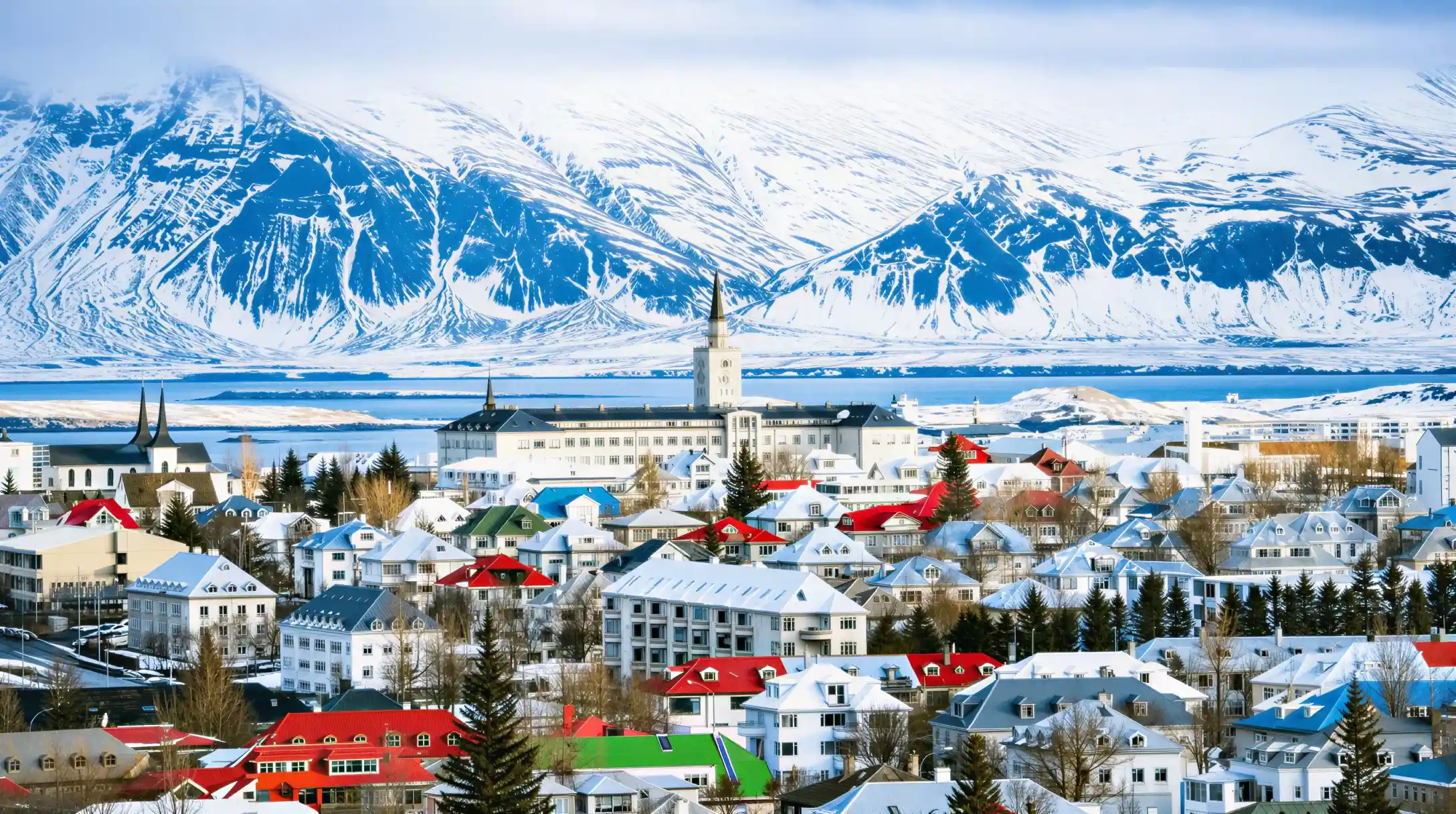
Most travellers assume Iceland has one confusing web of airports to sort out before a trip even starts. It does not. Reykjavik airport, listed under the code KEF, is the country's single international gateway, a 47-minute drive from the capital along one road. One terminal building handles every arriving and departing flight, so there is no wrong door to walk through and no shuttle between buildings to catch. This page settles what that terminal contains, how many people pass through it, what a taxi or a bus into town actually costs, and where the lounges and duty free sit once landside becomes airside. A separate page covers the transfer itself, seat by seat and minute by minute; this one is for understanding the building before landing in it.
 Our pick
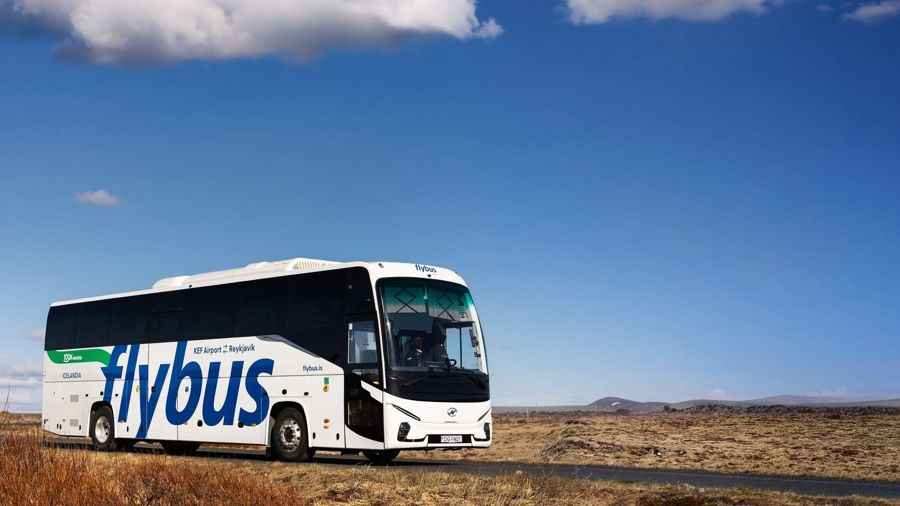
Keflavik Airport (KEF): Bus Transfer to/from Reykjavik
Bus transfer between Keflavik airport and Reykjavik
Travellers who want a seat booked before landing rather than queuing at the terminal
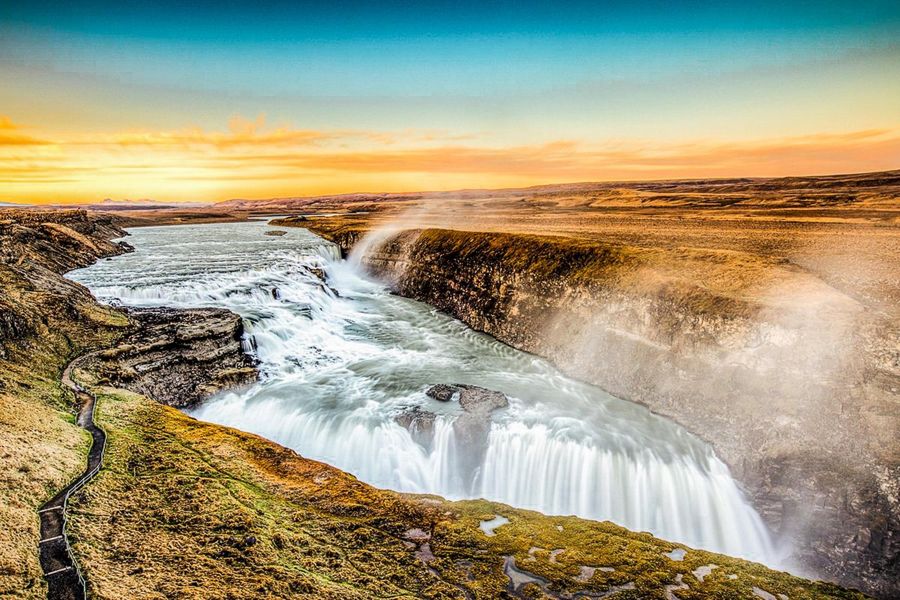
Reykjavik: Golden Circle Full-Day Tour with Kerid Crater
Full-day guided tour to Thingvellir, Geysir, Gullfoss and Kerid crater
A first full day out from Reykjavik after landing
Finding the Right Code at Check-In
Travellers booking a connecting flight sometimes type in the wrong three letters, because Reykjavik has more than one airfield and only one of them handles international traffic. The Reykjavik airport code that matters for an international ticket is KEF, assigned to Keflavik International Airport; the ICAO code, used by pilots and air traffic control rather than by booking systems, is BIKF.
The terminal itself has a name of its own, Flugstöð Leifs Eiríkssonar, shortened locally to Leifsstöð and translated as the Leif Eiríksson Air Terminal, after the Norse explorer. It opened in April 1987, decades after the airfield itself was built in 1943 as a US military base called Meeks Field. International traffic moved here gradually through the 1970s, away from the smaller airfield inside Reykjavik itself.
None of this sits inside the city. The Reykjavik keflavik airport arrangement that catches visitors out is geographic: the airport sits about 3 km from Keflavík town and closer to Njarðvík, both part of the municipality of Reykjanesbær, not inside Reykjavik proper. The drive from the terminal to central Reykjavik covers 47.2 km (29.3 miles) and takes about 47 minutes with no stops.
| Figure | Value |
|---|---|
| IATA code | KEF |
| ICAO code | BIKF |
| Elevation | 52 m |
| Runway 01/19 | 3,054 m |
| Runway 10/28 | 3,065 m |
| Distance to Keflavík town | 3 km |
| Road distance to Reykjavik | 47.2 km |
| Driving time to Reykjavik | 47 min |
- Value
- KEF
- Value
- BIKF
- Value
- 52 m
- Value
- 3,054 m
- Value
- 3,065 m
- Value
- 3 km
- Value
- 47.2 km
- Value
- 47 min
Why the Airport Feels Bigger Than It Looks
The scale of the place surprises people who expect a small-country airport to feel small. Isavia, the state-owned operator that runs the airport, recorded 8.1 million passengers through the terminal in 2025. Isavia's own airline page lists 30 carriers serving Keflavik as of 2026-09-08, flying to 84 nonstop airports across 25 countries on the airport's own destinations list. Icelandair, the main hub carrier, alone flies to 60 of those 84 destinations, roughly seven routes in ten.
That single figure answers how many airports are there in Reykjavik, at least the international one: there is one, and everything above routes through it. Keflavik is the Reykjavik international airport in everything but name, and Reykjavik's other airfield, inside the city itself, handles domestic flights within Iceland and a handful of flights to Greenland, not the transatlantic and European traffic that lands at Keflavik. The route map also shifts with the seasons: Isavia tags 54 routes as year round, 21 as summer only and 9 as winter only, so a destination available in July is not guaranteed in January.
One carrier that used to appear on route lists no longer does. PLAY, the Icelandic low-cost airline that succeeded WOW air, ceased operations on 29 September 2025 and has been removed from Isavia's own airline list.
- Passengers in 2025
- 8.1 million
- Airlines on Isavia's list (2026-09-08)
- 30
- Nonstop destinations
- 84 airports, 25 countries
- Year-round routes
- 54
- Operator
- Isavia ohf.
Getting from Landing to the Terminal Floor
Arriving without a plan for the last stretch is the most common mistake, not because the walk is long but because the choice between a bus and a taxi is best made before baggage claim rather than in the queue after it. The Flybus, run by Kynnisferðir, charges 3,999 ISK one way to Reykjavik's BSÍ terminal, with a return fare of 7,298 ISK and a reduced 2,000 ISK fare for children aged 6 to 15. The bus takes about 45 minutes.
A taxi costs considerably more but goes door to door. Hreyfill, one of the taxi cooperatives operating from the airport, publishes a fixed fare of 22,500 ISK for one to four passengers and 29,250 ISK for five to eight; metered fares from other companies typically fall between 15,000 and 25,000 ISK for the same trip.
Renting a car changes the calculation again, since most rental desks sit inside or immediately beside the terminal rather than requiring a shuttle. Whichever way the trip into town happens, the 47.2 km drive is the same distance either way, and nothing about the route changes with the choice of transport.
{'activity_id': '400146', 'title': 'Keflavik Airport (KEF): Bus Transfer to/from Reykjavik', 'rating': 4.66, 'reviews': 20988, 'includes': 'Bus transfer between Keflavik airport and Reykjavik', 'best_for': 'Booking the ride into town before the flight lands', 'link': '{{AFF_GYG_KEFLAVIK_AIRPORT_8}}'}
What Waits Past Security
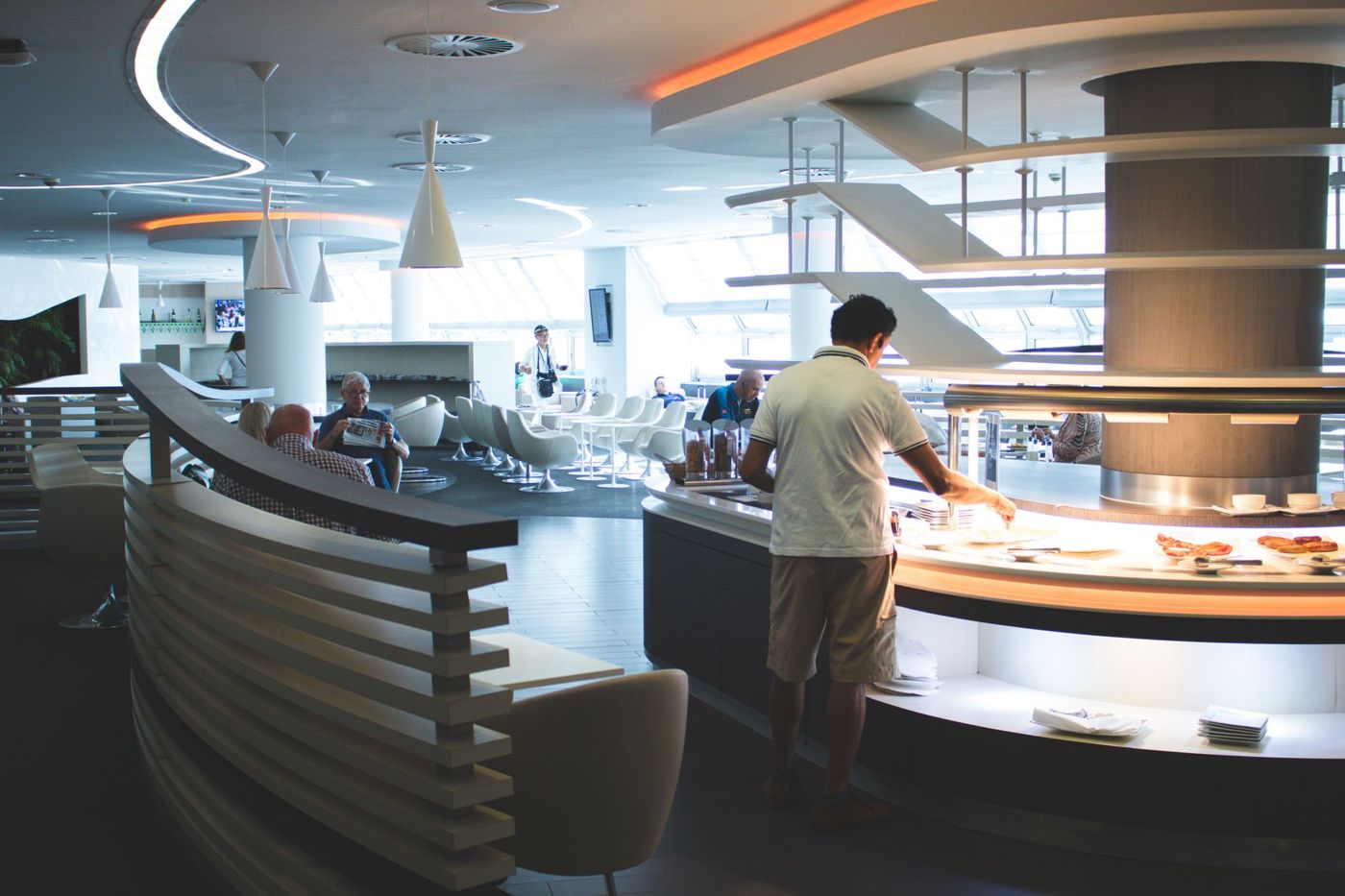
Passengers expecting a wide choice of lounges at a hub this busy find only one option airside, run under a single operator's brand rather than split across several banks. The Reykjavik airport lounges offering covers a single lounge in the departures area, with paid entry available to travellers who are not already carrying lounge access through a credit card or an airline programme.
Beyond the lounge, the terminal's food and retail count grew substantially with the most recent expansion. The East Wing, a 25,000 square metre addition, opened on 20 March 2025, adding four boarding bridges and two remote gates and increasing the terminal's overall size by about 30 percent, at a cost of roughly ISK 29.6 billion. Duty free sits in the standard position for a European terminal, in the corridor between security and the gates, sized for the volume the airport now carries rather than the smaller building that operated before the expansion.
Reading the Route Map Before Booking
Route choice depends heavily on which side of the Atlantic a traveller starts from, and the kef Reykjavik keflavik naming used interchangeably across airline booking systems and tour listings all points at this one facility. From North America, Icelandair, Delta, United, Alaska Airlines, Air Canada, Air Transat and WestJet all fly the route, with Icelandair carrying most of the map and holding the only service on many individual US cities. Sixteen US airports appear on Isavia's list, including New York's JFK and Newark, Boston, Chicago, Seattle and Denver among others; thirteen of those run year round, while Detroit and Pittsburgh are summer only and Miami runs in winter only.
Boston is the shortest hop from North America at 5 hours 40 minutes, against 5h 45m from JFK, 6h 05m from Chicago, 6h 25m from Washington DC, 7h 30m from Seattle and 8h 05m from Denver. From Canada, only Toronto Pearson and Vancouver run year round; Montreal, Calgary, Edmonton, Halifax and Winnipeg are summer only, so five of the seven Canadian routes disappear outside summer.
UK travellers have more year-round choice: Heathrow, Gatwick, Luton, Manchester, Edinburgh and Glasgow all run all year, with flight times of 3h 15m, 3h 10m, 2h 45m, 2h 20m and 2h 15m respectively from the gateways with published times. Bristol, Leeds, Newcastle and Stansted are winter-only routes flown by Jet2, easyJet and TUI.
Deciding Whether a Lounge Pass Is Worth It
A long layover or an early check-in is the usual reason travellers weigh up lounges at Reykjavik airport against simply waiting at the gate. Iceland's entry rules and any current travel advisories are worth checking through the US Department of State's Iceland page and the UK FCDO's Iceland travel advice before departure, since both cover the practical entry questions a lounge visit will not answer.
The lounge itself sits past security in the departures area and is the only one at the terminal, so the decision is binary rather than a choice between several. Paid access suits a traveller with a long connection or an early arrival ahead of a flight with no lounge access included through a card or an alliance.
{'activity_id': '400599', 'title': 'Reykjavik: Sky Lagoon Entrance Pass With 7-Step Spa Ritual', 'rating': 4.83, 'reviews': 7388, 'includes': 'Entry to the Sky Lagoon and the seven-step spa ritual', 'best_for': 'A first stop after landing, close to the city rather than the airport', 'link': '{{AFF_GYG_KEFLAVIK_AIRPORT_14}}'}
Laying Out the Terminal Before Arrival
A single-terminal airport is simpler to navigate than a hub split across buildings, but the Reykjavik airport map still has a shape worth knowing before landing rather than after. Arrivals and departures share the same building, with the East Wing addition extending the south side of the terminal and adding gates that did not exist before March 2025. Isavia has stated it plans a further expansion, a central connecting building linking the terminal's north and south sections, with the first phase beginning in 2026 and targeted completion in 2031 as part of a plan to lift capacity to 14.5 million passengers a year by 2040, at a further projected cost of ISK 22.3 billion.
Car rental desks cluster near the arrivals area, close enough that most rentals do not require a shuttle bus. For anyone planning to leave the terminal on foot toward the bus stands rather than by rental car, the Flybus schedule and route details are published directly by the operator, which is worth checking against a specific flight time before arrival rather than after.
Common questions
Is Keflavik airport the same as Reykjavik city airport?
No. Keflavik is the international airport, about 47 km from central Reykjavik. Reykjavik's own airport, inside the city, handles domestic flights and a small number of routes to Greenland.
How far is the airport from downtown Reykjavik?
About 47.2 km (29.3 miles) by road, a drive of roughly 47 minutes with no stops.
Is there more than one terminal at Keflavik?
No. One terminal building, Flugstöð Leifs Eiríkssonar, handles all arriving and departing flights, expanded in March 2025 with a new East Wing.
What does the Flybus cost from the airport to Reykjavik?
3,999 ISK one way to BSÍ terminal, or 7,298 ISK return. Children aged 6 to 15 pay 2,000 ISK.
Does PLAY still fly to Keflavik?
No. PLAY ceased operations on 29 September 2025 and no longer appears on the airport's own airline list.