
Most travellers waste money guessing between Keflavik vs Reykjavik transfer options instead of matching the choice to how many people are travelling, how much luggage is coming, which part of the city the hotel sits in, and what time the flight lands. A family of four with two large suitcases each has a different right answer from a solo traveller landing at 2am with a backpack. This page settles that choice by working through those four inputs in order, so the answer at the end fits the trip rather than the loudest recommendation online. Nothing here compares brand against brand; it compares what each mode actually asks of the traveller. By the third heading the shape of the decision is set: shared bus for most parties on a budget, private transfer for groups with heavy luggage or an odd-hour landing, taxi only for genuine last-minute flexibility, a rental car for anyone continuing beyond the city, and the city bus for nobody arriving with luggage at all.
 Our pick
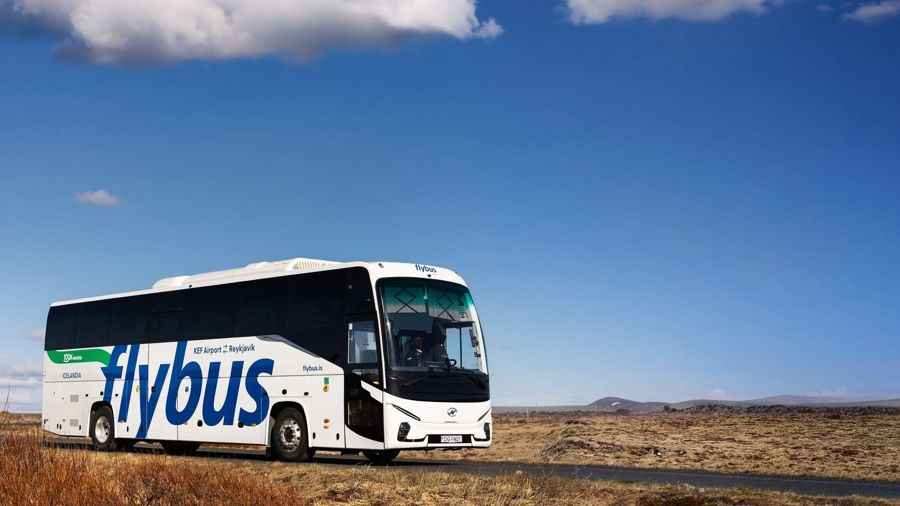
Keflavik Airport (KEF): Bus Transfer to/from Reykjavik
One-way or round-trip scheduled coach transfer between the airport and central Reykjavik
Solo travellers and pairs on a budget who can carry their own bags to a stop
Party size and luggage
A common mistake is pricing a transfer per person without checking what each mode does with luggage once the group grows past two. A shared bus prices seats one at a time, so four adults each carrying one large case and one carry-on pay four full fares and still queue to load their own bags into a shared hold with everyone else's flight. A private transfer prices the vehicle, not the seat, so a group of four to six with heavy luggage can come out cheaper per person than four bus tickets, and the driver loads the vehicle rather than the passengers queueing for hold space.
The other mistake is assuming a taxi scales the same way a bus does. A taxi is priced for the car, usually four passengers with standard luggage, and a fifth adult or an oversized case, a car seat, or ski bags means either a second car or a larger vehicle booked in advance, not something arranged at the kerb. A solo traveller with one bag has the widest choice of all four modes and the least reason to overpay for a private vehicle sized for a group that is not there. The right question is never how many people are flying, but how many bags are coming with them and whether those bags fit what has been booked.
A rental car removes the luggage question at check-in only to reintroduce it at every stop afterwards: whatever does not fit in the boot rides in the cabin for the rest of the trip, which matters on a car with four adults and full-size cases.
| Mode | Route | One-way distance | One-way drive time |
|---|---|---|---|
| Flybus, private transfer, taxi, rental car | Keflavik Airport to Reykjavik | 47.2 km (29.3 mi) | 47 min |
| Round trip, no stops | Keflavik Airport to Reykjavik and back | 94.4 km (58.7 mi) | 1 h 34 |
- Route
- Keflavik Airport to Reykjavik
- One-way distance
- 47.2 km (29.3 mi)
- One-way drive time
- 47 min
- Route
- Keflavik Airport to Reykjavik and back
- One-way distance
- 94.4 km (58.7 mi)
- One-way drive time
- 1 h 34
Hotel area
The hotel's location changes which transfer is worth booking more than most travellers expect. A shared coach service runs fixed routes through the main hotel districts near the old town and the harbour, usually with a stop within a short walk of the door; a hotel further out, in a residential neighbourhood or near the domestic airport, may sit outside that stop network entirely, which turns a supposedly simple bus transfer into a bus leg plus a taxi leg.
A private transfer is priced to the door regardless of where the hotel sits, which removes the guesswork for anyone staying outside the central stops. It costs more than a shared seat, but the price is fixed before departure and does not grow because the hotel happens to be inconvenient for a fixed route.
A traveller renting a car for days beyond the airport run has already solved the hotel-area problem in the other direction: the car goes wherever the hotel is, but finding overnight parking in the older, narrower streets near the harbour can undo some of that convenience, while hotels further out usually have their own car park.
Anyone unsure exactly which stop or street their hotel uses should treat that uncertainty as a reason to book the mode that goes to the door, not the mode that goes to the nearest fixed point.
Arrival hour
The time on the boarding pass matters as much as the party size, because not every mode runs at every hour. A shared coach operates on a published timetable built around the bulk of scheduled arrivals; a flight landing well outside that window, very early morning or late at night, may mean a longer wait at the airport for the next departure rather than a seat on the next available run.
A private transfer is booked against the actual flight time, not a fixed timetable, so it is the more predictable option for a landing outside normal hours, arriving before dawn or after most flights have already cleared the terminal. A taxi is available at the rank whenever a flight lands, which makes it the only mode genuinely built for a last-minute change of plan, a missed connection, or simply not wanting to book anything in advance.
A rental car sidesteps timetables altogether, since the counter and the vehicle are there whenever the flight lands, though a very late pickup is worth confirming against the rental desk's own hours rather than assuming it is staffed around the clock. Whichever mode is chosen, the drive itself takes 47 minutes one way regardless of the hour, so the time saved or lost is almost entirely in waiting, not in driving.
- Shared coach (Flybus-type)
- Yes · Per person · Only on the fixed stop route
- Private transfer
- No, matched to flight time · Per vehicle · Yes
- Taxi
- No, on demand · Per vehicle · Yes
- Rental car
- No · N/A, self-driven · Yes
- City bus
- Yes, limited hours · Per person · No
Money, in USD
A traveller comparing modes on price alone usually looks at only one leg of the trip. A shared coach ticket is the cheapest single fare, and it stays the cheapest choice for one or two people with manageable luggage taking a one-way or round trip. Once a third or fourth traveller is added, the maths changes: a vehicle priced per car, split across four adults, can land close to or below four individual coach seats, especially on a round trip.
A metered taxi from the airport is priced highest of the motorised options for a single one-way run for one or two people, and the fare does not fall by booking ahead the way a private transfer's does; its advantage is availability, not price. A rental car adds a daily rate on top of the drive itself, so it is worth pricing only for travellers who need the car for more than the airport leg, since a car booked purely to reach the hotel and then returned is rarely the cheapest way to cover 47.2 km.
None of these figures include what happens at the other end: parking, tolls on a rental, or a tip, which is not expected in Iceland and does not change any of the totals above.
The decision, in order
Start with party size and luggage, since it rules out the most options fastest. One or two travellers with a case each and a fixed hotel near the central stops are almost always best served by the shared coach: it is the cheapest fare for that party size and the timetable covers most arrivals. Three or more travellers, or any group with oversized luggage, car seats or ski bags, usually comes out ahead booking a private transfer priced per vehicle rather than buying multiple coach seats.
Arrival hour overrides the above when the flight lands well outside the coach timetable: a private transfer matched to the actual flight time, or a taxi at the rank, becomes the reliable option regardless of party size at that point. A rental car only belongs in this decision when the car is needed for days beyond the airport run, not purely to reach the hotel, since the daily rate makes it the most expensive way to cover a single 47-minute leg on its own.
The US Department of State country information for Iceland and the UK FCDO travel advice for Iceland are the places to check current entry and travel conditions before any of these bookings are finalised, since conditions can change between booking and arrival. Whichever mode is booked, building in slack around the 47-minute drive rather than cutting it close is the one habit that protects every other decision on this page.
Common questions
Is a private transfer worth it for two people?
For two travellers with standard luggage and a hotel near the central stops, a shared coach is usually cheaper. A private transfer becomes worth it once luggage is oversized or the arrival time falls outside the coach timetable.
Does the city bus run to the airport?
It is not built for airport luggage runs and keeps limited hours, so it suits neither an early nor a late arrival with cases in tow.
Can a taxi be booked in advance?
A taxi is generally taken on demand at the rank rather than pre-booked for a fixed fare, which is its advantage for last-minute changes and its disadvantage on price.
Does the transfer time change with the mode chosen?
No. The drive between the airport and the city is 47 minutes one way regardless of which mode is booked; what changes between modes is waiting time and cost, not driving time.
Is a rental car cheaper than a transfer for one night in the city?
Rarely. A rental adds a daily rate on top of the drive itself, so it is worth booking only when the car is needed beyond the airport leg.