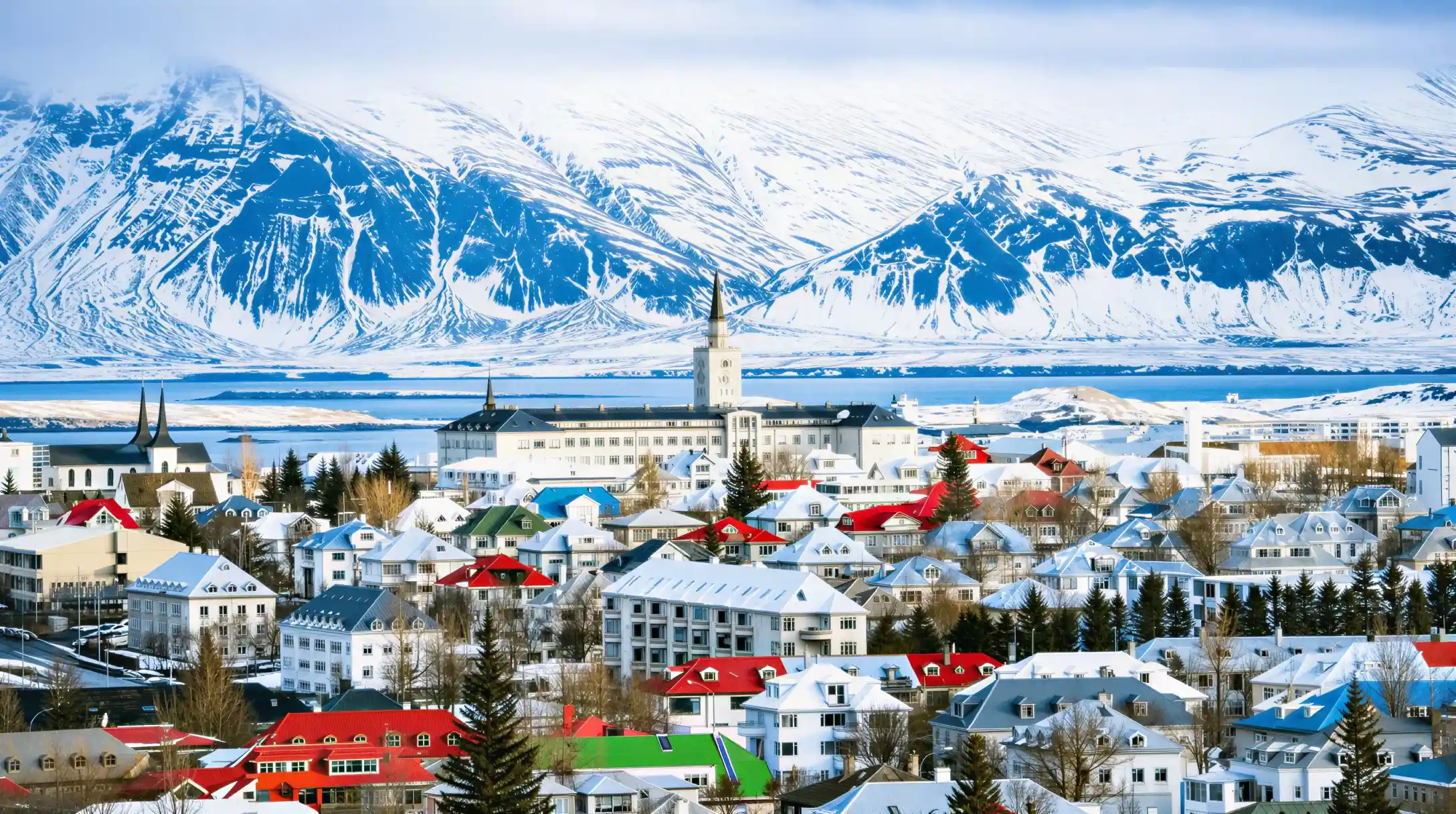
A week of restaurant meals in Reykjavik does not behave like a week of restaurant meals anywhere a US or UK visitor has budgeted for before. The city has no cheap tier of sit-down dining the way a European capital usually does, and the gap between a hot dog stand and a tasting menu is wider here than the map of the old town suggests. Anyone assembling a food budget from a general Iceland article is working from someone else's numbers, and general Iceland articles rarely separate a bakery lunch from a plated dinner. This page settles both: what a meal actually runs at each level in the city centre, which named places are worth booking ahead for, and where the money goes further than the price on the menu implies. Read it as the arithmetic behind a trip, not as a ranked list, because the ranking changes with how many nights a visitor has and how many of them are meant to be memorable rather than merely fed. The best restaurants in Reykjavik are not interchangeable with each other, and a plan that treats every dinner the same way overspends on the nights that did not need it and underspends on the one that did.
 Our pick
Reykjavik: Golden Circle Full-Day Tour with Kerid Crater
Golden Circle route · Kerid Crater stop · Guided full-day coach tour
A first full day out of the city before booking a dinner reservation for the evening

Reykjavik: South Coast Waterfalls, Black Sand & Glacier Tour
South coast waterfalls · Black sand beach · Glacier viewpoint stop
A long day trip that ends late enough to skip a restaurant booking and eat at the hotel
What restaurant prices in Reykjavik actually track
A visitor who converts Reykjavik menu prices at a glance and compares them to a home-city dinner is comparing the wrong two numbers. Iceland Revenue and Customs sets VAT on restaurant food and on hotel rooms at 11 percent, already folded into every price printed on a menu, so nothing is added at the table. What sits underneath that number is not sales tax at all: Eurostat's comparative price level survey puts Icelandic restaurant and hotel spending at an index of 167.3 against an EU27 average of 100, meaning a meal that reads as ordinary money on the page costs two thirds more than the same category of meal across most of the European Union. Statistics Iceland's own consumer price index tracks the restaurant and cafe sub-index rising at roughly 4.9 percent a year, which is fast enough that a figure quoted a year old is already low. Reykjavik restaurants sit inside a small, import-heavy economy, and the price on a menu reflects that before it reflects anything about the kitchen behind it.
None of this means every meal in the city is expensive in the same way. A hot dog, a bakery lunch and a sit-down dinner occupy three different price worlds, and a week's budget built around only the top of that range will feel punishing by day four. The next sections split the city by what each meal is actually for, starting with the one Icelanders themselves price-watch.
| Item | Price (ISK) |
|---|---|
| Hot dog with everything, Baejarins Beztu | 880 |
| Hot dog and a Coke (the combo) | 1,330 |
| Coffee, central bakery-cafe | 650 |
| Sandholt breakfast, cheapest plate | 1,390 |
| Sandholt brunch plate | 2,690-3,290 |
| Hotel grab-and-go breakfast bag | 2,900 |
- Price (ISK)
- 880
- Price (ISK)
- 1,330
- Price (ISK)
- 650
- Price (ISK)
- 1,390
- Price (ISK)
- 2,690-3,290
- Price (ISK)
- 2,900
Reading the price bands before choosing where to eat
Most first-time visitors decide where to eat in Reykjavik by neighbourhood, following the walk from Hallgrimskirkja down to the harbour and picking whatever looks busy. That works for finding a meal; it does not work for controlling what the week costs, because a busy-looking room on Laugavegur can be a 900 ISK coffee counter or a 9,000 ISK plated dinner and the street gives no signal which. The more reliable split is by what the meal is for rather than where it sits: a hot dog or a bakery plate is a between-things meal, a mid-range sit-down lunch is a planned but unremarkable one, and a booked dinner at a named kitchen is the one or two nights a trip is actually built around.
Treating every dinner as the third kind is the single most common budgeting mistake in a short Reykjavik trip. A visitor who books a tasting menu on the first night and again on the last, with nothing but grazing in between, spends roughly the same as one who eats two tasting menus across a week and fills the rest with bakeries and a fish counter lunch, but the second visitor's week has more variety and more slack for the day a flight is delayed or a tour runs long. The price bands exist so the choice can be made on purpose rather than by whichever door was open.
A tasting-menu kitchen worth the reservation
Sumac Reykjavik earns its name-recognition from the same instinct that drives interest in Dill: a small room, a tasting-format menu, and a kitchen built around Middle Eastern and North African technique rather than the Nordic New Cuisine style most visiting diners expect from an Icelandic tasting menu. That contrast is the reason it gets booked out on short notice during the summer months, when a large share of the city's dinner covers are visitors rather than residents. A table here is not the place to arrive without a reservation and hope, the way a hot dog stand or a bakery lunch can be treated.
What a visitor gets wrong most often is assuming a tasting-format restaurant in Reykjavik behaves like one in a larger capital, where a same-week table is normal outside peak season. Iceland's dining rooms are physically small and the city's visitor numbers do not thin out evenly across the year the way restaurant capacity would need them to. Booking a specific night before the rest of an itinerary is set, rather than after, is the difference between eating at the place that was actually planned for and eating wherever still has a table on the night in question.
A wine-bar kitchen for the night that is not the big one
Skal Reykjavik sits inside the Hlemmur Mathöll food hall, which changes what it is for compared with a standalone dinner reservation. It runs as a natural-wine bar with a short, changing kitchen menu rather than a full tasting-format restaurant, which makes it the right choice for the nights of a trip that are not meant to be the single big dinner but should still be better than a hot dog and a bakery pastry. A visitor who tries to book it the way a tasting-menu restaurant is booked, weeks out with a fixed time, is planning around a room that does not really work that way; it takes walk-ins and a shorter wait than the standalone kitchens nearby.
The mistake worth naming directly is assuming everything inside a food hall is priced and paced the same. Hlemmur Mathöll holds counters selling everything from noodle bowls to fish and chips at prices closer to a bakery lunch than a restaurant dinner, sitting a few metres from a wine bar charging closer to restaurant rates for small plates. Picking a stall at random inside the hall and expecting one price bracket produces the wrong bill about as often as it produces the right one.
The harbour fish counters and what they actually sell
The fish market Reykjavik visitors ask about is usually a shorthand for the cluster of seafood-forward counters and small restaurants near the old harbour, in the same stretch of Tryggvagata where the original Baejarins Beztu hot dog stand stands opposite Harpa. These rooms sell fresh, simply prepared cod, haddock and langoustine at prices between a bakery lunch and a full tasting dinner, and they are the closest the city gets to a mid-range meal that still feels like an occasion rather than a stopgap. A visitor expecting a market in the literal sense, stalls and a walk-through hall, is looking for something that does not match what is actually there: most of these are sit-down counters with a short menu, not a browsing market.
What catches people out is timing rather than price. A harbour-front seafood counter fills fast around the whale-watching and Golden Circle pickup and drop-off windows, since coach groups and independent travellers converge on the same few streets at the same hours. Arriving just after a tour lands, rather than exactly when it does, is a small adjustment that avoids the worst of the crush without needing a reservation at all.
Reading a menu that has no prices you recognise
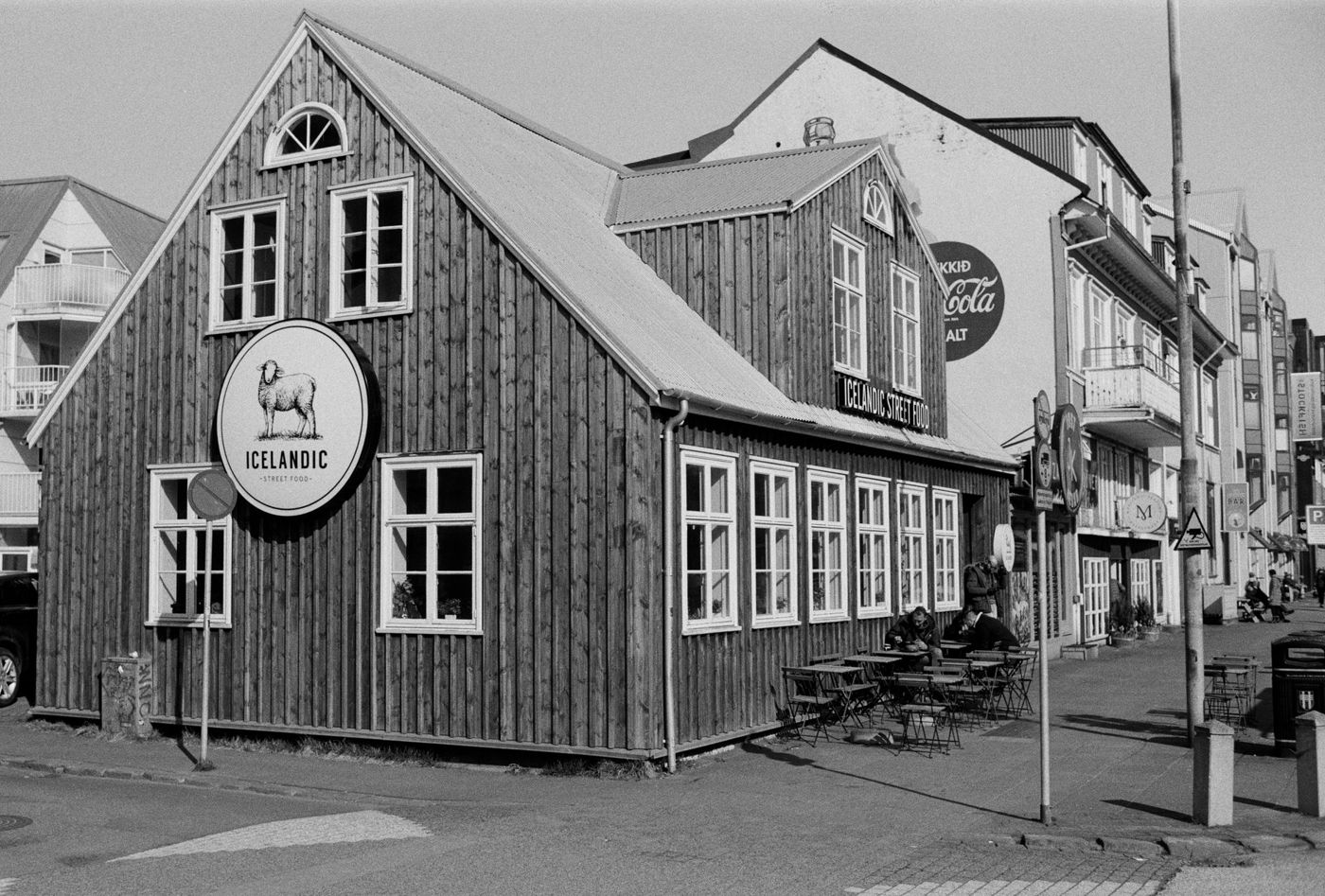
Anyone assembling a shortlist of places to eat in Reykjavik from photos alone will find the pricing genuinely hard to predict from the room or the plating. A minimalist dining room with paper napkins can be the mid-range tier, and a wood-panelled, old-fashioned looking restaurant can be the expensive one, because the signals a visitor uses at home, tablecloths, waitstaff formality, restaurant age, do not map onto price the same way in a small, tourism-heavy capital. The more reliable tell is the length and structure of the menu: a short, fixed or near-fixed tasting sequence is usually the top band: a longer a la carte menu with individually priced starters, mains and sides is usually the mid-range band.
The other thing worth correcting before arrival is the assumption that a tourist-facing location is automatically the expensive one and a side street is automatically the cheap one. Some of the most visited streets in the centre, Laugavegur especially, carry both a 900 ISK coffee counter and a reservation-only dinner room within a hundred metres of each other. Location on a map says nothing reliable about price; the menu format does.
What separates a good meal from a much-published ranking
Most published rankings of the top restaurants in Reykjavik are built from the same handful of tasting-format kitchens, reordered by whoever wrote the list, and that approach hides more than it reveals for a visitor planning a specific week. A ranked list cannot tell a reader whether a kitchen is booked out three weeks ahead or has same-day tables, and it rarely says whether the menu changes seasonally or nightly, both of which matter more to a short trip than the ordinal position. The more useful question is not which restaurant ranks highest but which one matches the night being planned: a last night in the city calls for a different kind of booking than a Tuesday spent mostly on a day tour.
A visitor who treats a ranking as a checklist, working down it night by night regardless of what else the day involved, ends up eating the same style of tasting menu on consecutive nights and running out of a week's budget by day three. Spacing a booked, top-tier dinner against nights built around a food hall counter or a bakery meal keeps both the palate and the budget from flattening out over a longer stay.
Dill, and why one kitchen dominates the conversation
Any search for the best restaurant Reykjavik has to eat around Dill, the tasting-menu kitchen most often credited with starting Iceland's New Nordic movement and the reason the phrase gets attached to Reykjavik dining at all internationally. Its reputation is not a marketing claim assembled for visitors; it is the kitchen the rest of the city's tasting-menu rooms are usually compared against, including Sumac and the harbour seafood counters covered above, each of which occupies a different register rather than competing directly with it. Booking here needs the same lead time as the other tasting-format kitchens in this guide, and for the same reason: a small room and a visitor season that does not thin out evenly.
The error worth avoiding is treating a single highly regarded kitchen as a stand-in for the whole city's dining scene. One outstanding tasting menu does not tell a visitor anything about what a Tuesday lunch or a food-hall dinner will cost, and building an entire week's food budget around the assumption that every meal will be Dill-adjacent in price is how a trip runs out of money by the fifth day. Treat it as the one or two nights a trip is built around, not as the baseline for the rest.
Bakeries, and the meals that never show up on a restaurant list
No restaurant list captures what a Reykjavik kitchen actually produces day to day for residents, because the everyday eating happens at bakeries and supermarkets rather than at any of the rooms visitors book ahead. Braud & Co, on Frakkastigur, and Sandholt, on Laugavegur, both open before most restaurants and both sell a full breakfast or brunch plate for a fraction of a sit-down dinner: Sandholt's cheapest breakfast plate runs from 1,390 ISK and its brunch plates from 2,690 to 3,290 ISK, with a coffee at a central bakery-cafe running around 650 ISK on its own. Braud & Co does not publish a price for its cinnamon roll, the pastry most associated with the bakery, so that figure has to be checked on arrival rather than budgeted from home.
Supermarkets do the same work at a steeper discount again: Visit Reykjavik names Bonus, Kronan and Pris as the cheapest chains in the city, and a visitor filling in two or three meals a week from a supermarket rather than a restaurant changes the week's total more than any single dinner choice does. Tap water is free and drinkable everywhere, which removes one more line from a daily total that a visitor used to bottled water abroad might otherwise budget for without thinking.
The dishes a menu names without explaining
A visitor reading a Reykjavik menu for the first time meets several dishes with no equivalent to translate against, and guessing wrong is the easiest way to order something unexpected on a night that was meant to be a treat. Plokkfiskur is a fish stew locals actually eat, boiled cod or haddock mashed with potato and onion, plainer and cheaper than its position on a tasting menu might suggest. Kjotsupa is a lamb soup with potatoes, carrots and turnips, closer to a home-cooked dish than a restaurant showpiece, and it turns up on cafe menus as often as on formal ones. Skyr is not a yoghurt, despite sitting next to yoghurt in most fridges and most descriptions; it is a fresh cheese, and ordering it expecting yoghurt's tartness or texture sets up a small disappointment that has nothing to do with the kitchen.
Fermented shark sits at the other end of the same problem: it is sold in the city's supermarkets, traditionally taken with a shot of brennivin, and it is offered on some tourist-facing menus as a dare rather than as an everyday dish, which is worth knowing before ordering it expecting a normal course. None of these dishes cost more than a mid-range plate, so trying one is a low-risk way to spend a meal, provided the visitor knows in advance roughly what is arriving.

Hotel breakfast against an early tour departure
Most hotel breakfast service in central Reykjavik runs from 07:00 to 10:00, a window that assumes a guest is either sleeping in or leaving the hotel after nine. A Golden Circle or south coast tour departure is frequently earlier than that, and a visitor who books a full-day tour without checking the hotel's breakfast hours against the pickup time can end up choosing between missing the meal entirely and missing the pickup. Some hotels sell a grab-and-go breakfast bag for exactly this situation, priced from 2,900 ISK, which is worth asking about at check-in rather than discovering at 06:30 on the morning of the tour.
The other option that costs nothing extra is planning around the bakeries rather than the hotel. Braud & Co opens at 06:30 and Sandholt at 07:30, both early enough to cover a pickup that the hotel's own breakfast service cannot, and both sell a plate that travels well in a paper bag onto a coach. A visitor who checks pickup times against breakfast hours before booking either the tour or the room avoids a decision that otherwise gets made in a rush the night before.

What nobody prints a price for, and how to plan around it
A few things a visitor will want to know before a trip simply are not published anywhere official, and no amount of searching turns up a number that does not exist. What a main course costs at an ordinary mid-range restaurant, as a single averaged figure, is not published by Statistics Iceland or by Iceland's tourist board, unlike the hot dog price, which the country's own press tracks closely enough to report a change of a few hundred krona. Braud & Co's cinnamon roll price is the same kind of gap: a signature item at a well-known bakery, and no figure printed anywhere that can be quoted with confidence. The practical answer is to treat any number for either of these as something to confirm at the counter or on the day, rather than something to plan a budget around in advance.
The tipping question sits in the same category from a different angle: Iceland's restaurant prices already include VAT and service is not customarily added on top the way it is in the United States, so a visitor budgeting an extra 15 to 20 percent onto every bill the way they would at home is budgeting for a cost that Icelandic restaurants do not expect. Rounding up a bill for good service is common and welcome without being obligatory, which changes the total for a week of dining more than most of the individual dish prices do.
Common questions
Do restaurants in Reykjavik expect a tip?
Restaurant prices already include VAT and service is not added automatically. Rounding up for good service is common but not expected the way it is in the United States.
Is the hot dog at Baejarins Beztu really worth queuing for?
At 880 ISK for one with everything, it is priced well below almost anything else in the city centre, which is a large part of why it stays busy at both the harbour stand and the 24-hour branch on Austurstraeti.
Do I need to book Dill or Sumac weeks in advance?
Both are small rooms during a visitor season that does not thin out evenly across the year, so booking a specific date before the rest of the itinerary is set is safer than waiting.
Can I get breakfast before a 7am tour pickup?
Most hotel breakfast service starts at 07:00, so a bakery open earlier, or a hotel's grab-and-go breakfast bag, covers a pickup the hotel's own service cannot.
Is tap water safe to drink instead of buying bottled water at restaurants?
Yes, tap water in Reykjavik is free and drinkable everywhere, and ordering it instead of bottled water is a routine way to trim a restaurant bill.