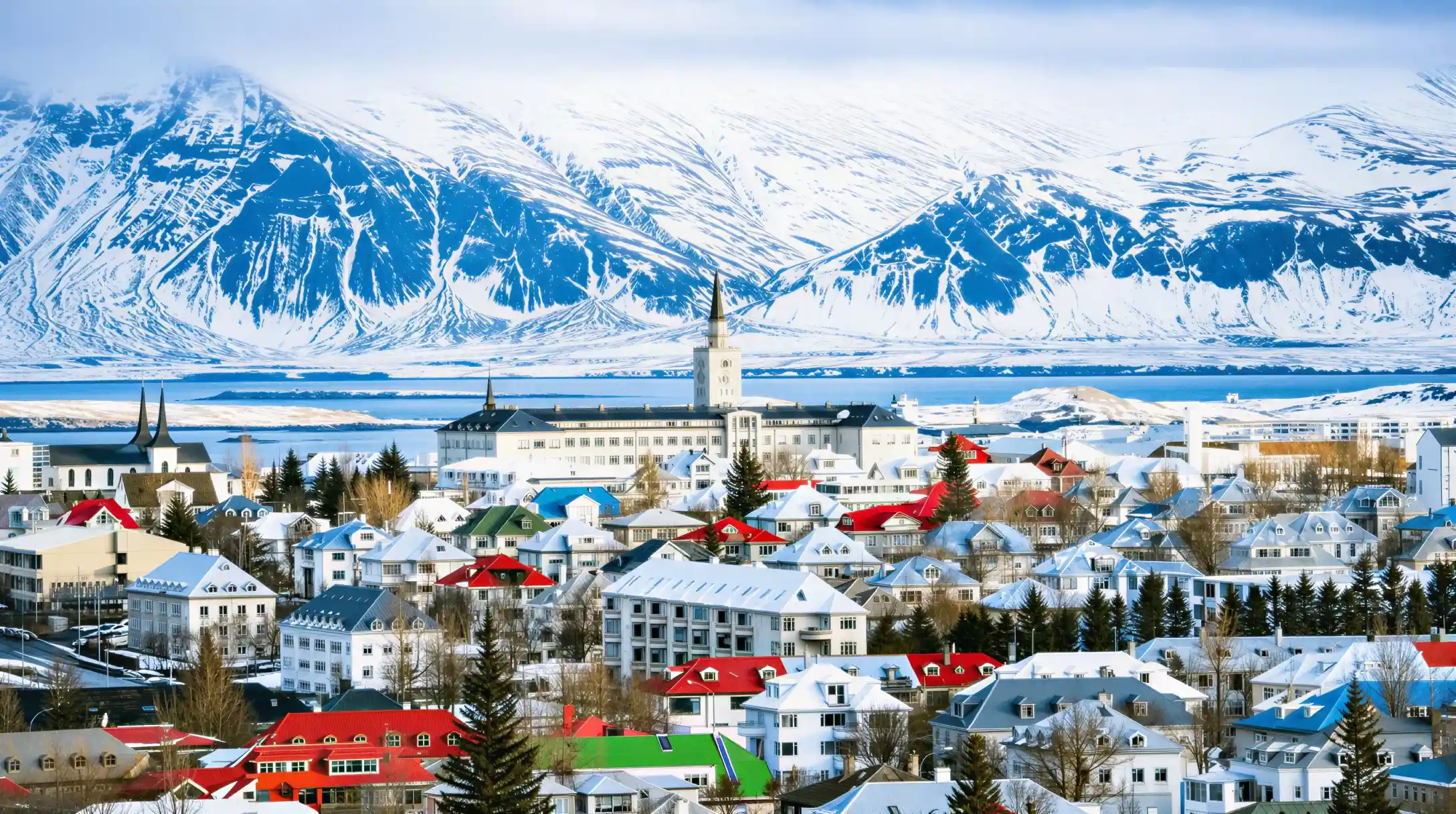
Most people booking iceland glacier tours from Reykjavik assume any glacier on the map is a walk-up. It is not. Sólheimajökull and Langjökull sit two to three hours from the city by road, and the ice itself is never open to an unguided visitor: crampons, a harness and a certified guide are required before anyone steps past the moraine. This page settles which glacier suits a first-timer, a snowmobiler and someone who wants to climb ice rather than just walk on it, and what each option actually includes. It also settles how far the drive runs and what a booking needs to include before it counts as safe. What it leaves alone is the rest of the south coast itinerary around the glacier, covered on its own page.
The two glaciers sold from Reykjavik are different trips with different demands. Sólheimajökull is an outlet tongue of Mýrdalsjökull, reached by a short hike from a car park, and it is walked on foot with a guide. Langjökull is Iceland's second-largest ice cap, reached by a modified vehicle or a snowmobile, and most of the visit happens sitting down rather than walking. Neither is a casual add-on to a sightseeing day: both need a half day or more once the drive from Reykjavik is counted, and both are weather-dependent in a way a city tour is not.
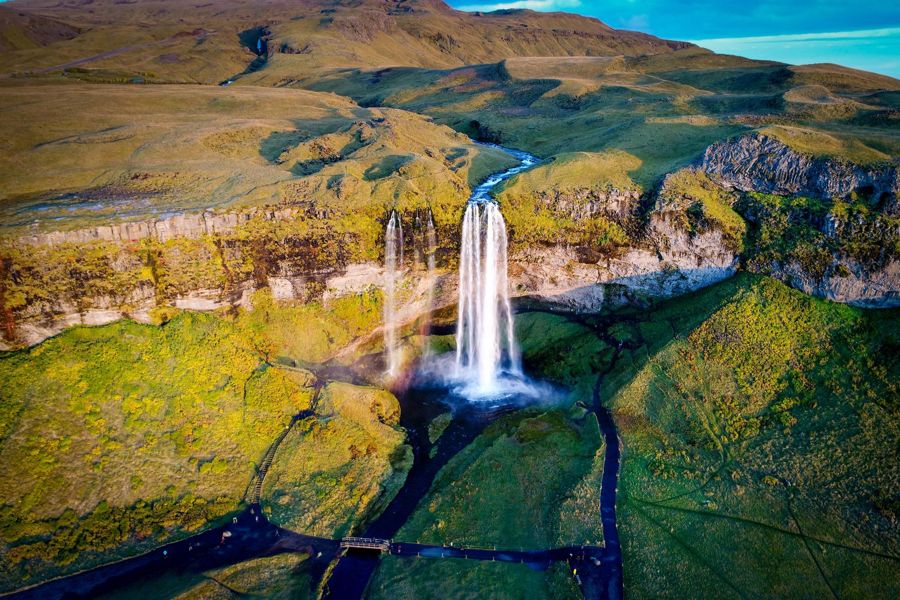 Our pick
Reykjavik: South Coast Waterfalls, Black Sand & Glacier Tour
South coast waterfalls, black sand beach and a glacier stop
First-timers combining the south coast with a glacier view
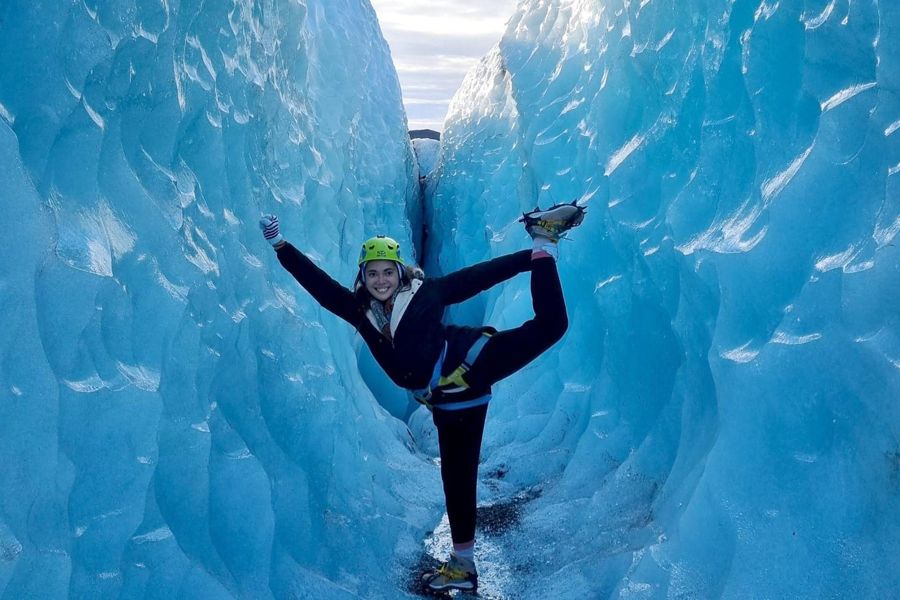
Reykjavik: Glacier Hike, Waterfall and Black Sand Beach
Guided glacier hike plus waterfall and black sand beach stops
Travelers who want to walk on the ice, not just see it
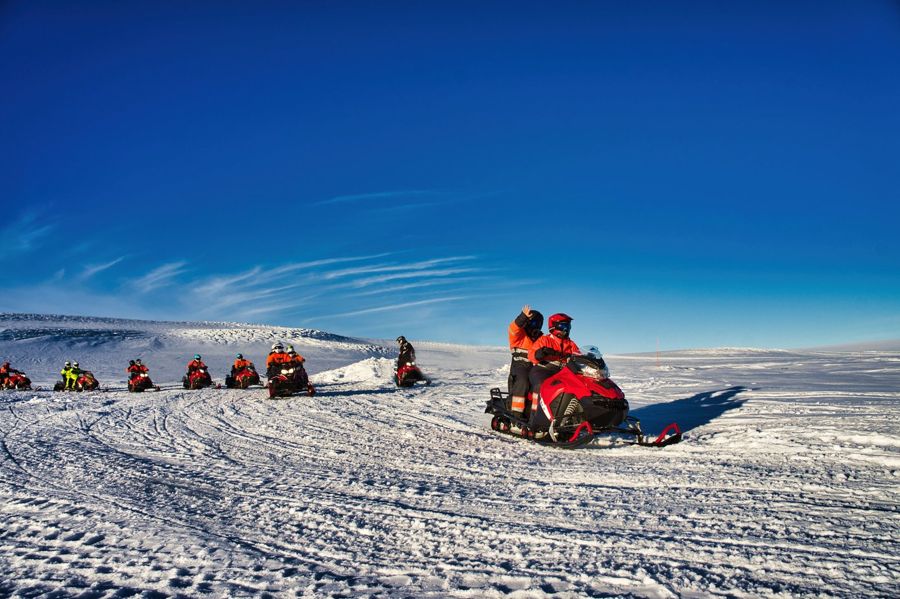
From Geysir: Snowmobile Adventure on Langjökull Glacier
Snowmobiling on Langjökull glacier, departing from Geysir
Travelers already in the Golden Circle area wanting a glacier add-on
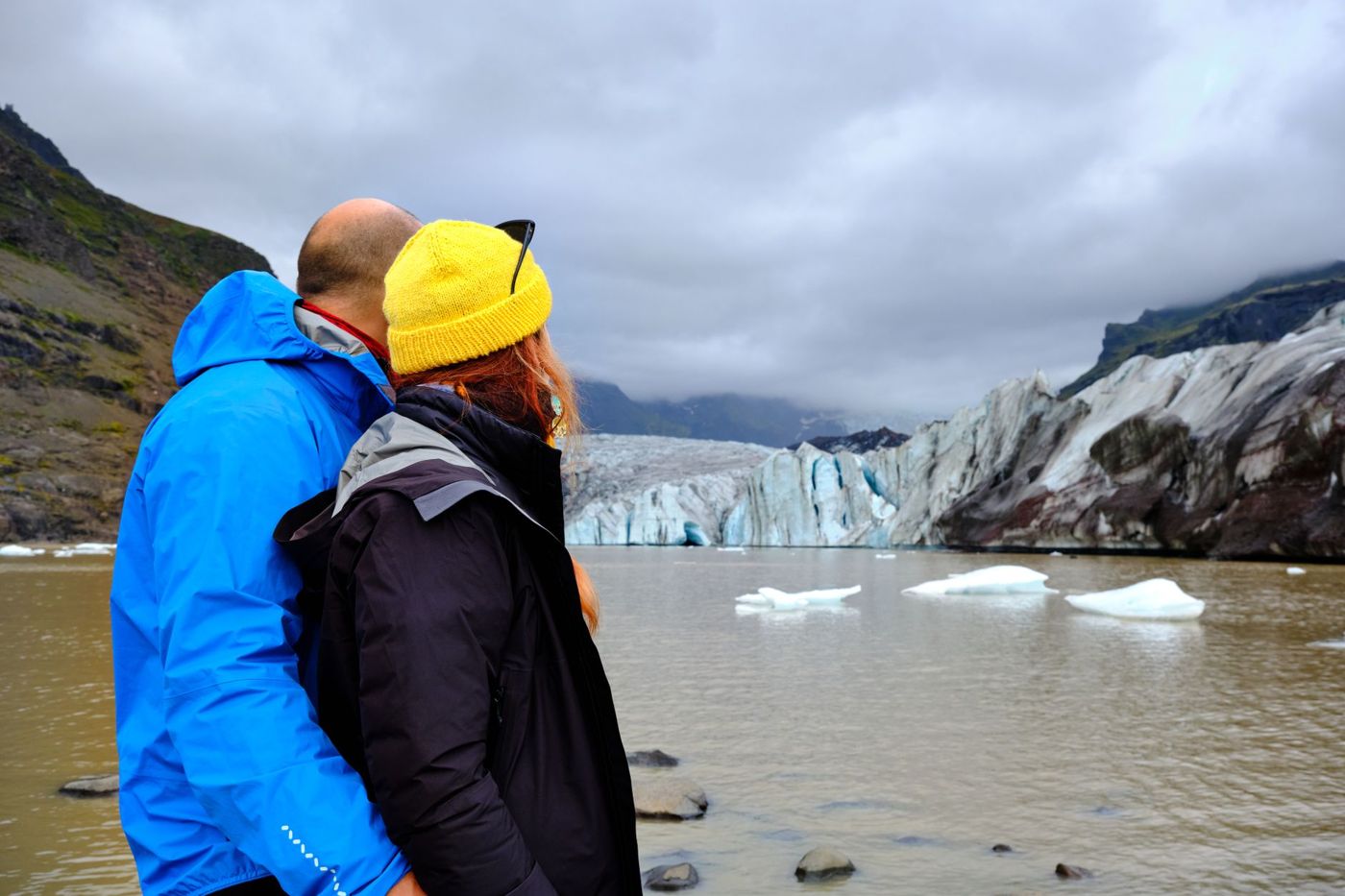
What the glacier tongue at Sólheimajökull actually looks like
A common mistake is picturing Sólheimajökull as a single fixed sheet of ice a short walk from the car. The access itself has changed: Route 1 leads to Road 221, Sólheimajökulsvegur, then a further 4 km of gravel road to the parking area. Parking costs 750 ISK for a private car and 1,800 to 6,400 ISK for a tour bus, and the toilet at the car park adds 300 ISK. The glacier tongue itself runs about 11 km long and 1 to 2 km wide, ranging from 100 m to 1,350 m in elevation, and it has lost 120 to 150 m of ice thickness since 1960.
The ice has not moved in one direction. It retreated 977 m between 1930 and 1969, then advanced 495 m between 1969 and 1995, and it has retreated a further 445 m since 2010, including 37 m in the single year from autumn 2021 to September 2022. A proglacial lagoon began forming at the glacier's edge in 2011 and now reaches 54 m deep. None of this is a reason to skip a into the glacier tour iceland style trip, but it is why the current edge of the ice looks nothing like photographs from a decade ago and why a guide is checking the route each time, not walking a fixed path.
The area sits within the Katla UNESCO Global Geopark, and the glacier itself is an outlet of Mýrdalsjökull, Iceland's fourth-largest ice cap. Underneath sits Katla, a subglacial volcano with at least 21 recorded eruptions in the last 1,100 years, capable of triggering a glacial outburst flood in a short window if it erupts. Stepping onto the ice or onto the ridge at the lagoon's edge without a guide is unsafe: a new lagoon has formed east of the tongue, the ice ridge connecting to it has thinned, and rockfall risk exists along the route below Jökulhaus mountain, according to the Icelandic Meteorological Office. Operators have cancelled walks here as a precaution while scouting safer routes around the unstable margin, and unguided access to the ice itself is never permitted, since walking on it requires crampons and a certified glacier guide.
Choosing between a walking tour and a snowmobile tour
Travelers often assume the best glacier tour iceland has to offer is whichever one appears first in a search result, rather than the one that matches their fitness and time budget. A walking tour on Sólheimajökull suits someone who wants to feel the ice underfoot and is comfortable on an hour or more of uneven ground in crampons. A snowmobile tour on Langjökull suits someone short on time or mobility, since most of the experience happens seated, guided across the ice cap rather than walked. Neither is harder to book than the other, but they answer different questions about what a visitor wants from the day.
Distance also separates the choices. Sólheimajökull is 165.1 km from Reykjavik by road, a drive of about 150 minutes each way, which makes it a long half-day or a full day once the hike and any south coast stops are added. A glacier tour iceland vatnajökull itinerary, by contrast, reaches a different ice cap entirely and typically runs as a multi-day trip rather than a single day out of the city, since Vatnajökull sits far to the east on the south coast route. Anyone comparing the two should decide first whether a single day or several days is available, because the two glaciers are not interchangeable stops on the same afternoon.
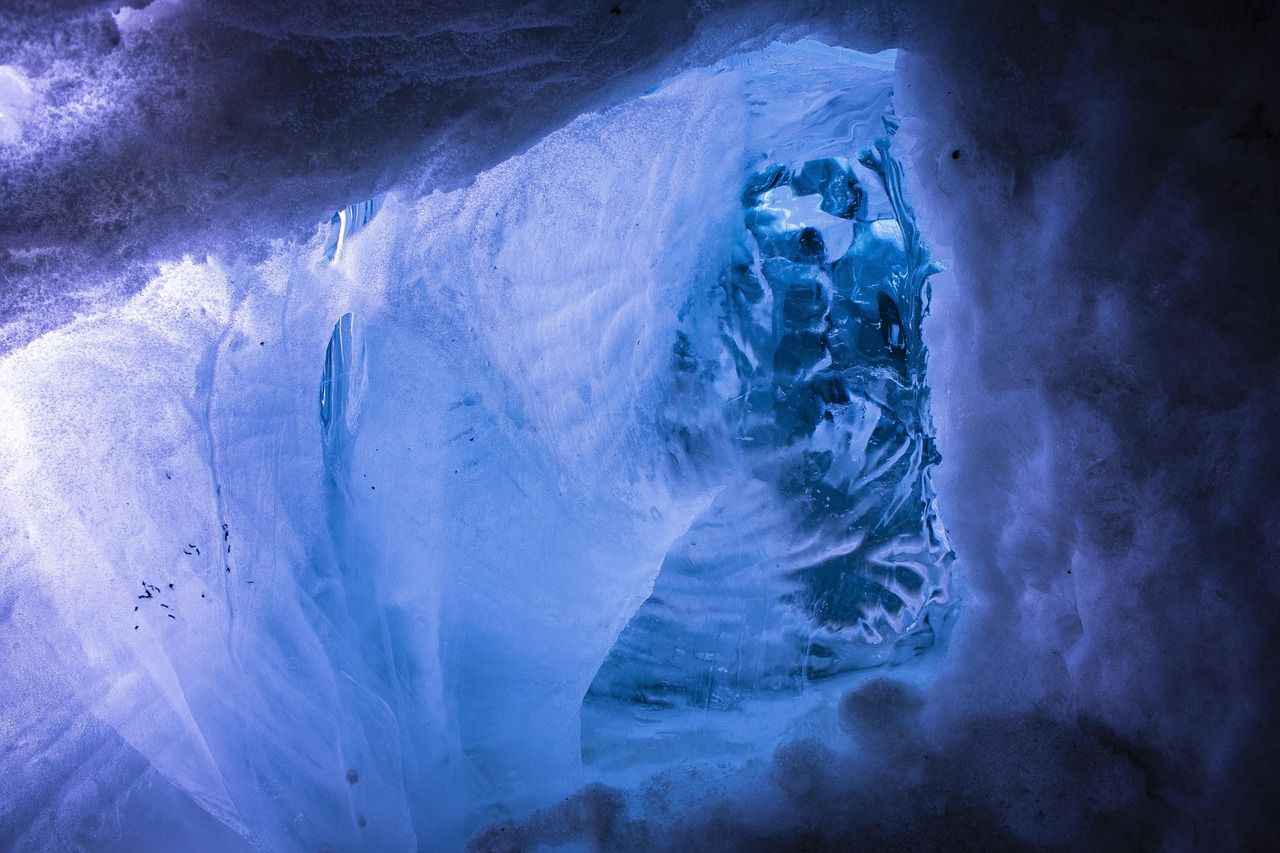
Blue ice caves, where visible, are a winter product only, running mid-October to the end of March, and they are separate from the standard glacier walk, which runs year-round subject to weather and ice conditions. A booking that advertises an ice cave outside that window is describing something other than a natural cave.
What fitness a glacier walk actually requires
A frequent misunderstanding is treating a glacier hike tour iceland operators sell as equivalent to a paved sightseeing walk. It is not flat, and the surface changes underfoot: bare ice, snow patches, meltwater channels and loose moraine can all appear inside the same hour. Crampons are fitted and worn for the ice sections, and a guide sets the pace and the route, since routes are re-checked as the ice margin shifts. A reasonable level of walking fitness, the ability to manage uneven ground for an hour or more, and suitable warm, waterproof layers matter more than any technical climbing skill for the standard walking tours.
Footwear supplied by the operator typically fits over normal winter boots, and loose or slippery shoes are the most common reason a guide holds someone back from a section of the group. Weather changes fast on an exposed ice tongue, so wind and cold matter even on a day that looks mild from the car park. None of the standard walking products require prior glacier experience, but they do require a guide's clearance on the day, which depends on conditions rather than on the booking alone.
What ice climbing adds to a standard walk
An iceland ice climbing tour is not the same booking as a glacier walk, even when both depart from the same car park at Sólheimajökull. Climbing adds a harness, an ice axe in each hand and a guide belaying from above or alongside, and it usually follows an introductory walk across the lower ice before reaching a face suited to climbing. No prior climbing experience is required for an introductory product, but upper body strength and comfort with exposure make the climbing section considerably easier than arm strength alone would suggest from a walk.
Because the glacier's surface features move year to year, from the 977 m of documented retreat between 1930 and 1969 to the more recent retreat since 2010, the specific ice faces used for climbing are chosen by the guide on the day rather than fixed in the marketing photos. Groups are kept small enough for one guide to belay each climber in turn, so waiting between climbs is normal and part of the pacing rather than a delay.
Sólheimajökull, in numbers
- Distance from Reykjavik
- 165.1 km (102.6 mi)
- Driving time
- 150 min
- Glacier tongue length
- 11 km (6.8 mi)
- Glacier tongue width
- 1-2 km (0.6-1.2 mi)
- Elevation range
- 100-1,350 m (328-4,429 ft)
- Retreat since 2010
- 445 m (1,460 ft)
- Parking fee, private car
- 750 ISK
- Blue ice cave season
- Mid-October to end of March
Booking the right level of guided access
A glacier walk tour iceland operators run is always guided, and that guiding is the product, not an optional extra bolted onto a self-directed hike. The certified guide decides the route each departure, checks crampon fit before the group leaves the moraine, and holds the pace to the slowest capable walker rather than the fastest. This matters more at Sólheimajökull than it might elsewhere, since the current hazard notes from the Icelandic Meteorological Office describe a thinned and unstable ice ridge near the lagoon and rockfall risk along part of the access route, both of which shape where a guide is willing to take a group on a given day.
Group sizes and start times vary by operator and are shown at booking, and cancellation for weather or ice conditions is handled by the operator directly rather than by the visitor guessing in advance. A booking confirmation is not the same as a guarantee of reaching the ice: conditions are checked again on the morning of departure, and a route change or a shortened walk is a safety decision rather than a shortfall in the product.
Distance and drive time from Reykjavik
| Glacier | Distance | Driving time |
|---|---|---|
| Sólheimajökull | 165.1 km (102.6 mi) | 150 min |
- Distance
- 165.1 km (102.6 mi)
- Driving time
- 150 min
Where Vatnajökull fits into a Reykjavik-based trip
Vatnajökull National Park protects Iceland's largest ice cap, and an iceland vatnajokull tour reaches a different part of the country from the glaciers closer to the capital. It sits further along the south coast, well past Sólheimajökull, which puts it out of range for a single day trip out of Reykjavik in the way a shorter drive to Sólheimajökull is not. Visitors who want to add Vatnajökull to an itinerary are generally looking at an overnight stay or a multi-day route down the south coast rather than a day trip and a return to the city by evening.
The park itself sets the rules for access within its boundaries, and any glacier walk or ice cave visit inside Vatnajökull follows the same principle as Sólheimajökull: a certified guide and proper equipment are required, and unguided access to the ice is not permitted. Weather and seasonal conditions govern which parts of the ice cap are open to visitors at any given time, the same as at the glaciers nearer the capital.
How close the nearest glaciers really are
Travelers scanning a map sometimes expect glaciers in iceland near Reykjavik to be a short suburban drive, closer to the way a city park sits near a downtown hotel. The nearest regularly toured glacier, Sólheimajökull, is 165.1 km away, a drive of about 150 minutes each way on Route 1 before the final gravel stretch of Road 221. Langjökull tours typically depart with a pickup from Reykjavik or from a meeting point along the Golden Circle route, adding travel time on top of the time spent on the ice itself.
This distance is the reason most glacier products are sold as a half day or full day rather than a short excursion, and it is worth building the drive into any time budget alongside the walk or snowmobile ride itself. A morning departure from Reykjavik is standard for the full-day products, since the round trip alone accounts for several hours before any time on the ice is counted.
Common questions
Is a glacier hike near Reykjavik safe for a first-timer?
Standard walking tours are guided by a certified glacier guide who fits crampons and sets the route, and no prior experience is required. Fitness for an hour or more on uneven ground and warm, waterproof clothing matter more than technical skill.
Can visitors walk onto the glacier without a guide?
No. Unguided access to the ice at Sólheimajökull is not permitted, and the current hazard warnings from the Icelandic Meteorological Office cover an unstable ice ridge and rockfall risk near the lagoon.
What is the difference between a Sólheimajökull tour and a Langjökull tour?
Sólheimajökull tours are walked on foot from a car park reached off Route 1. Langjökull tours mostly use a snowmobile or a modified vehicle on Iceland's second-largest ice cap, and most of the visit happens seated rather than walked.
When can visitors see a blue ice cave?
Natural blue ice caves are a winter product, open roughly mid-October to the end of March. Outside that window, any ice cave sold is a different kind of product, not the natural blue ice cave.
How far is the drive from Reykjavik to the nearest glacier?
Sólheimajökull is 165.1 km from Reykjavik, about 150 minutes of driving each way before accounting for the final gravel access road.