
Booking a whale watching trip in Reykjavik is not the same decision in every month, and the boat you choose changes what the three hours actually feel like. A rigid-hulled speedboat gets to open water faster and turns quickly on a sighting; a larger cruise boat gives more shelter, a cabin to warm up in, and a steadier ride for anyone prone to seasickness. This page settles which type suits which traveller, when a puffin add-on is worth booking and when it is only a boat ride, and where to go instead if the weather closes the harbour. Sailings leave from Reykjavik's old harbour year round, with the heaviest schedule in the warmer months. A reader planning around northern lights season or a rainy afternoon in the city will find both covered below, alongside a museum that works regardless of what the sea is doing that day.
 Our pick
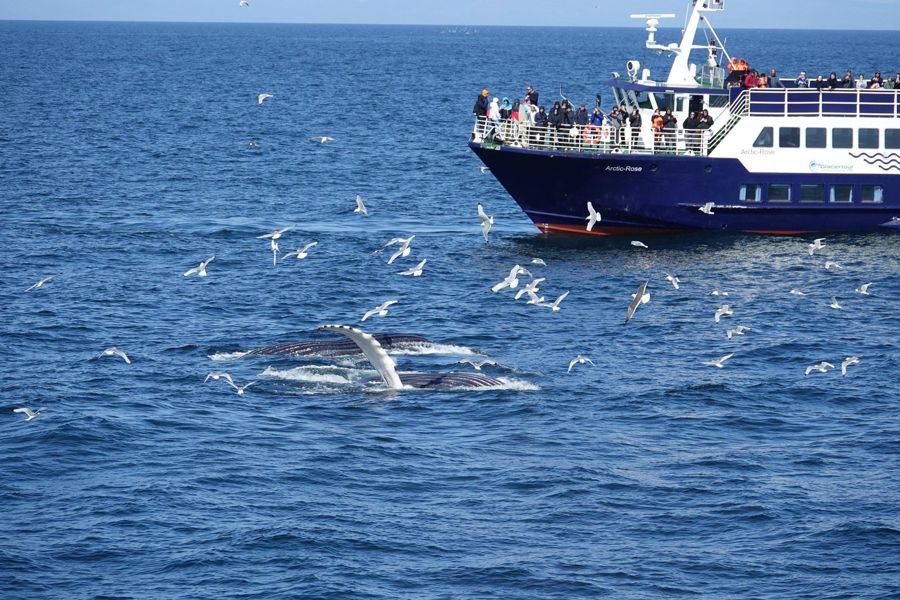
Reykjavik: Whale Watching and Marine Life Cruise
Marine life cruise from Reykjavik old harbour
Travellers who want the widest-reviewed option
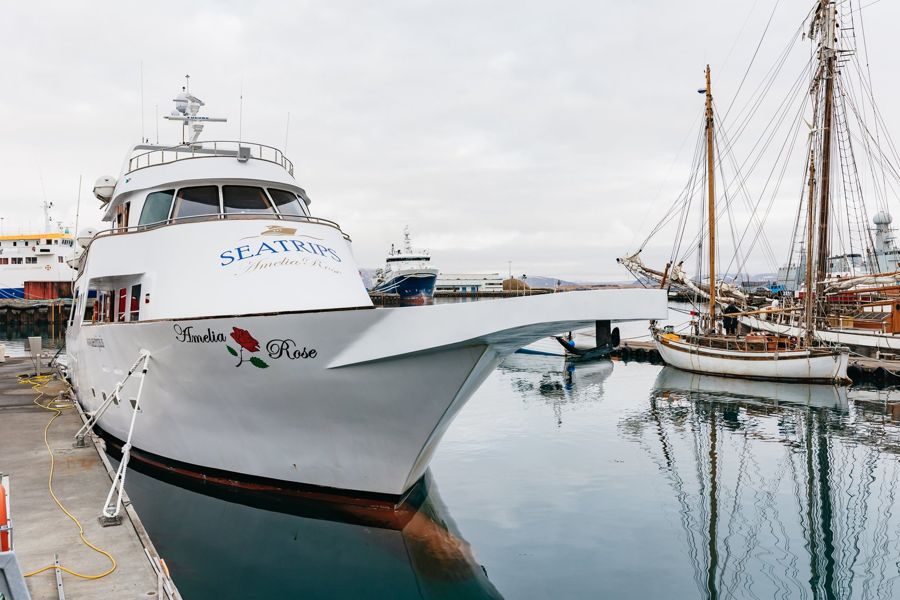
Reykjavik: Whale Watching Cruise on the Amelia Rose Yacht
Cruise aboard the Amelia Rose yacht
Travellers who prefer a yacht over a RIB or a large cruise boat
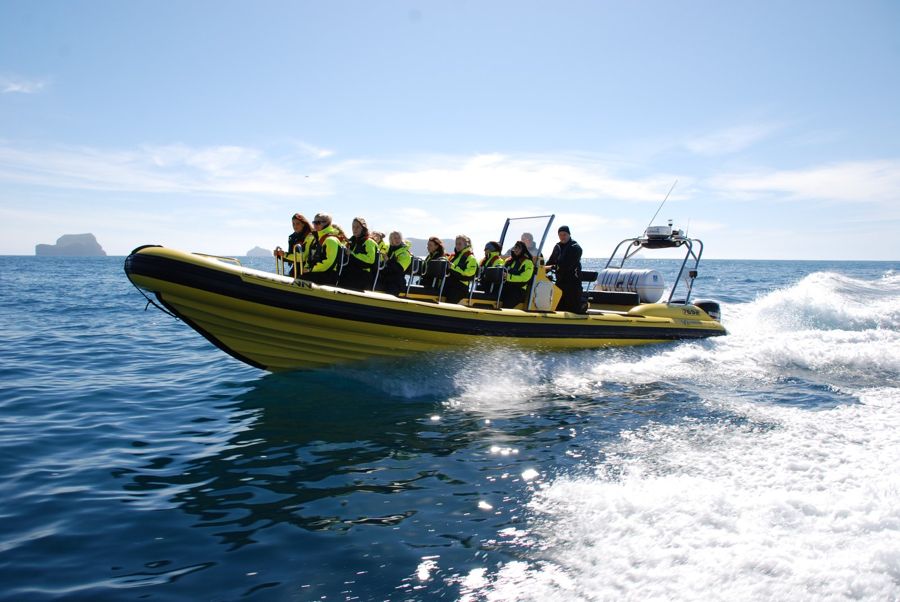
Reykjavik: Whale Watching by RIB Speedboat
Speedboat cruise, RIB hull
Travellers who want the fastest boat to open water
Combining whales and puffins on one sailing
A reader who books a whale watching and puffin tour iceland listing in September or later is booking a boat that passes the islands, not a puffin sighting. Puffins are on the islands off Reykjavik roughly May to August, and outside those months no boat can show one no matter what the listing photograph implies. Inside that window the combination works well: the same sailing that takes a boat out toward known whale grounds can swing past the skerries where puffins nest, so a traveller gets two subjects on one ticket instead of two separate bookings.
Timing the visit around late May through July gives the best odds of seeing puffins actively coming and going from burrows, since that stretches through the core of the nesting season named above. Anyone travelling in April or from September onward should treat an iceland whale and puffin tour as a whale trip with scenery, not as a puffin guarantee, and choose it on the strength of the whale watching itself rather than the puffin promise printed on the box.
Whale sailings themselves run all year, with a strong summer skew in scheduling and frequency. A winter booking is not a lesser version of the summer one; it simply will not include puffins, whatever month the operator's photos were taken in.
Choosing a boat for how the sea will feel
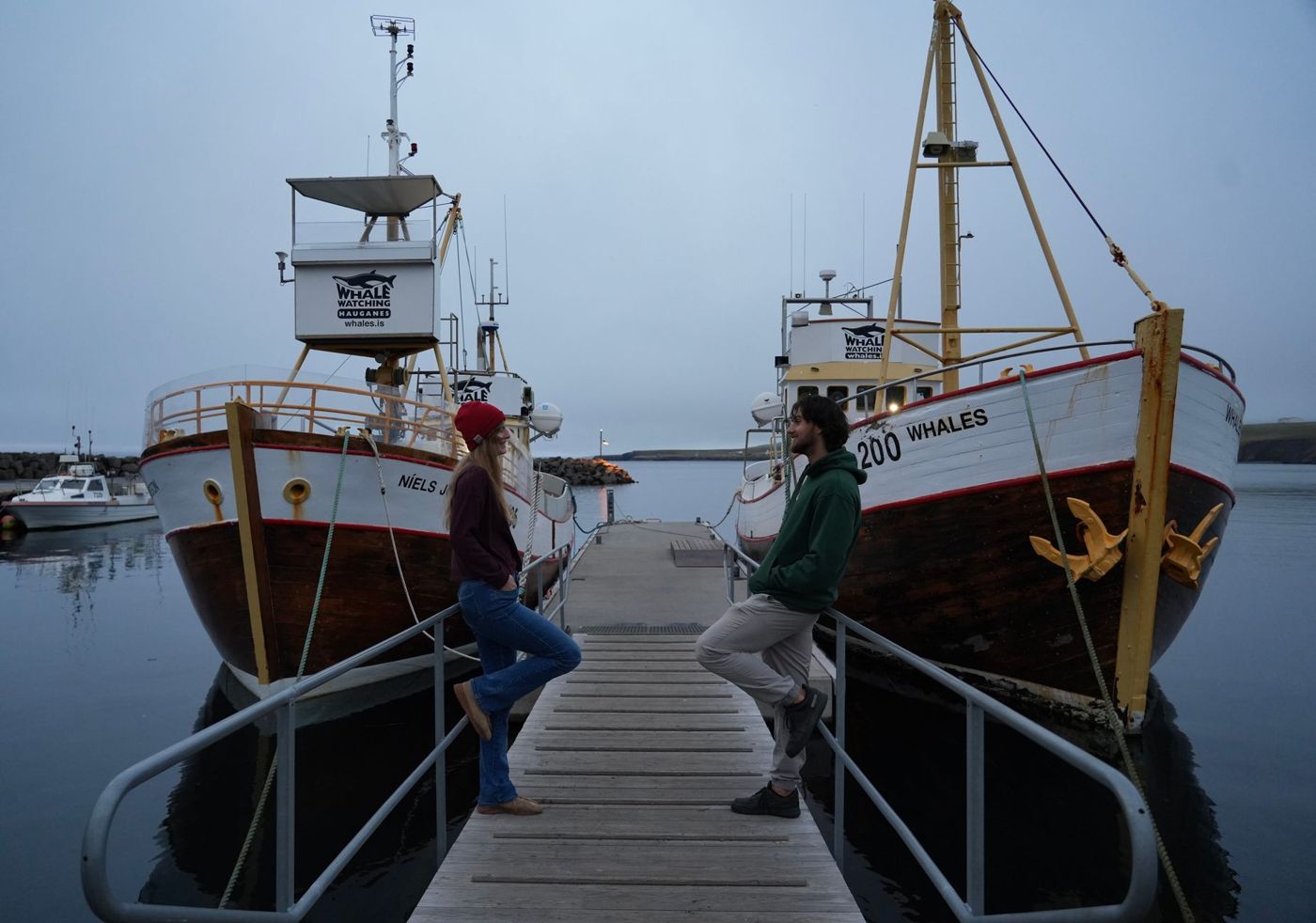
The mistake is picking a whale watching tour iceland listing on price alone and ignoring the hull. A RIB speedboat sits low, moves fast and feels every swell directly, which suits a traveller who wants speed and does not get seasick easily. A larger cruise boat rides higher, has a covered cabin and a toilet on board, and suits a family, an older traveller, or anyone unsure how their stomach will handle open water. Neither type is better in the abstract; the harbour conditions on a given day and the passenger's own tolerance decide which one to book.
Anyone prone to motion sickness should choose a larger boat over a RIB and take precautions before boarding rather than during the sailing, since medication and timing both work better taken ahead of the swell than after it starts. Reading reviews for mentions of rough crossings on a specific route is more useful than trusting a single average rating, because sea state on the day varies more than any boat's general comfort level.
Whale watching trips from Reykjavik depart from the old harbour regardless of hull type, so the walk to the dock is the same whichever boat a traveller books; what differs is everything from the moment the ropes come off.
What a sighting actually depends on
A common assumption is that any whale tour iceland operator can promise a particular species on a particular day. No boat controls where whales surface, and the mix of species seen shifts through the year rather than staying constant. What a good operator controls is where it searches, how experienced the crew is at reading the water, and how it handles a slow day, not which animal appears.
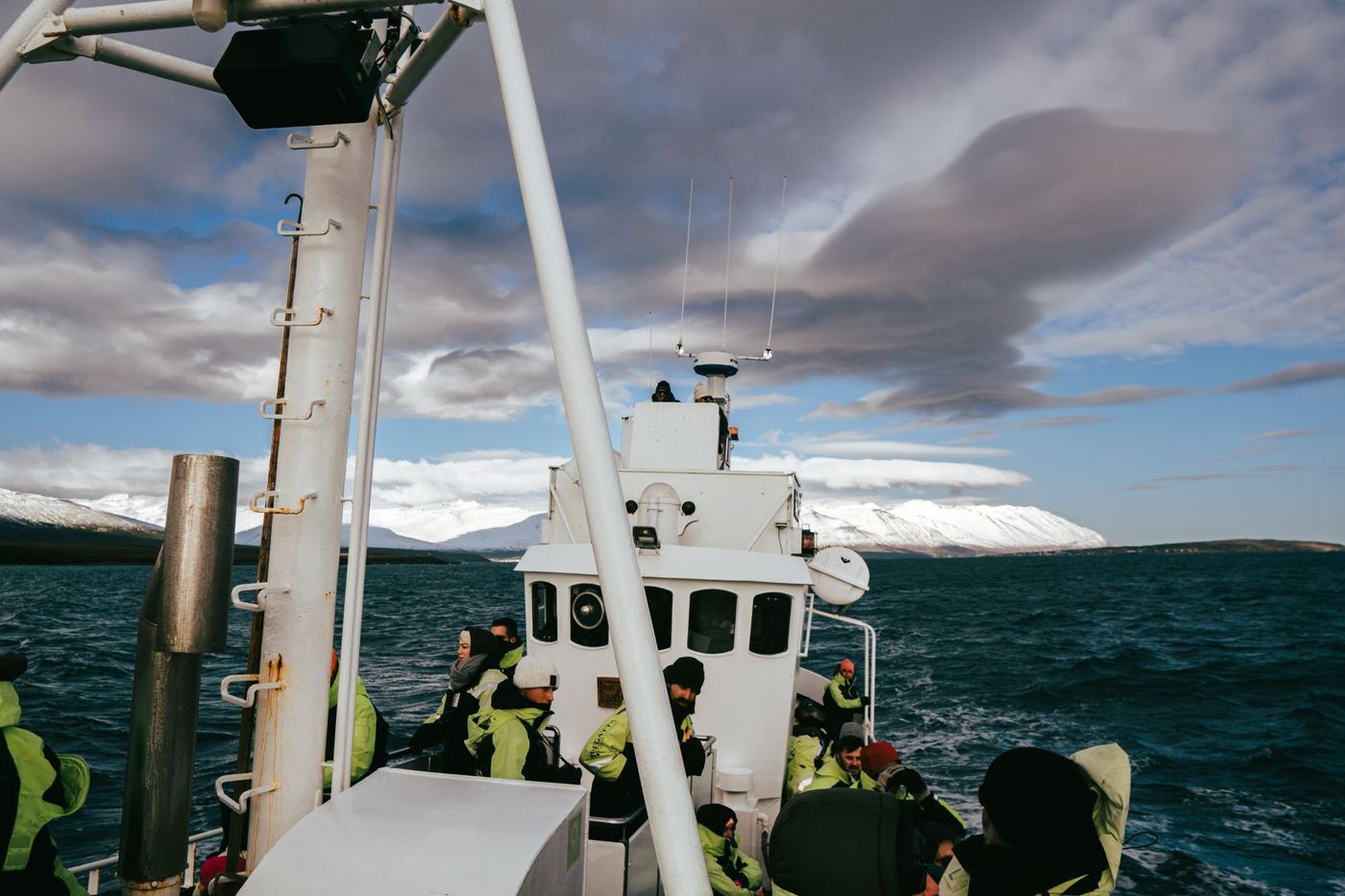
Dress for the boat rather than for the harbour: temperatures on open water run colder than on land even in summer, and a windproof outer layer matters more than how warm the forecast looks from the dock. Binoculars help but are not required, since most operators position the boat close enough for a sighting to be visible without them.
A three-hour sailing is long enough to travel out to known grounds, spend time searching, and return, and that structure holds whether the boat is a RIB or a larger cruise vessel. Shorter express options exist for travellers with less time, trading search time for a faster return to the harbour.
Getting to the departure point
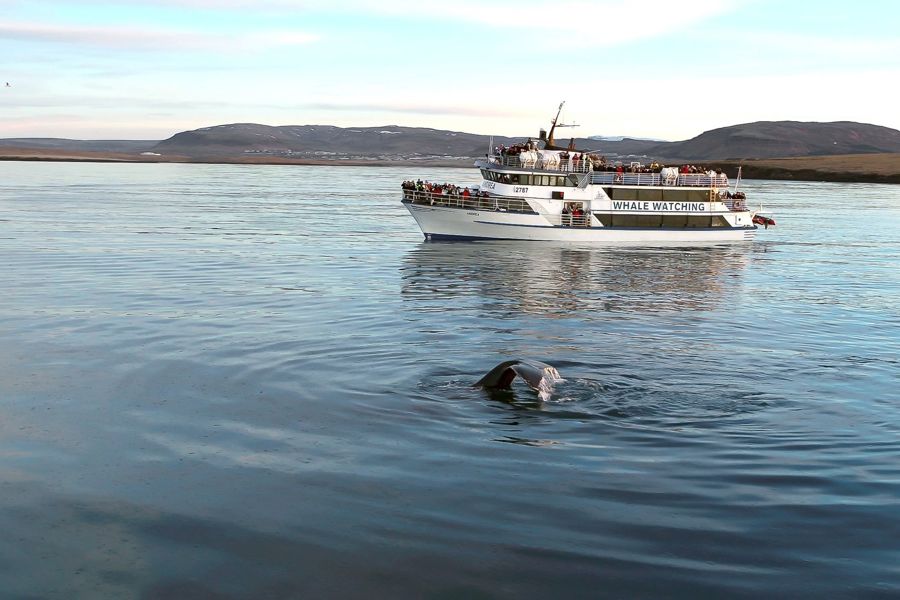
Whale watching from Reykjavik harbour starts at the old harbour area, a short walk from the city centre rather than a transfer to an outlying dock. A traveller staying downtown can walk to check-in; anyone staying further out should allow time for a bus or taxi rather than assuming the harbour is within easy walking distance from every neighbourhood.
Arriving early matters more than the sailing time itself, since check-in, safety gear and boarding all happen before the boat leaves and a late arrival can mean missing the departure entirely. The harbour area also holds several operators side by side, so a traveller who has not pre-booked can compare departure times in person, though availability in the warmer months tightens quickly and booking ahead avoids a wasted trip to the dock.
Weather on the day can delay or cancel a sailing regardless of how the harbour looks at check-in time, since conditions further out can differ from what is visible from land.
| Item | Detail |
|---|---|
| Puffin season | Roughly May to August |
| Whale sailings | All year, strong summer skew |
| Whale watching cruise, top-rated | 4.63/5 from 803 reviews |
| Whales of Iceland admission, adult, list | 4300 ISK |
| Whales of Iceland admission, adult, online | 4000 ISK |
- Detail
- Roughly May to August
- Detail
- All year, strong summer skew
- Detail
- 4.63/5 from 803 reviews
- Detail
- 4300 ISK
- Detail
- 4000 ISK
Comparing whale watching tours by what is included
Not every listing for whale watching tours Reykjavik includes the same extras, and reading past the headline price matters. Some include hot drinks and a warm overall suit on board; others are bring-your-own-layers. A traveller comparing tours should check whether wet-weather gear is provided before assuming a windproof jacket alone will be enough for three hours on open water.
Reviews and ratings differ by operator and by boat type rather than by route, since most boats search similar grounds. A tour with a smaller passenger count on a RIB tends to feel more personal and can reposition faster on a sighting, while a larger boat carries more passengers and moves more slowly between viewing spots. Choosing between them is a trade between intimacy and comfort rather than between good and bad options.
Checking the includes line against the best-for note before booking avoids the common mistake of choosing on rating alone when the actual difference between two similarly rated tours is the boat, not the crew.
Sailing in the colder months
Winter whale watching Reykjavik trips run on a lighter schedule than summer but do operate, since sailings continue all year with only the frequency thinning out in the darker months. Daylight hours are shorter, so a winter sailing is more likely to be scheduled around the limited daylight rather than at a traveller's preferred time, and checking the operator's actual departure times for the month of travel matters more than assuming a summer timetable applies.
Cold-weather layers matter more in winter than the boat type chosen, since wind chill on open water in December differs sharply from July even on a calm day. A cruise boat with an enclosed cabin gives more relief from the cold than a RIB does, which is worth weighing alongside comfort with speed and motion.
Winter sailings will not include puffins, since the nesting season named earlier has ended by autumn and does not resume until spring. A winter booking should be chosen for the whale watching itself.
When the harbour is not an option
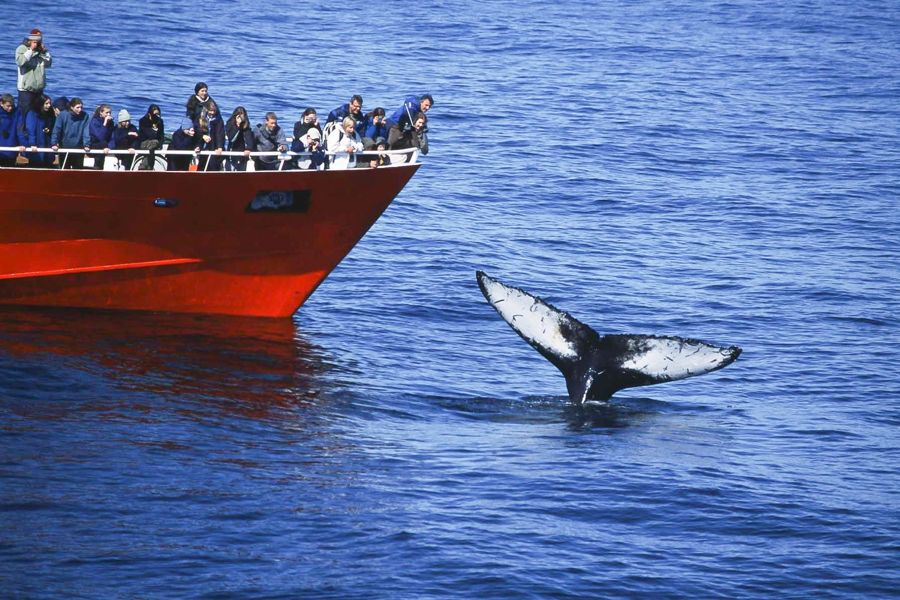
A cancelled sailing or a day with no boat slots left does not have to mean an empty afternoon. A whale watching trip Reykjavik booking can be rescheduled with most operators if conditions force a cancellation, and checking the operator's own policy at booking time avoids surprises later. For a rainy day or a gap before a rescheduled sailing, Whales of Iceland at Fiskislod 23-25 in the Grandi district holds 23 life-size models covering species from blue and fin whales to orcas and porpoises, entirely indoors on a single level.
The museum is about a 15-minute walk from the city centre, and city bus 14 stops outside for anyone not wanting to walk. It opens daily from 10:00 to 17:00, including holidays, with the single exception of 25 December. A free audio guide covers the exhibition in seventeen languages, and daily guided tours run at 11:00 and 15:00 in English.
Travellers weighing safety questions around Iceland more broadly, from road conditions to entry rules, can check the US Department of State's country information for Iceland before departure, since conditions and advisories change.
Common questions
Will a September tour include puffins?
No. Puffins are on the islands roughly May to August, so a September sailing is a whale watching trip without a puffin sighting, regardless of what a combo listing implies.
Do whale watching boats run in winter?
Yes. Sailings continue all year from Reykjavik's old harbour, though the schedule thins out compared with the summer months.
Is a RIB speedboat or a larger cruise boat better for seasickness?
A larger cruise boat rides higher and more steadily, which suits anyone prone to motion sickness better than a low, fast RIB.
What can be done on a day with no whale watching availability?
Whales of Iceland in the Grandi district is an indoor, single-level museum open daily, a short walk or bus ride from the city centre.
How long does a standard whale watching tour take?
Around three hours, covering the trip out to known grounds, time spent searching, and the return to the harbour.