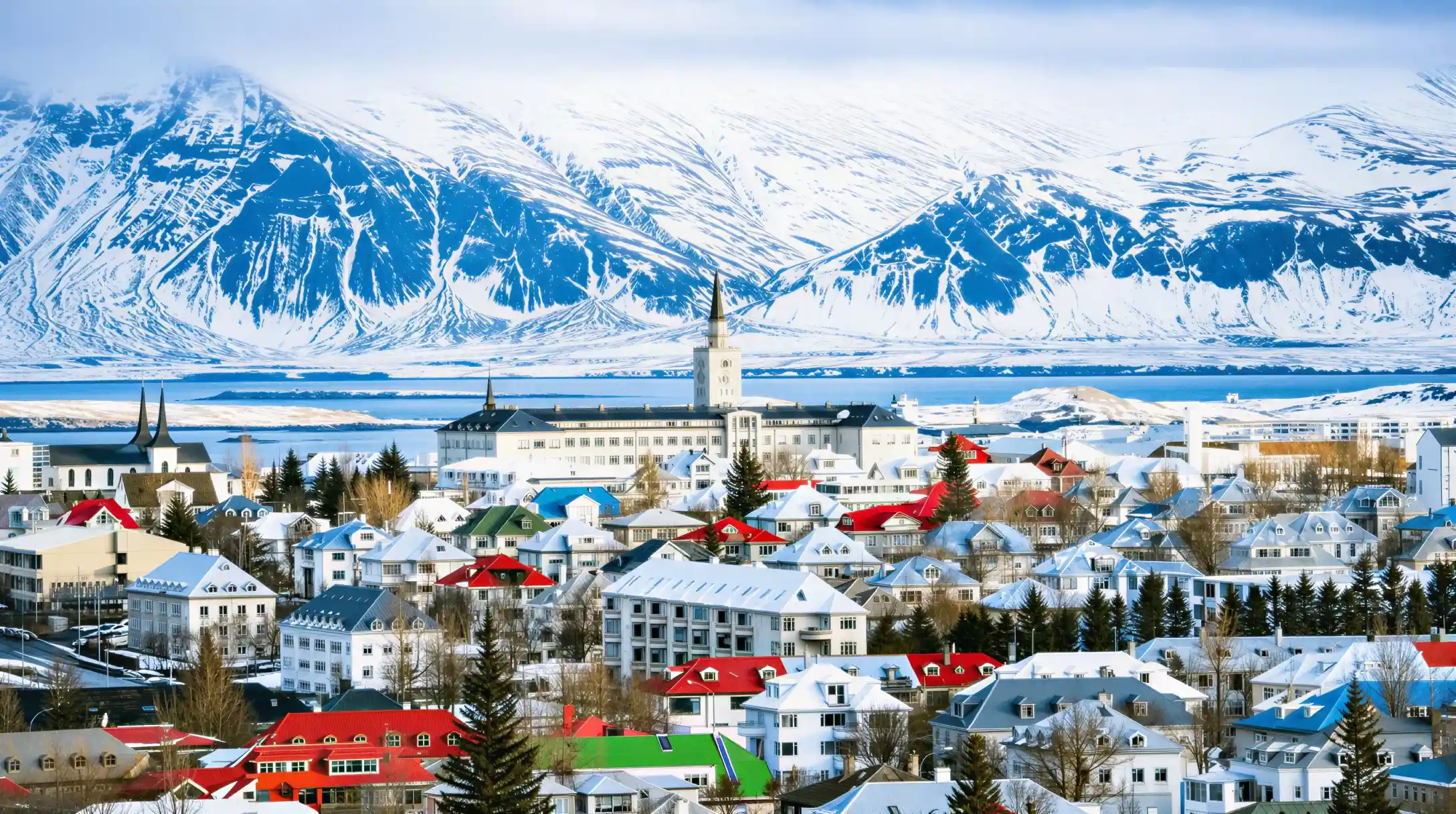
Reykjavik's centre is small enough to misjudge. A reader picturing a city the size of London or New York often books a full day for what is, on foot, a two or three hour walk between the harbour, the pond and the shopping streets. A reykjavik walking tour solves the opposite problem: it turns a compact old town into a sequence of stories about turf houses, settlement-era streets and the buildings that survived the twentieth century, rather than a checklist a visitor works through alone with a map. This page sets out where a guided walk earns its price, where a hop-on hop-off bus or a bike route covers the same ground faster, and how free walking tours and tipping actually work in Iceland. It does not deal with anything outside the city itself: the Golden Circle, the volcano sites and the day trips each have their own page. What follows is a comparison of formats, not a single recommendation, because the right one depends on how much walking a visitor wants to do and how much of the city they plan to cover on the same day.
 Our pick
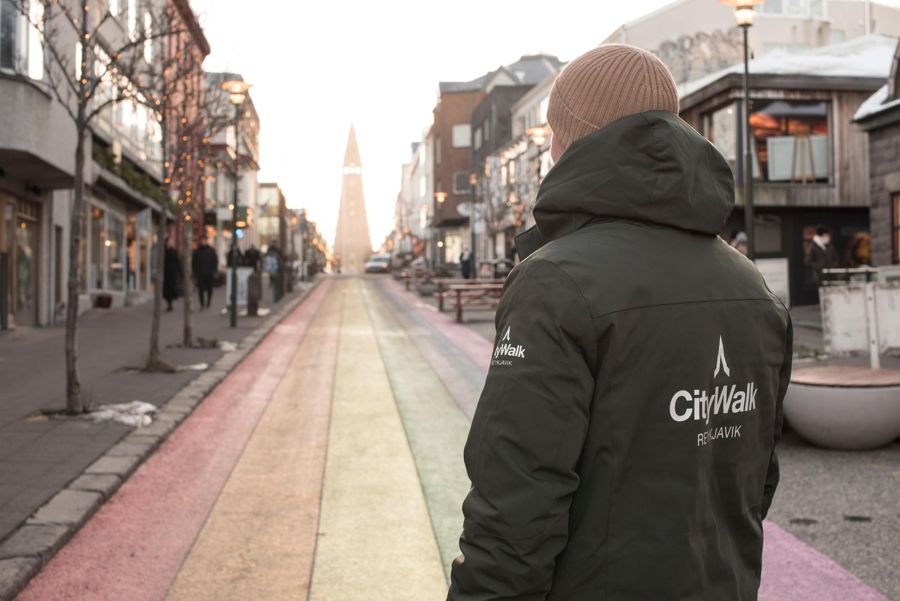
Reykjavik: City Walking tour in Small Group with Local Guide
A local guide and a small group format through the city centre
Readers who want the standard walking tour with the most reviews behind it
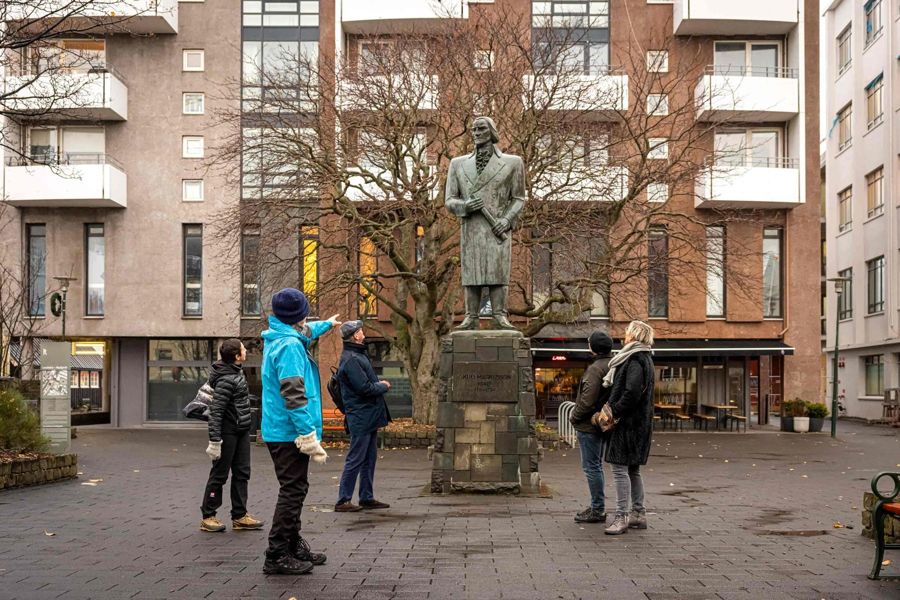
Reykjavik: Sightseeing Walking Tour with a Viking
A guided sightseeing walk framed around Viking-era history
Readers who want the city's early history told as they walk
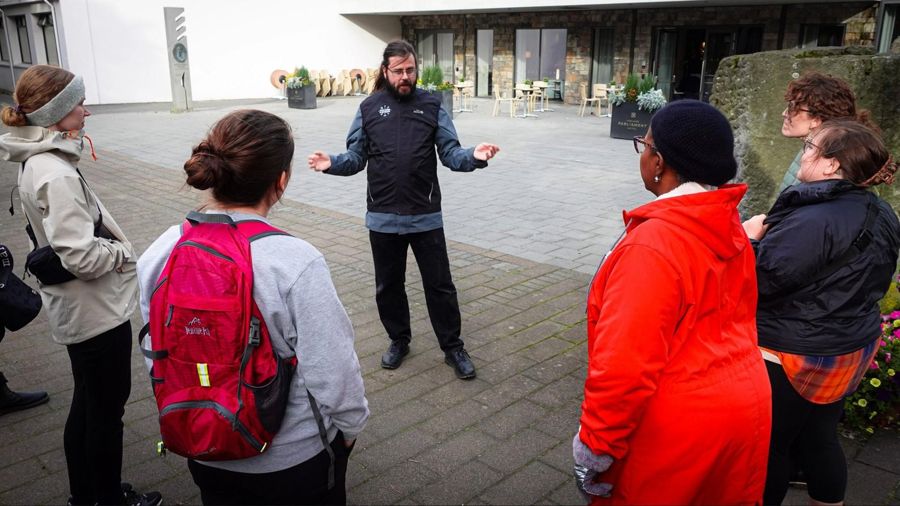
Reykjavik: Guided Folklore Walking Tour
A guided walk built around Icelandic folklore
Readers who want stories alongside the streets, not just facts
Bus or on foot
A visitor who books a bus expecting a guided walk is often disappointed, and the reverse mistake costs more time. Hop on hop off Reykjavik routes are built for covering distance between fixed stops, not for the kind of narrated detail a walking guide gives on a single street. The bus suits a traveller who wants to reach the Sun Voyager sculpture, Hallgrímskirkja and the harbour on the same day without walking between them, especially with limited mobility or bad weather.
The Reykjavik hop on hop off bus format works on a loop with a set number of stops, so a rider gets on and off as many times as the ticket allows within its validity window. It does not stop for questions and it does not narrate side streets the way a guide on foot does, because its job is transport between sights rather than commentary on them.
A visitor who has one full day and wants both formats can pair a short guided walk in the old town with a bus loop for the sights further out, rather than choosing one for the whole visit. The two are not competing products so much as different tools for different distances, and treating the bus as a substitute for a guided walk is the mismatch that leaves people disappointed with either.
- Schengen stay allowed
- Up to 90 days in any 180
- Emergency number
- 112
- Reykjavik daylight, June
- 21.2 hours
- Reykjavik daylight, December
- 4.1 hours
- Driving licence
- A valid US or UK licence is accepted for a visit
Free tours are not free
The word free in a tour listing misleads a reader who expects no cost at all, and a free walking tour Reykjavik listing is the clearest case of it. A free walking tour Reykjavik operator runs on tips: there is no ticket price, but the guide's income depends entirely on what the group gives at the end, and walking away without paying anything is the mistake most first-time visitors make out of habit from home. Tipping is not expected in Iceland's restaurants or taxis, because service is already included in the price, which is exactly why a free tour works differently: the tip here is the fee, not a bonus on top of one.
Visitors comparing prices sometimes search further afield for a bus tour iceland company thinking a bus will be cheaper than a paid walking tour, but the two are not substitutes. A city walking tour covers the centre on foot in a couple of hours; a bus tour built for Iceland at large is a different product entirely, running well outside Reykjavik toward sights a short city walk was never going to reach.
A reasonable tip on a free walking tour follows the same logic as tipping anywhere service is not already priced in: it reflects what the group felt the walk was worth, paid directly to the guide at the end rather than added to a bill. Cash is not necessary to carry for this or for anything else in Iceland, since cards work almost everywhere including for a tip handled through an app some free tour operators now use.
{'activity_id': '412398', 'title': 'Reykjavik: Feline-Focused City Walking Tour', 'rating': 4.8, 'reviews': 99, 'includes': "A guided walking tour with a theme built around the city's cats", 'best_for': 'Readers who want a lighter, narrower walking tour rather than a general one', 'link': '{{AFF_GYG_WALKING_TOURS_6}}'}
On two wheels instead
A visitor set on covering more ground than a walking tour allows sometimes assumes a bike is only for the countryside, when it is just as often the fastest way around the city itself. City sightseeing Reykjavik on two wheels reaches the harbour, the shoreline path and the older neighbourhoods in less time than walking the same route, without the fixed stops of a bus loop. It suits a visitor who wants to set their own pace and stop where they choose rather than following a guide's schedule or a bus timetable.
Confusing a city bike route with an iceland bike tour is the other common error: the latter usually means multi-day or countryside cycling well beyond Reykjavik's streets, a different trip with different gear and distances. A short city ride and a countryside cycling tour share a vehicle but nothing else about the experience, the terrain or the time required.
Weather affects a bike route far more than it affects a walking tour, since wind off the harbour and rain change a ride's comfort more than a two or three hour walk through sheltered streets. Layers that work for walking usually work for a short city ride as well, though a longer countryside route calls for gear suited to changeable conditions rather than a single afternoon in town.
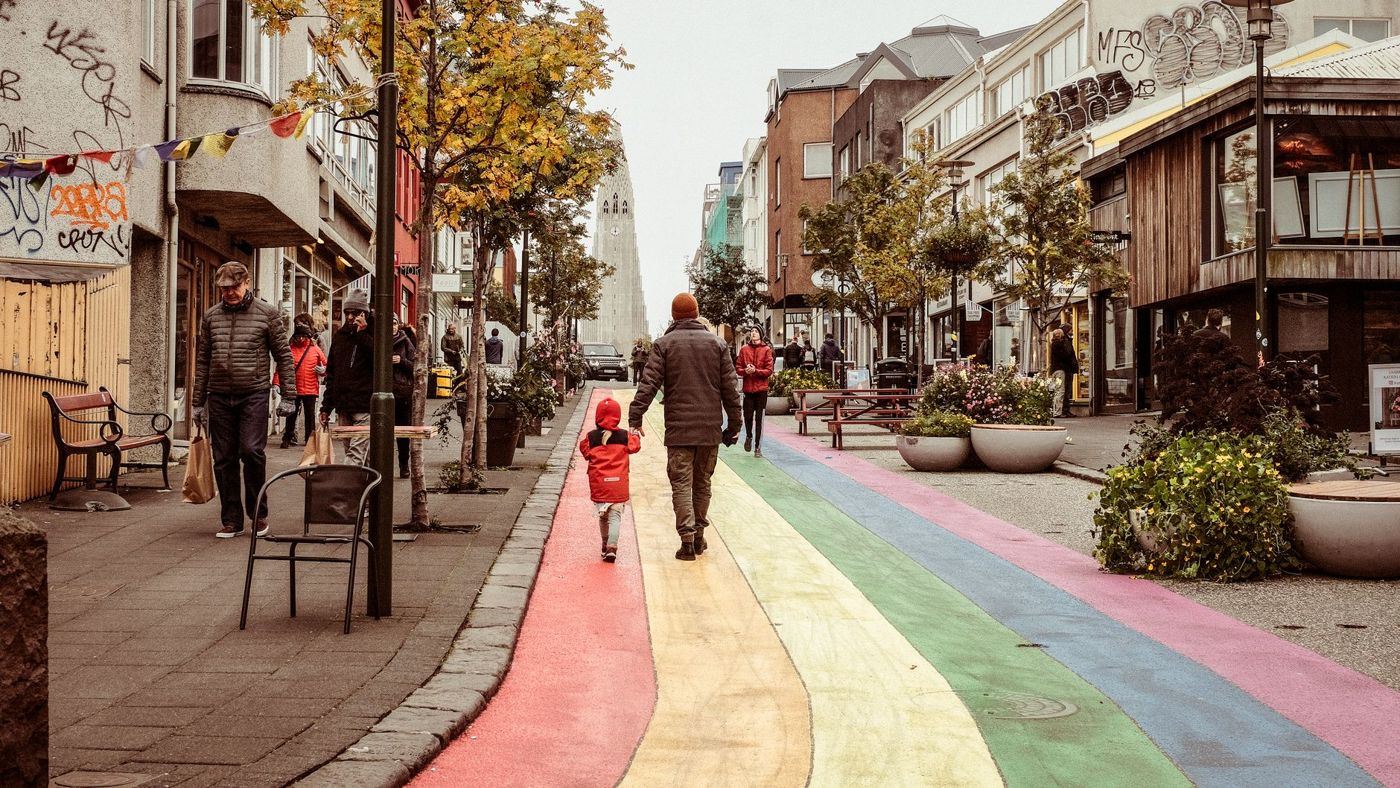
Guided or self-paced
A visitor booking blind sometimes assumes all Reykjavik sightseeing tours cover the same ground in the same order, when the format changes what gets seen far more than the route does. A guided walk moves at the group's pace and stops where the guide chooses to talk, while a self-paced route through the same streets covers more ground in less time but without the context a guide provides at each stop.
The clearest way to choose between the Reykjavik walking tours on offer is by theme rather than by route, since most cover the same compact centre and differ mainly in what the guide chooses to emphasise along the way. A folklore-themed walk and a history-themed walk can retrace nearly identical streets while telling entirely different stories about them, which matters more to most visitors than the exact path taken.
Group size affects how much a visitor gets to ask, since a smaller group hears more from the guide directly than a larger one moving through the same streets. None of this changes the distance covered, only how much of it gets explained rather than simply passed.
{'activity_id': '464091', 'title': 'Reykjavik: Guided City Walking Tour', 'rating': 4.96, 'reviews': 94, 'includes': 'A guided walking tour through the city centre', 'best_for': 'Readers who want the highest-rated general walking tour on offer', 'link': '{{AFF_GYG_WALKING_TOURS_10}}'}
Timing it right
A visitor planning a single Reykjavik city tour around sunset or the northern lights often gets the season wrong, since darkness and daylight swing further here than at home. Reykjavik has 21.2 hours of daylight in June and only 4.1 in December, so a walk timed for golden light in summer needs a very different clock than the same walk in midwinter, when much of the day is already dark by mid-afternoon.
Iceland is in Schengen, so US and UK visitors need no visa for stays up to 90 days in any 180, though a passport valid three months beyond departure and proof of onward travel can still be asked for at the border. The UK Foreign, Commonwealth and Development Office advises checking current entry requirements before travel, since Iceland sits in Schengen but outside the EU, a distinction that changes little for a short walking tour but matters for the paperwork around it.
A city tour booked for early morning in summer avoids the crowds that build through the day in the old town, while the same slot in winter risks starting before proper daylight. Checking sunrise and sunset for the travel dates before booking a time slot avoids both problems.
Common questions
Is a walking tour worth it if the city centre is small enough to see alone?
A self-guided walk covers the same streets, but a guide adds the history and stories behind buildings that a map alone will not explain.
How much should a visitor tip on a free walking tour?
The tip is the guide's income rather than a bonus on top of a ticket price, since there is no fee charged upfront.
Does the hop-on hop-off bus replace a walking tour?
It covers distance between fixed stops rather than narrating streets, so it suits reaching spread-out sights rather than exploring the old town in detail.
Is a bike route faster than walking the same area?
Yes, a bike covers the harbour and shoreline path in less time than walking, though it depends more on wind and rain.
Do visitors need cash for a tip?
No, cards work almost everywhere in Iceland and some free tour operators take tips through an app.