Most people booking an ice cave tour from Reykjavik assume every option looks the same underground: blue light, ice walls, a guide with crampons. It does not. Some of these trips only run for part of the year, and the one that runs every month is not a natural cave at all. Booking the wrong month gets a cancelled trip or a rebooking onto a tunnel a traveller did not know they were choosing. This page settles which product is which, when each one actually runs, and what the difference means for the day itself, so a booking made in July and a booking made in January are not the same mistake in reverse.
Natural ice caves form and reform inside glacier ice each winter, and access depends on that ice staying stable enough to walk into. That window runs roughly November to March. Outside it, the cave a company shows in its photos may not exist in the shape pictured, or may not be safe to enter at all. The Langjokull tunnel is different: it is cut into the glacier by machine, reinforced, and lit, and it runs all year regardless of season. Anything marketed as a summer ice cave near Reykjavik is either that tunnel or the Katla ice cave, which sits inside a lava formation rather than glacier ice and is not weather-dependent in the same way. Knowing which of the three a listing describes changes what to expect and when to book it.
 Our pick
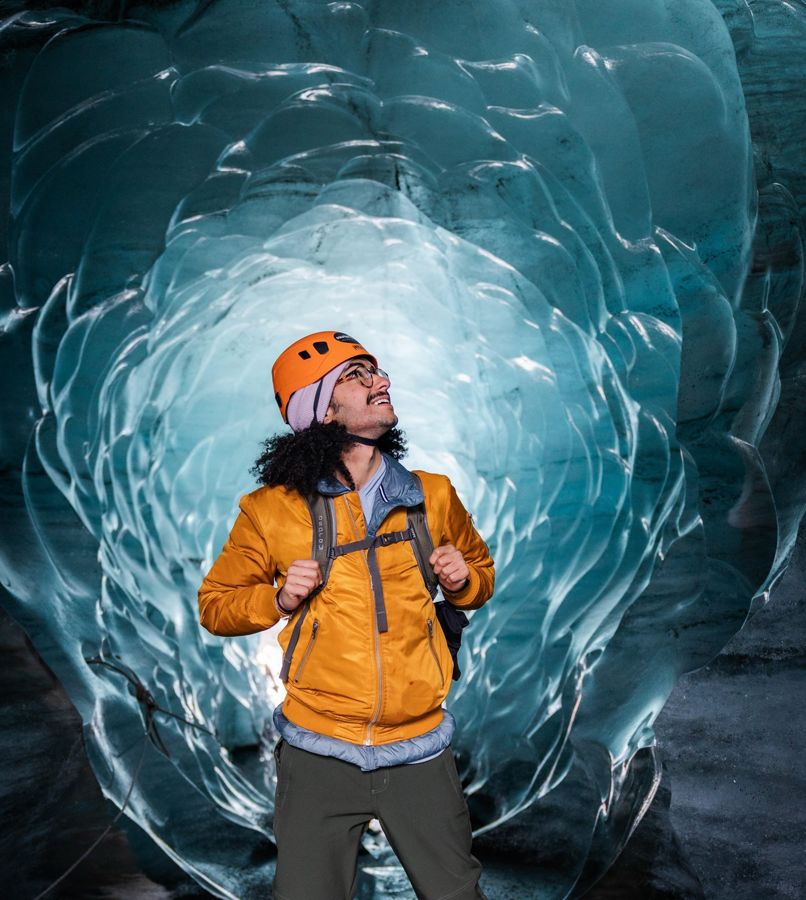
South coast sightseeing plus guided entry to the Katla ice cave
Travellers who want one day covering both the south coast and a cave, without an overnight
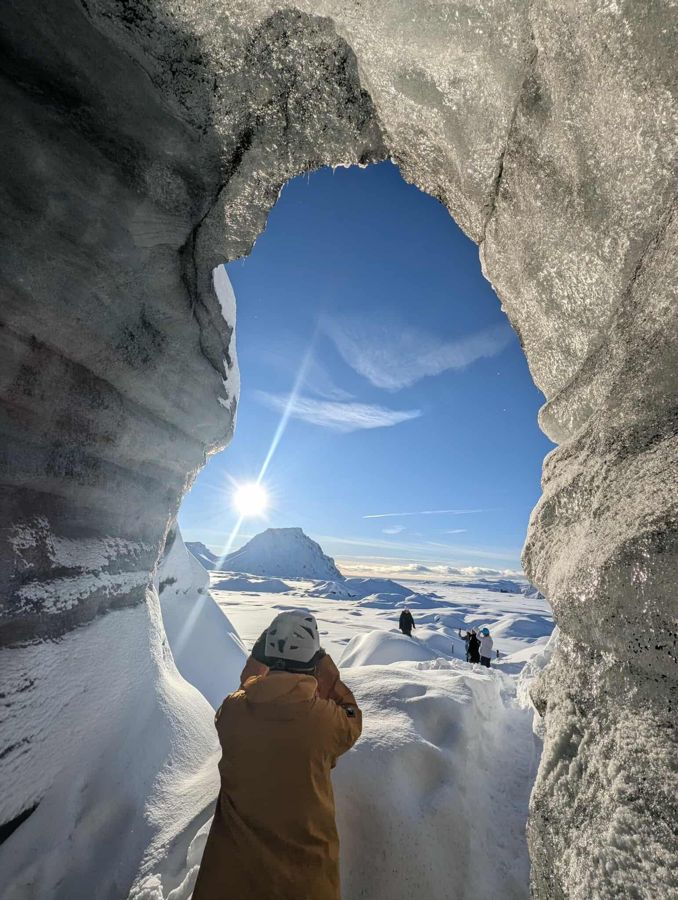
Small group south coast tour with Katla ice cave entry
Travellers who prefer a smaller group over a large coach
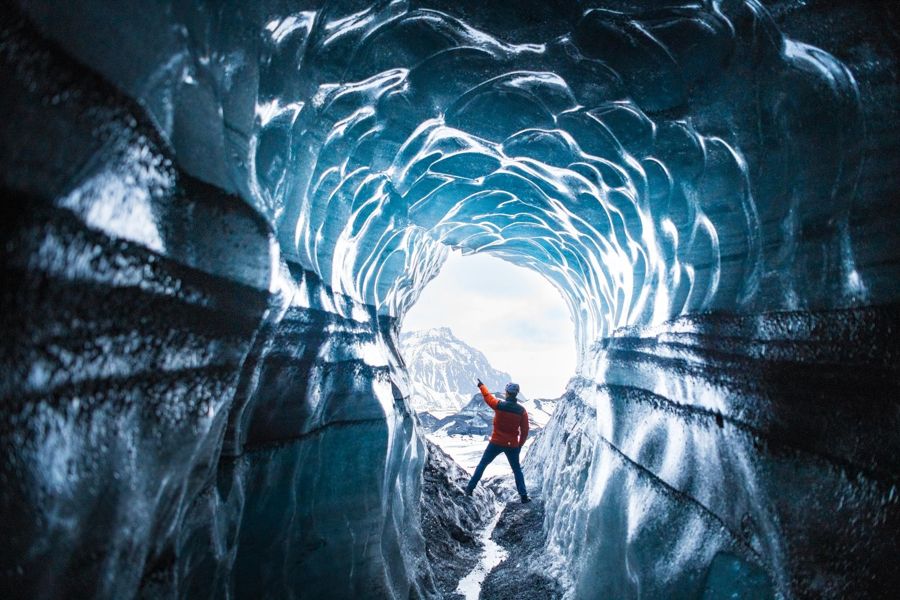
South coast stops combined with the Katla ice cave
Travellers comparing departure times against the two tours above
Tunnel or natural cave: what changes underground
A reader who has only seen marketing photos assumes the two experiences look interchangeable. They do not. Walk into an ice tunnel tour iceland companies run at Langjokull and the passage is cut in straight lines, wide enough for two people abreast, with a level floor and fixed lighting through the whole route. It is built for year-round foot traffic and it reads that way: consistent, engineered, safe in a storm that would cancel a natural cave visit outright. A natural cave has none of that. The walls curve with whatever the ice did that winter, the floor is uneven, and the light is whatever the guide's headlamp and the ice itself let through, which is why the blue in the photos looks different from cave to cave and from year to year.
Getting to each one is also a different day. The tunnel sits inside a purpose-built access route to the glacier and the operator runs a monster truck or a specially adapted vehicle to the entrance, which is part of why it can operate through weather that would close other routes. A natural cave near a glacier snout is reached on foot or by smaller vehicle over ground that changes with the season, and a heavy snowfall or a thaw can close it for days even inside the November to March window. A glacier hike and ice cave tour iceland operators sell as one package usually means walking on the glacier surface itself before descending into a cave mouth, which is a longer and more physical day than a straight tunnel visit and worth asking about before booking if mobility or fitness is a concern.
- Natural ice cave season
- Roughly November to March
- Langjokull ice tunnel
- Open all year, man-made
- Highest reviewed Katla product
- 4.83/5 from 204 reviews
- Longest-running Katla product
- 4.68/5 from 1,331 reviews
What to ask before paying a deposit
The single most useful question to put to an operator is which cave the tour actually visits and whether that cave is currently open, since a listing published in spring can still describe a cave that closed weeks earlier. A second question worth asking directly is what happens to the booking if the cave access changes: a rebooking onto the tunnel, a different natural cave, or a refund. An ice cave and snowmobile tour iceland listing adds a further variable, since the snowmobile leg depends on separate ice and weather conditions on the glacier surface and can be cancelled independently of the cave visit itself, so ask whether the two are refunded together or separately.
It is also worth asking what the group size and pace will be, since a natural cave entrance is often narrow and a large group waiting to file through changes how long anyone actually spends inside. A crystal ice cave tour iceland description usually refers to a natural cave where the ice is clear rather than opaque, which depends on how the ice formed that particular winter and is not something a company can promise in advance for a specific date. None of this makes one type of trip better than the other; it makes them different products that happen to share a category page, and the right one depends on whether the traveller wants a guaranteed departure or the specific look of that year's natural formation.
- Natural cave
- Forms in glacier ice, season-dependent, roughly Nov to Mar
- Langjokull tunnel
- Man-made, reinforced, open all year
- Katla cave
- Formed in lava rather than glacier ice
- Group tour example
- 4.66/5 from 745 reviews
Reading a listing correctly
A traveller comparing ice caves iceland tour listings side by side will notice that some name a specific cave and others simply say "ice cave" without naming one. That gap is worth closing before booking rather than after, because the two unnamed possibilities are not equivalent trips. A listing that mentions snowmobiles, a monster truck, or "all year" availability is almost certainly the Langjokull tunnel. A listing that mentions the south coast, a black sand beach stop, or a departure that only runs in winter months is almost certainly a natural cave trip built around the Katla area.
The safest way to avoid confusion is to check the departure months a listing offers. A product bookable in July for a natural glacier cave should be treated as a red flag, since the season above rules that out; it is either misdescribed or it is actually the tunnel sold under looser wording. Checking road conditions before a winter departure is also worth doing directly through Vegagerðin, since the south coast route to Katla crosses ground that can close in poor weather even when the tour itself is still scheduled to run.
{'activity_id': '387416', 'includes': 'Guided entry to the Langjokull ice tunnel from Husafell, year-round departure', 'best_for': 'Travellers who want a guaranteed departure regardless of season', 'link': '{{AFF_GYG_ICE_CAVE_TOURS_4}}'}
The Katla day trip from Reykjavik
For a traveller based in Reykjavik without a rental car, a katla ice cave tour from Reykjavik is the more practical of the two natural options, since it departs from the capital and returns the same day, unlike the Vatnajokull blue ice trips further east. The route runs along the south coast, and the cave itself sits within a lava formation near the Katla volcano rather than inside the glacier proper, which is part of why it can sometimes stay accessible slightly outside the strict November to March window that governs pure glacier caves, though this still depends on conditions each year.
This trip suits travellers who want to combine a cave visit with south coast sights on the same day rather than dedicating a separate trip to each, and who are comfortable with a full day out, typically ten to twelve hours door to door given the driving distance involved. It does not suit anyone hoping to see the cave in summer, or anyone who wants a short half-day itinerary, since the driving time alone rules that out.
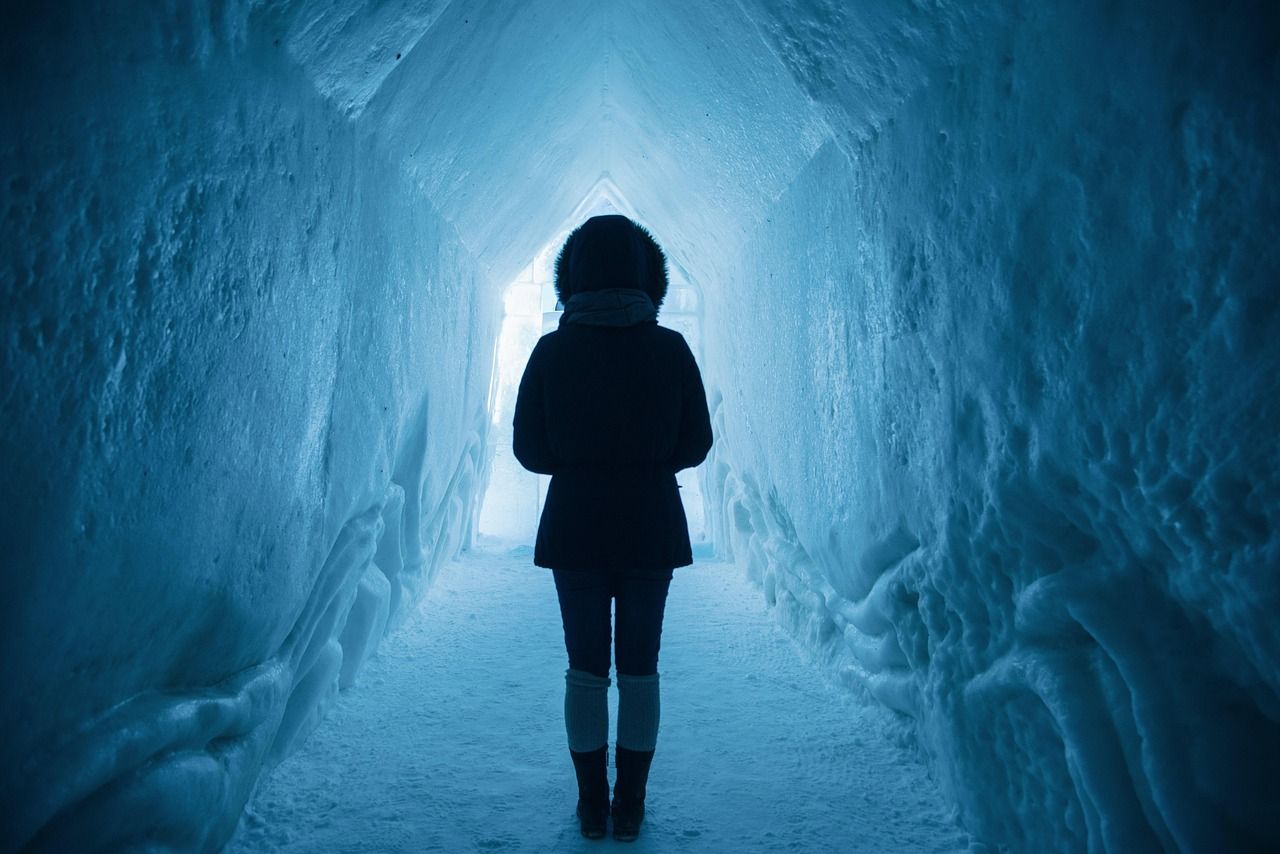
Who the Katla option suits
A katla cave tour iceland booking works best for a traveller who has one day free in their Reykjavik itinerary and wants both a cave and the south coast covered in it, rather than splitting the two across separate days. It suits someone comfortable with a long coach or minibus day, since the driving alone takes several hours each way before any time on foot is counted.
It suits less well a traveller who wants the deepest blue ice colouring associated with the glacier caves further east near Vatnajokull, since that colour comes from compressed glacier ice specifically and the Katla cave's lava setting looks different underground. It also does not suit anyone travelling in summer who wants a natural formation rather than the tunnel, since the natural options are governed by the same winter season regardless of which one is chosen. For a winter visitor without extra days to spare, though, it remains the only natural cave reachable and returnable from Reykjavik inside a single day.
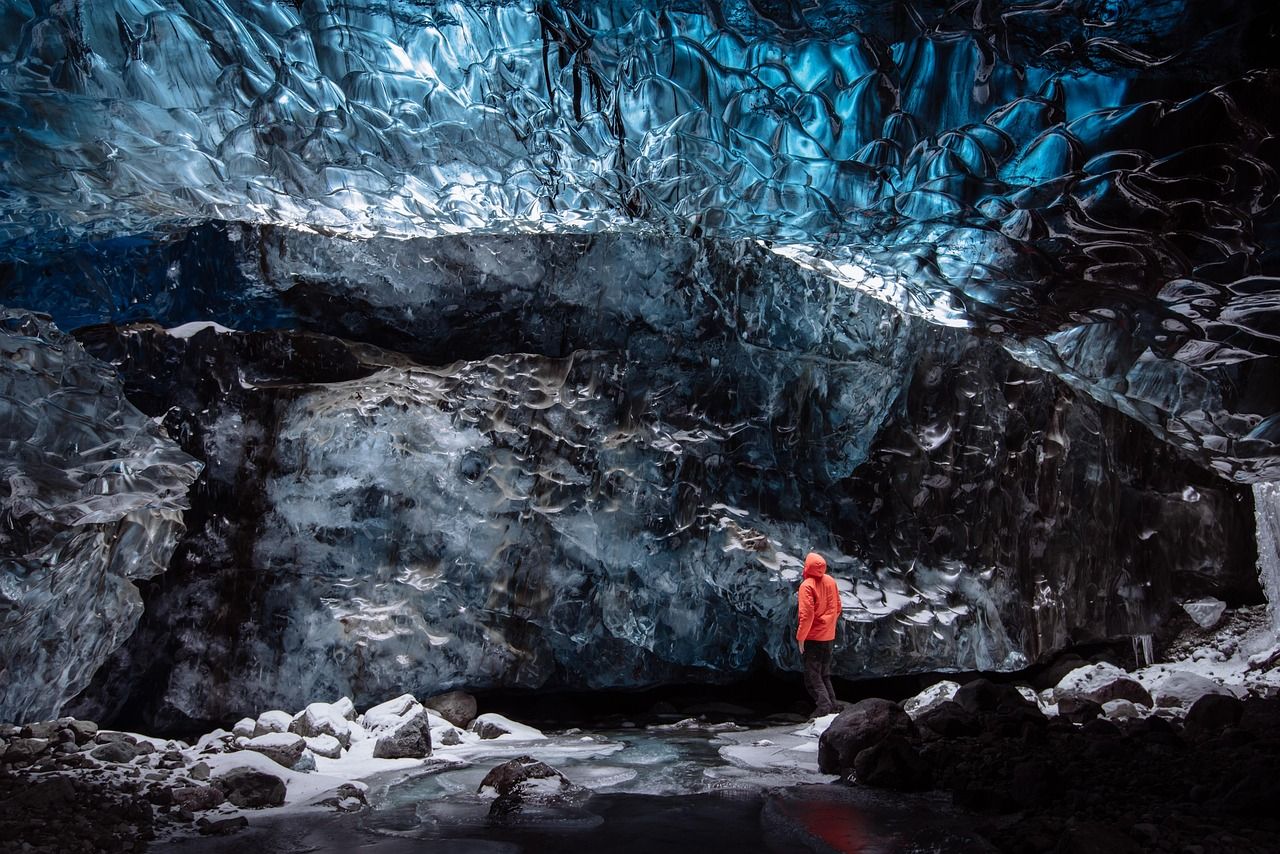
The overnight option further east
A blue ice tour iceland listing that shows deep saturated blue rather than the paler tones of the Katla cave is describing a glacier cave near Vatnajokull, further along the south coast than a single day from Reykjavik comfortably allows. Reaching one of these caves and returning to Reykjavik the same day is not realistic given the driving distance, which is why the products that reach them are built as two or three day trips with an overnight included rather than a day return.
This matters for planning because a traveller booking a south coast itinerary around Reykjavik accommodation needs to decide early whether they want the shorter Katla day trip or the longer Vatnajokull itinerary with a hotel stay along the way, since the two are not interchangeable bookings and cannot be swapped close to departure. Anyone who values the blue ice colour above convenience should plan for the overnight version from the outset rather than assuming a day trip can be upgraded later.
{'activity_id': '427394', 'includes': '3-day south coast winter tour including an ice cave visit', 'best_for': 'Travellers who want the deeper blue ice of a Vatnajokull-area cave and are willing to do an overnight', 'link': '{{AFF_GYG_ICE_CAVE_TOURS_5}}'}
Booking around the season
Anyone searching for an iceland katla tour in the months outside November to March should expect the operator to either substitute the Langjokull tunnel or decline the booking rather than run the natural cave portion as advertised, since the underlying ice access genuinely is not there in summer. This is not a policy choice by any one operator; it follows from the season described earlier and applies across every company running the route.
The practical approach is to decide first whether the trip has to include a specific natural cave or whether any ice cave experience will do. A traveller fixed on seeing a natural glacier formation should book within the winter window and expect some itineraries to be adjusted close to departure if conditions change. A traveller who mainly wants an ice cave experience on a fixed summer date is better served booking the Langjokull tunnel directly, since it removes the seasonal uncertainty entirely and the trip will run as described regardless of month.
Common questions
Can I visit a natural ice cave in summer?
No. Natural caves depend on stable glacier ice, and that access runs roughly November to March. Anything sold as a summer ice cave is the Langjokull tunnel or the Katla lava cave.
Is the Langjokull ice tunnel a real ice cave?
It is cut into the glacier by machine and reinforced rather than naturally formed, but it is genuinely inside the ice and runs on a fixed year-round schedule.
Can I do a Katla ice cave tour without a car?
Yes. It is sold as a guided day trip departing from Reykjavik, covering the drive, the south coast stops and the cave entry.
Why do some ice cave tours need an overnight?
The caves near Vatnajokull with the deepest blue ice sit further from Reykjavik than a day return allows, so those itineraries are built as two or three day trips with a hotel stay included.
What should I check before booking a winter ice cave tour?
Confirm which specific cave the tour visits, whether it is currently accessible, and what the operator does if conditions force a change of route.