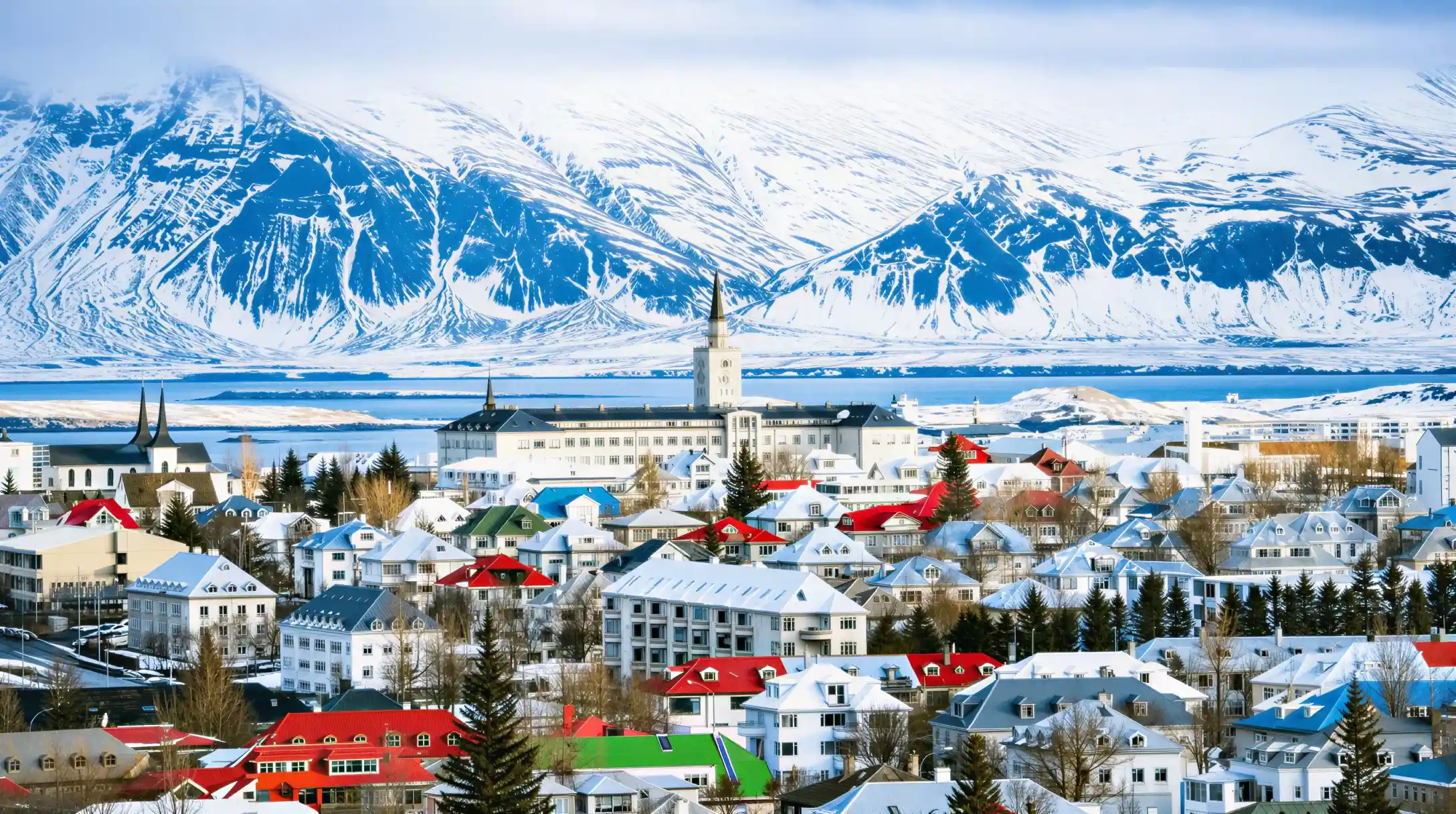
Packing for Reykjavik in October on the strength of a summer photo is the most common mistake a visitor makes this month. The long light and open highland roads of July are gone by the first week, and the city itself has already turned toward its dark half. This page sets out what the averages mean in practice: what to wear, what closes, and where a plan built on warmer months starts to fail. The daytime high sits at 7.6°C (46°F) and the overnight low at 2.7°C (37°F), a drop of roughly seven degrees from September that changes what a jacket needs to do. Daylight is also shortening fast, several minutes shorter each day, so an itinerary that assumes late evening light will run out of it. None of this rules out a trip. It just means the trip has to be planned for October, not for the month before it.
 Our pick
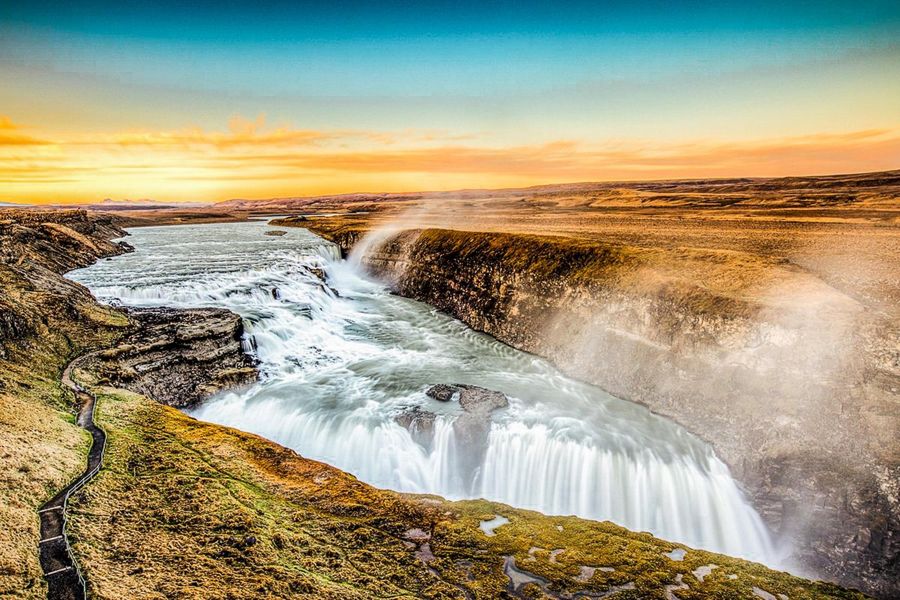
Reykjavik: Golden Circle Full-Day Tour with Kerid Crater
Full day · Þingvellir, Geysir, Gullfoss, Kerið crater · First-time visitors wanting the classic route in one day
Full day · Þingvellir, Geysir, Gullfoss, Kerið crater · First-time visitors wanting the classic route in one day
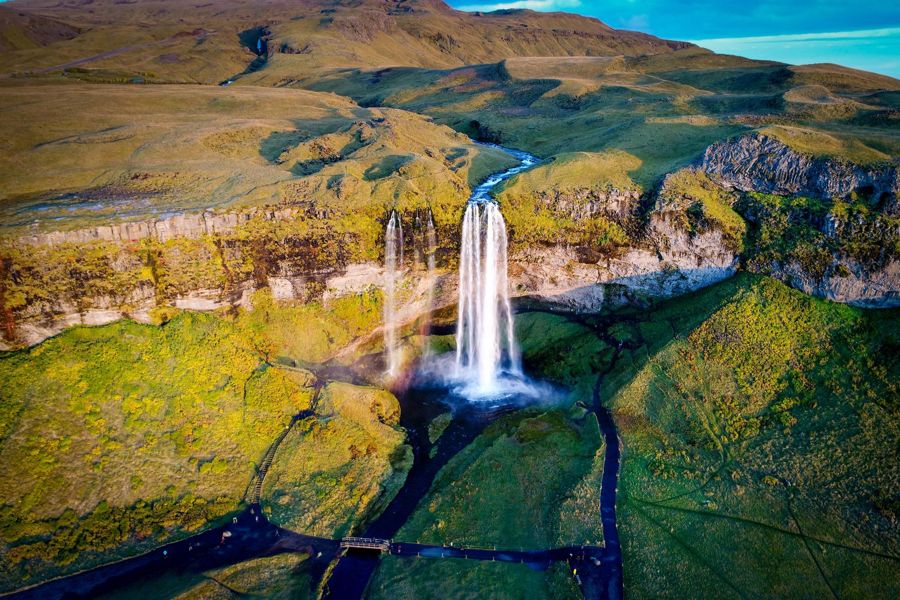
Reykjavik: South Coast Waterfalls, Black Sand & Glacier Tour
Full day · South coast waterfalls, black sand beach, glacier viewpoint · Travellers who want coastal scenery before the F-roads close for winter
Full day · South coast waterfalls, black sand beach, glacier viewpoint · Travellers who want coastal scenery before the F-roads close for winter
Reading the month's numbers correctly
A single average high hides more than it shows, and October is the month this catches people out. Reykjavik weather october sits between the last mild days of autumn and the first real cold, so the same week can bring a calm 9°C (48°F) afternoon and a raw 3°C (37°F) one back to back. The 7.6°C (46°F) average high and 2.7°C (37°F) average low are the middle of that range, not a forecast for any single day. Compare this against September's 11.4°C (52°F) high, and the shift is not just a number: it is warm layers and a windproof shell replacing the light jacket that worked a month earlier.
Rain gear matters as much as warmth in October. The city's annual precipitation runs to 875.9 mm (34.5 in), and autumn months carry their share of that total in short, wind-driven showers rather than steady rain. Waterproof outer layers do more than a warm coat that soaks through. Wind is the part a first-time visitor underestimates, since it turns a mild-sounding temperature into something that cuts through thin clothing on an exposed viewpoint or a boat deck. Anyone packing for this month should treat the average as a starting point and the wind as the variable that changes how it feels.
Daylight is the other figure worth checking before booking anything. By late October the days are noticeably shorter than the Icelandic summer's near-permanent light, and they are still shrinking toward the 4.1 hours of the December solstice. A day trip planned for a leisurely pace in July will feel rushed in October, because there is simply less usable light to fit it into.
| Figure | Value |
|---|---|
| Average high | 7.6°C (46°F) |
| Average low | 2.7°C (37°F) |
| September average high, for comparison | 11.4°C (52°F) |
| Average annual precipitation | 875.9 mm (34.5 in) |
| Daylight on the December solstice, for reference | 4.1 h |
- Value
- 7.6°C (46°F)
- Value
- 2.7°C (37°F)
- Value
- 11.4°C (52°F)
- Value
- 875.9 mm (34.5 in)
- Value
- 4.1 h
What changes about the plan
Things to do in Reykjavik in october are not the same list as in July, and the biggest reason is the highlands. Ferðafélag Íslands runs Landmannalaugar from about 20 June to 15 September, and the F208 and F225 mountain roads that reach it open only in June and close again as autumn sets in, so any itinerary built around the interior highlands has already missed its window by October. The trip shifts toward the Golden Circle, the south coast and the city itself, all of which stay open and reachable by paved road year-round.
The aurora is one thing October genuinely offers that summer cannot. The season runs from late August to mid-April, bounded by darkness rather than by the aurora itself, and October's longer nights give it real room to work compared with the near-permanent daylight of June. A clear, dark evening in Reykjavik this month is worth checking the forecast for.
Puffins, on the other hand, are already gone. They nest on the islands off Reykjavik roughly from May to August, and no boat trip in October will find one, whatever a listing might suggest. Whale sailings run all year with a summer skew, so October cruises still go out, just with a lighter schedule than midsummer. A visitor who arrives expecting both puffins and northern lights in the same week is planning for two different seasons at once.
Getting from the airport in the shoulder season
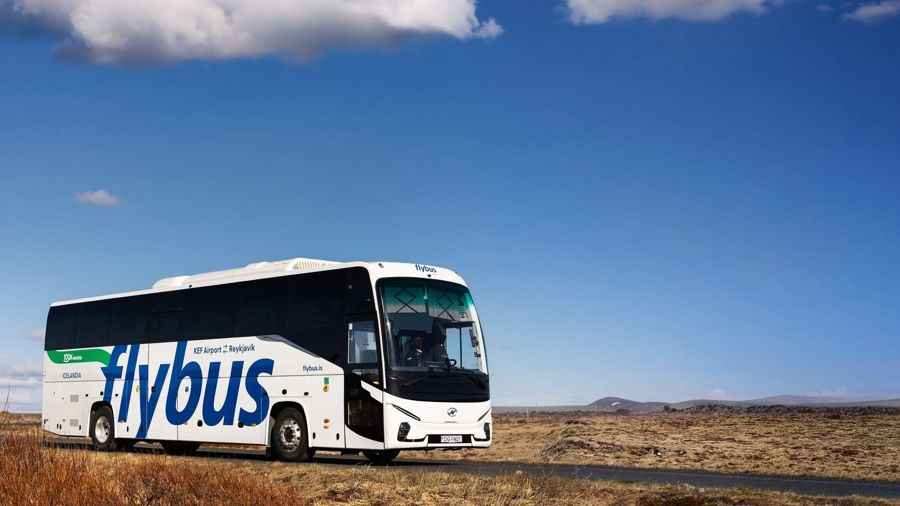
Keflavík Airport sits about 50 km (31 miles) southwest of the city, and the drive to downtown takes roughly 45 minutes by car or airport bus in normal conditions. October conditions are not yet the deep-winter driving many visitors picture, but the wind and rain that define the month can still slow that transfer, so it is worth building a little slack into an arrival plan rather than booking straight through to a fixed appointment.
The Flybus one-way fare from Keflavík to Reykjavik is 3,999 ISK, with a return ticket at 7,298 ISK and a child fare of 2,000 ISK for ages 6 to 15. A fixed-price taxi from Hreyfill runs 22,500 ISK for one to four passengers, or 29,250 ISK for five to eight, and a metered ride with another operator can come in lower depending on traffic and company. None of these fares changes with the season, but a shared bus timed to a flight is a smaller commitment than a taxi when weather could shift the schedule.
Within the city, a single Strætó bus fare is 690 ISK, valid 75 minutes including transfers, with reduced fares for ages 12 to 17 and 67 and over, and free travel for children 11 and under. Icelandic currency is the króna, and the country runs on cards almost everywhere, so carrying cash for a bus fare or a museum ticket is rarely necessary.
Fees that catch visitors off guard
Several of Iceland's best-known free sights now charge for parking, and October is not exempt from any of it. Þingvellir and Geysir both charge 1,000 ISK to park, Skógafoss charges 1,000 ISK from a car park about 500 m from the falls, and Seljalandsfoss charges 900 ISK. Sólheimajökull's car park runs 750 ISK. Gullfoss remains free to park at, which is worth knowing before assuming every stop on a south coast or Golden Circle route comes with a fee.
Kerið crater, often bundled into Golden Circle itineraries, charges a flat 700 ISK to walk in, with no reduced rate for children or seniors despite what some resale listings still advertise. It publishes no fixed opening hours. None of these fees are large individually, but a day with four or five stops adds up in a way a first-time visitor rarely budgets for in advance.
Reykjavik itself has no eruption underway on the Reykjanes peninsula at the time this was checked; the most recent one ran from 16 July to 4 or 5 August 2025. Grindavík and the Blue Lagoon remain open behind lava barriers, though Grindavík has crevasses and visitors are asked to keep to marked paths. The Blue Lagoon requires pre-booked, timed entry, and a transfer ticket alone does not admit anyone.
Documents and money before departure
Americans and Britons need no visa for stays of up to 90 days in any 180-day period, under the Schengen rule shared across all 29 Schengen countries, and passports should be valid at least three months beyond the departure date. Iceland sits inside Schengen but outside the European Union, a distinction that trips up plenty of travel pages. Proof of onward travel or funds can be requested, though it rarely is. Current entry rules are confirmed by the US Department of State's Iceland travel information and, for UK travellers, by the UK FCDO's Iceland travel advice.
ETIAS, the EU's pre-travel authorisation, is not yet in force. The EU dropped its Q4 2026 launch target in July 2026, and 2027 is now the likelier year; it will be a 20 EUR authorisation valid three years, not a visa, once it starts. This is worth checking again close to departure since the date has already moved once.
European type F plugs run at 230V, so US appliances need an adapter and often a voltage converter. Tipping is not expected and service is included in the bill. The emergency number is 112, and it also runs the safety app that ICE-SAR asks hikers to carry, a detail worth knowing for anyone heading out to a waterfall or coastal path in October's shorter daylight.
Common questions
Is October too cold to visit Reykjavik?
No. The average high is 7.6°C (46°F) and the average low 2.7°C (37°F), similar to a mild autumn day in much of the northeastern United States or the UK. Layered, waterproof clothing matters more than heavy insulation.
Can I still see the northern lights in October?
Yes. The aurora season runs from late August to mid-April, and October's longer nights give it more room to appear than the near-permanent daylight of June allows.
Are the highland roads open in October?
No. The F208 and F225 mountain roads open in June on average and close again by autumn, and Ferðafélag Íslands runs its Landmannalaugar service only from about 20 June to 15 September.
Do I need to carry Icelandic króna in October?
Not really. Cards and contactless payment work almost everywhere, and only some unmanned petrol pumps require a card with a PIN.
Will I see puffins in October?
No. Puffins nest on the islands off Reykjavik roughly from May to August and are gone by autumn, though whale watching cruises continue year-round on a lighter schedule.