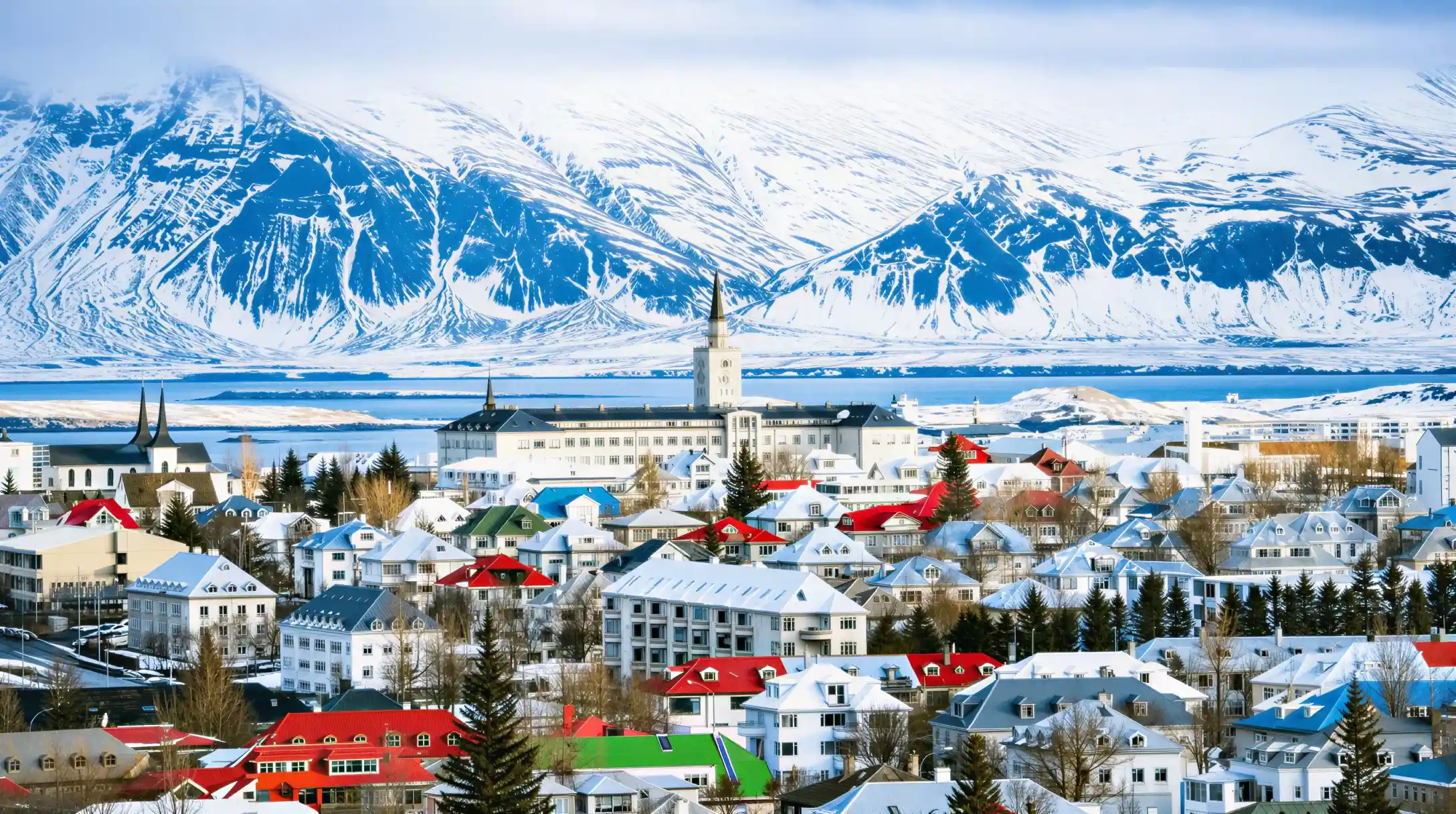
There is no single best time to visit Reykjavik. There is a trade, and most travellers pick a month without knowing they made it. Choose winter and the days run about 4 to 7 hours of usable light but the sky is dark enough for aurora and prices sit at their floor. Choose midsummer and the reverse happens: a 21.2 hour June day means no darkness for any aurora display however strong it is, but the highland roads are open, whale and puffin trips run at full pace, and the city is busiest and priciest. The right month is whichever column of that trade matters more to a given trip, and this page lays out the columns rather than describing twelve months in a row.
 Our pick
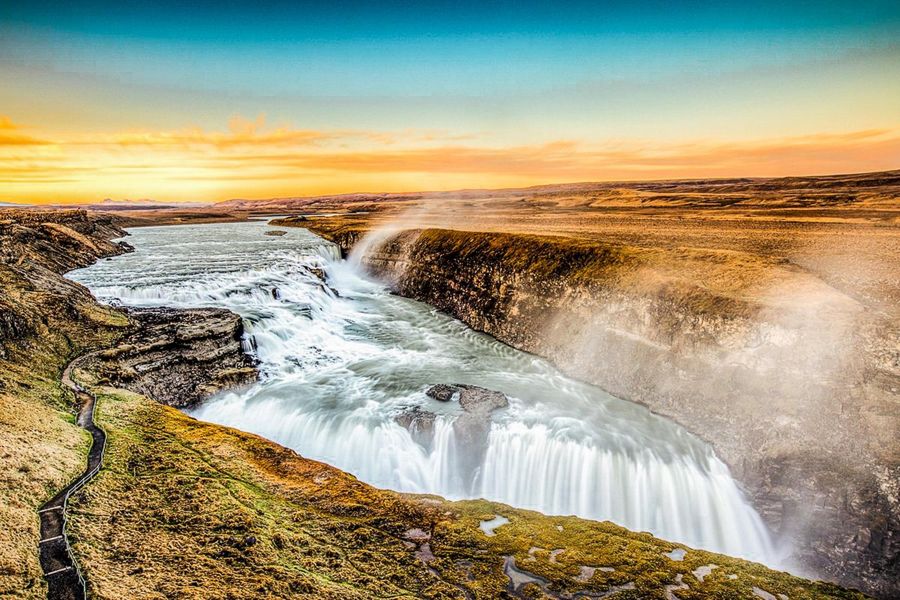
Reykjavik: Golden Circle Full-Day Tour with Kerid Crater
Full-day coach tour covering the Golden Circle route and Kerid Crater
Travellers who want the classic day route regardless of season
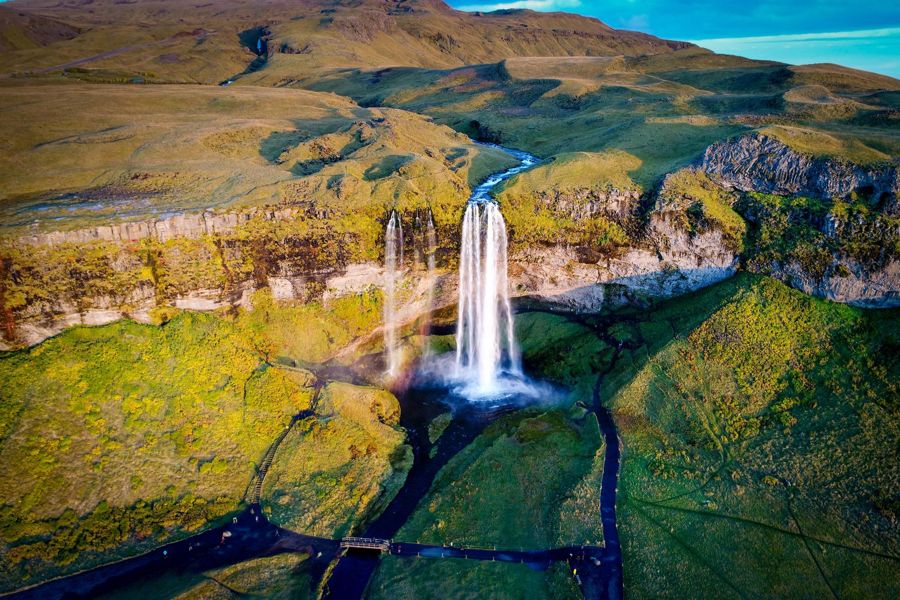
Reykjavik: South Coast Waterfalls, Black Sand & Glacier Tour
Full-day coach tour to south coast waterfalls, black sand beach and a glacier stop
Travellers building a shoulder-season trip around daylight hours rather than darkness
Winter darkness is the whole point, not a drawback to plan around
A visitor arriving expecting a normal evening in December gets 4.1 hours of daylight on the solstice, sunrise near 11:22 and sunset near 15:29. That is the wrong way to read the month. The short day is what makes the aurora possible at all, since a display needs a dark sky and Reykjavik only has one from late August to mid-April. Anyone weighing the best time to visit Reykjavik northern lights against a fixed two or three night trip is really weighing which of those eight months has the darkest evenings paired with the mildest weather, because the season itself does not narrow further than that.
January and February average highs of 3.2 to 3.3 degrees C (38 F) sit at the coldest and darkest end of the window, with lows down to about -1.9 degrees C (28 F) in February. That combination buys the longest nightly window for a sky to go dark and stay dark, at the cost of the shortest days for anything else on an itinerary. A trip built around the sky rather than around outdoor daytime activity does best here, and worse the moment daytime sightseeing is also the priority.
Weighing a single fixed week against the calendar
Most travellers do not have a free choice of month. A booked week off work decides the best time to go to Reykjavik far more than any chart does, so the useful question is what that particular week offers rather than what the ideal month would be. A week in early June gets the highland road at Landmannalaugar just opening, since F208 averages open around 2 June and F225 around 16 June, plus June daylight already near its 21.2 hour peak. The same week in early September gets an average high of 11.4 degrees C (53 F), the aurora season just resuming, and airfares easing from the summer peak.
The mistake is assuming any fixed week can deliver everything at once. A week that includes both a highland hike and an aurora sighting does not exist on the calendar, because the roads open only once darkness has already left for the year. Fixing the week first, then checking that week against daylight hours, road status and wildlife windows, produces a shorter and more honest list of what that particular trip can actually include.
Clear sky matters more than the calendar month
A traveller who books the darkest week of the year and sees nothing has usually mistaken season length for nightly odds. The window for the best time to see northern lights in Reykjavik runs from late August to mid-April, a span of roughly eight months, and inside that span no single month is guaranteed clear. What changes month to month is how much dark sky is on offer each night, not how likely any one night is to be cloudless.
October through February offer the longest dark windows, with average highs from 3.2 to 7.6 degrees C (38 to 46 F) across that stretch, which keeps outdoor waiting tolerable without the deep cold of the coldest weeks. Late August and September, and again March into early April, trade some darkness for milder evenings and the return of daylight for sightseeing between attempts, which suits a shorter trip better than a single long midwinter stay built around one chance at a clear night.
Reading the darkness window rather than a single peak month
There is no peak month for the aurora itself, only a peak window for darkness, and the two get confused constantly. The best time of year to see northern lights in Reykjavik is framed correctly as the full late August to mid-April span rather than as one favoured month inside it, because the display's own strength does not follow the calendar the way daylight does. December and January simply hand a longer dark window each night than September or March does, which raises the number of chances across a stay rather than the odds of any single night.
A one-week trip in October or November sits inside that window with average highs of 7.6 and 4.7 degrees C (46 and 41 F) respectively, cold enough to dress for but not the deepest winter cold. Multiple consecutive nights matter more than the exact week chosen, since a single cloudy night says nothing about the next one, and a short window of only two or three nights carries real odds of seeing nothing at all regardless of the month picked.
Daylight at the extremes
- June solstice daylight
- 21.2 h
- December solstice daylight
- 4.1 h
- Aurora season
- Late August to mid-April
- Highland road F208 opens (average)
- Around 2 June
- Highland road F225 opens (average)
- Around 16 June
- Landmannalaugar bus season
- About 20 June to 15 September
Matching the month to the single thing that matters most
Ranking months without a stated priority produces an answer that fits nobody's actual trip. The best time of year to visit Reykjavik is a different month for a reader chasing puffins than for one chasing a lagoon soak on a budget, and the chart below only works once that priority is named first. Puffins are on the islands off Reykjavik roughly May to August; a whale sailing runs all year but with a strong summer skew, so a winter booking still has a real chance while a puffin booking outside those four months has none.
Budget behaves on its own separate axis from wildlife and light. The coldest, darkest months carry the lowest prices across flights and hotels, which means a reader optimising purely for cost lands in December or January regardless of what the aurora or the daylight columns say, and a reader optimising for warmth and long days accepts the summer premium as the cost of that choice.
| Month | Avg high | Avg low | Daylight priority | What's open |
|---|---|---|---|---|
| January | 3.2 °C (38 °F) | -1.7 °C (29 °F) | Aurora season, short days | City sights, no highland roads |
| February | 3.3 °C (38 °F) | -1.9 °C (28 °F) | Aurora season, short days | City sights, no highland roads |
| March | 4.2 °C (40 °F) | -1.3 °C (30 °F) | Aurora season | City sights, no highland roads |
| April | 6.9 °C (44 °F) | 1.0 °C (34 °F) | Aurora season closing | City sights, no highland roads |
| May | 10.1 °C (50 °F) | 4.0 °C (39 °F) | Puffins arrive | Highland roads not yet open |
| June | 13.0 °C (55 °F) | 7.2 °C (45 °F) | 21.2 h daylight, no aurora | F208 and F225 open this month |
| July | 14.9 °C (59 °F) | 9.1 °C (48 °F) | Puffins, whales, long days | Landmannalaugar bus running |
| August | 14.1 °C (57 °F) | 8.6 °C (47 °F) | Puffins, aurora resumes late month | Landmannalaugar bus running |
| September | 11.4 °C (53 °F) | 6.2 °C (43 °F) | Aurora season | Landmannalaugar bus running to 15 Sept |
| October | 7.6 °C (46 °F) | 2.7 °C (37 °F) | Aurora season | Highland roads closing |
| November | 4.7 °C (41 °F) | -0.1 °C (32 °F) | Aurora season | No highland roads |
| December | 3.3 °C (38 °F) | -1.6 °C (29 °F) | Aurora season, shortest days | No highland roads |
- Avg high
- 3.2 °C (38 °F)
- Avg low
- -1.7 °C (29 °F)
- Daylight priority
- Aurora season, short days
- What's open
- City sights, no highland roads
- Avg high
- 3.3 °C (38 °F)
- Avg low
- -1.9 °C (28 °F)
- Daylight priority
- Aurora season, short days
- What's open
- City sights, no highland roads
- Avg high
- 4.2 °C (40 °F)
- Avg low
- -1.3 °C (30 °F)
- Daylight priority
- Aurora season
- What's open
- City sights, no highland roads
- Avg high
- 6.9 °C (44 °F)
- Avg low
- 1.0 °C (34 °F)
- Daylight priority
- Aurora season closing
- What's open
- City sights, no highland roads
- Avg high
- 10.1 °C (50 °F)
- Avg low
- 4.0 °C (39 °F)
- Daylight priority
- Puffins arrive
- What's open
- Highland roads not yet open
- Avg high
- 13.0 °C (55 °F)
- Avg low
- 7.2 °C (45 °F)
- Daylight priority
- 21.2 h daylight, no aurora
- What's open
- F208 and F225 open this month
- Avg high
- 14.9 °C (59 °F)
- Avg low
- 9.1 °C (48 °F)
- Daylight priority
- Puffins, whales, long days
- What's open
- Landmannalaugar bus running
- Avg high
- 14.1 °C (57 °F)
- Avg low
- 8.6 °C (47 °F)
- Daylight priority
- Puffins, aurora resumes late month
- What's open
- Landmannalaugar bus running
- Avg high
- 11.4 °C (53 °F)
- Avg low
- 6.2 °C (43 °F)
- Daylight priority
- Aurora season
- What's open
- Landmannalaugar bus running to 15 Sept
- Avg high
- 7.6 °C (46 °F)
- Avg low
- 2.7 °C (37 °F)
- Daylight priority
- Aurora season
- What's open
- Highland roads closing
- Avg high
- 4.7 °C (41 °F)
- Avg low
- -0.1 °C (32 °F)
- Daylight priority
- Aurora season
- What's open
- No highland roads
- Avg high
- 3.3 °C (38 °F)
- Avg low
- -1.6 °C (29 °F)
- Daylight priority
- Aurora season, shortest days
- What's open
- No highland roads
What stays open regardless of the month chosen
A reader assuming the whole city pauses in the off season misreads what actually closes. Museums, pools and restaurants run on their normal calendar all year, and the Sky Lagoon and Blue Lagoon both operate through winter, with the Blue Lagoon requiring a pre-booked, timed entry slot in any season. What narrows with the calendar is outdoor and highland activity: natural ice caves are a winter product running roughly November to March, while the man-made Langjökull ice tunnel stays open all year regardless of season.
Grindavík and the Blue Lagoon remain open behind lava barriers built around the town and Svartsengi, with visitors asked to keep to marked paths because of crevasses in the area. No eruption is active on the Reykjanes peninsula at the time these dates were checked, and magma continues to accumulate under Svartsengi, so the hazard assessment carries its own expiry and is worth checking again close to any booked date.
Building the trip around the one thing that cannot move
Every other choice on this page bends around whichever fact does not move: darkness for aurora chasers, road opening dates for highland hikers, the four-month puffin window for wildlife trips, or a fixed calendar week for everyone else. Settling that one fixed point first, then checking the month it falls in against the daylight, temperature and access figures above, replaces a vague sense of "when is best" with a short, specific answer for that particular trip.
A traveller flying regardless of month still gains from knowing what that month rules out. Booking July rules out any aurora sighting no matter how the itinerary is arranged, since the sky does not go dark enough. Booking January rules out Landmannalaugar and the F-roads entirely, since they will not have opened yet. Neither trade-off is a flaw in the destination. It is simply what the light and the roads allow in that particular month, and packing the itinerary to match it beats hoping the itinerary can outrun it.
For entry rules and any travel advisory that might affect a booked date, US travellers can check the State Department's Iceland page and UK travellers the FCDO's travel advice for Iceland before departure. Road status for any highland route is set each year by Vegagerðin, and current aurora and hazard conditions are published by the Icelandic Meteorological Office.
Common questions
Is it better to visit Reykjavik in summer or winter?
Neither is objectively better. Summer brings up to 21.2 hours of daylight, open highland roads and full wildlife activity at the highest prices; winter brings the darkness the aurora needs and the lowest prices, at the cost of daylight for sightseeing.
Can the northern lights be seen in Reykjavik in summer?
No. The sky does not get dark enough from roughly late April to late August, so no display is visible even on a clear, active night.
When do the highland roads to Landmannalaugar open?
F208 opens around 2 June and F225 around 16 June on average, with the Landmannalaugar bus season running from about 20 June to 15 September. Dates are set by Vegagerðin each year.
When can puffins be seen near Reykjavik?
Roughly May to August. Outside that window the islands are not showing puffins regardless of what a tour listing suggests.
Is whale watching available year round from Reykjavik?
Sailings run all year, with a strong skew toward the summer months when sightings are more frequent.