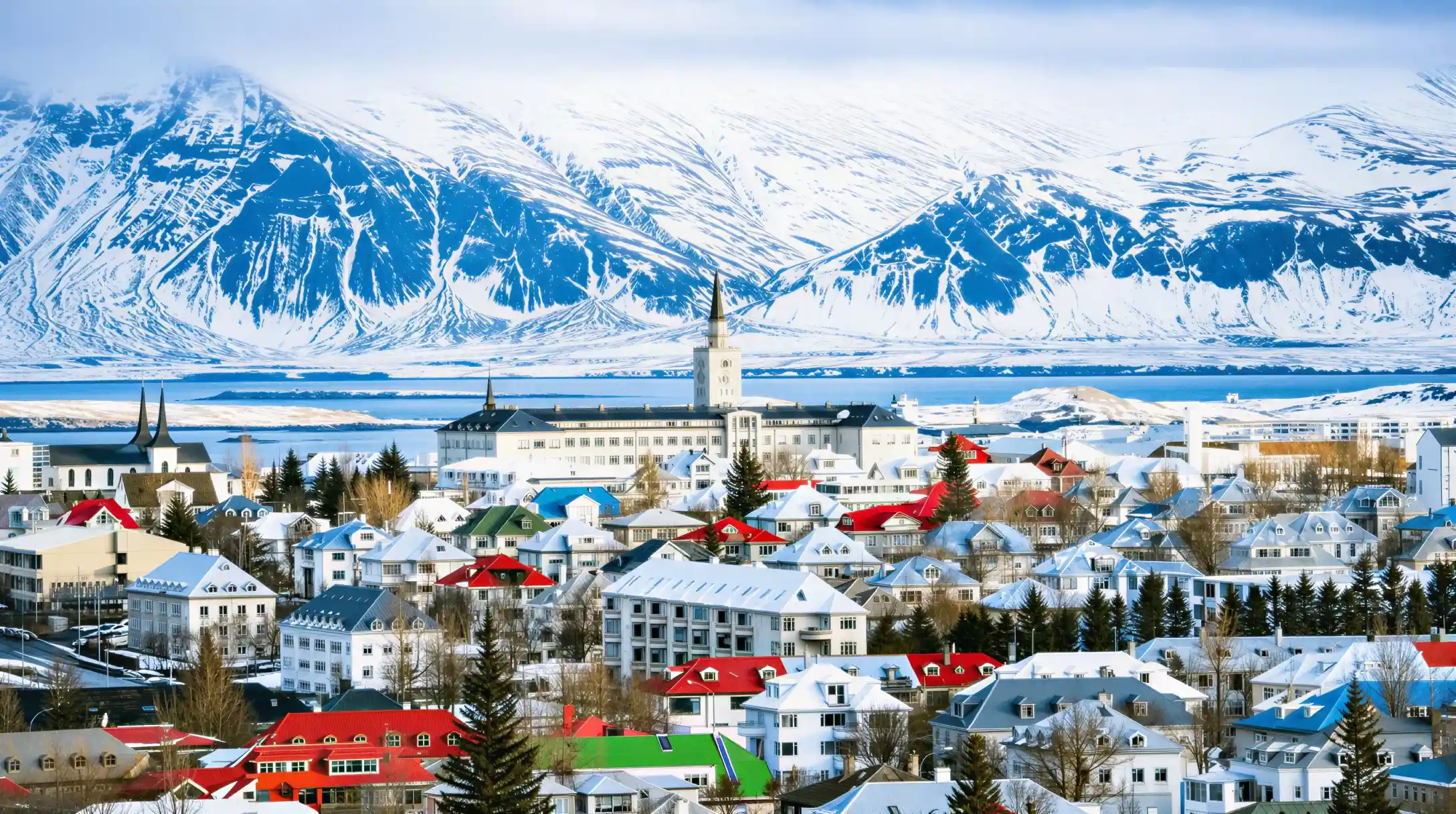
Packing for a beach holiday because the calendar says August is the first mistake most visitors make. Reykjavik weather august sits closer to a mild, breezy autumn afternoon than to a Mediterranean summer, with an average high of 14.1°C (57.4°F) and a low of 8.6°C (47.5°F). Layers matter more than any single warm coat, since the day can swing from sun to drizzle to wind within a few hours. This page sets out the actual numbers for the month, what they mean for the last of the puffins and the return of dark enough skies for the aurora, and where the figures come from.
 Our pick
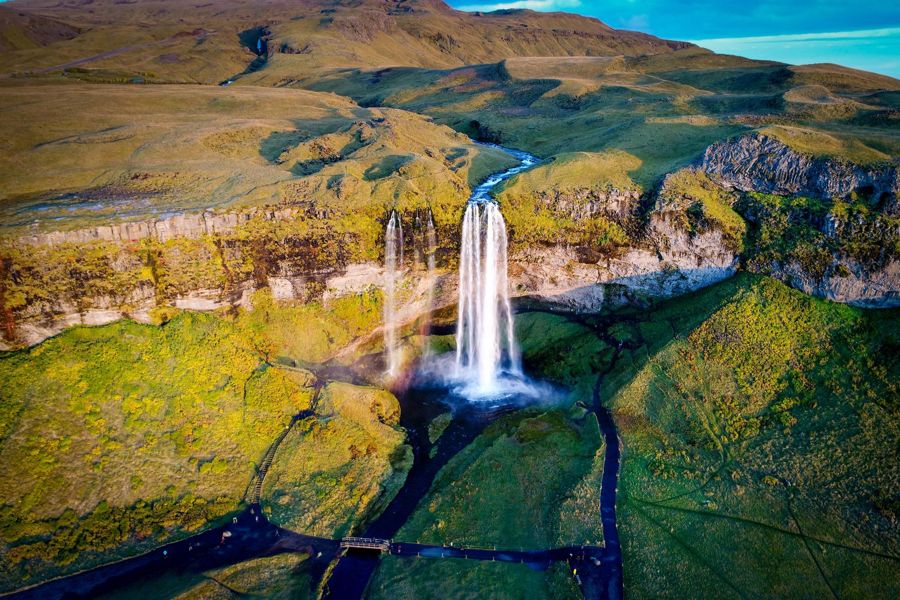
Reykjavik: South Coast Waterfalls, Black Sand & Glacier Tour
South coast waterfalls, black sand beach and glacier viewing on a full-day coach tour
Travellers who want the classic south coast landscapes while daylight is still long
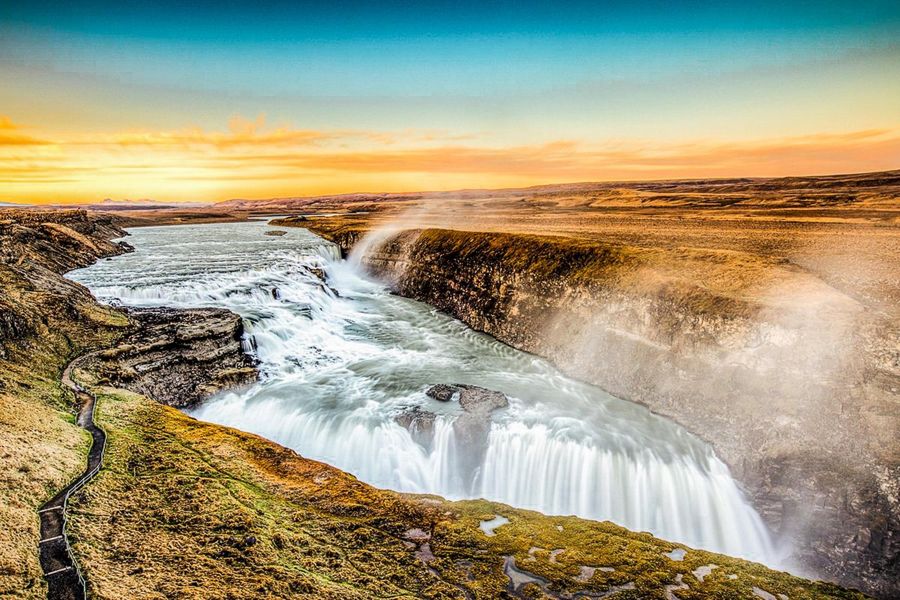
Reykjavik: Golden Circle Full-Day Tour with Kerid Crater
Þingvellir, Geysir, Gullfoss and Kerið crater on one guided day trip
First-time visitors who want the three best-known inland sights in one day
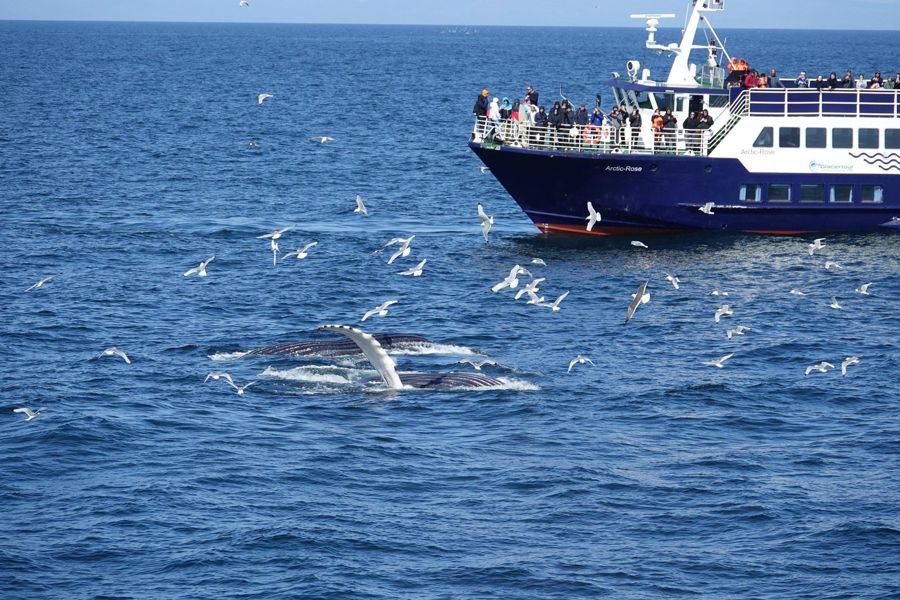
Reykjavik: Whale Watching and Marine Life Cruise
A guided boat trip from the harbour with commentary on marine life in the bay
Travellers taking a summer sailing before the season's skew toward whales fades
Reading the month correctly
Assuming August behaves like July is the second mistake. July is the warmer month on paper, with an average high of 14.9°C (58.8°F) against August's 14.1°C (57.4°F), and the drop shows up most in the evenings once the average low falls to 8.6°C (47.5°F). A jacket that felt unnecessary in July earns its place in a daypack by the middle of August.
Rain gear gets left behind more often than it should. Iceland's coast does not follow a dry-season pattern the way southern Europe does, and a clear morning in Reykjavik gives no promise about the afternoon. A packable waterproof shell, worn over a fleece or a wool layer, covers the range of conditions the month actually produces better than a single heavy coat does.
Wind is the factor visitors from milder climates underestimate most. Exposed spots on the south coast and along the harbour see stronger gusts than the same air temperature would suggest inland, so a windproof outer layer matters as much as a waterproof one. Footwear should assume wet pavement and uneven ground rather than dry city streets, since paths at waterfalls and coastal viewpoints are rarely fully dry even on a sunny day.
None of this makes August a difficult month to visit. It remains one of the more comfortable stretches of the Icelandic year for walking around the city and taking day trips, and the layering habits above are the only real adjustment a visitor coming from a warmer climate needs to make.
| Month | Average high | Average low |
|---|---|---|
| July | 14.9°C (58.8°F) | 9.1°C (48.4°F) |
| August | 14.1°C (57.4°F) | 8.6°C (47.5°F) |
| September | 11.4°C (52.5°F) | 6.2°C (43.2°F) |
- Average high
- 14.9°C (58.8°F)
- Average low
- 9.1°C (48.4°F)
- Average high
- 14.1°C (57.4°F)
- Average low
- 8.6°C (47.5°F)
- Average high
- 11.4°C (52.5°F)
- Average low
- 6.2°C (43.2°F)
What the month actually offers
Treating August as purely a weather statistic misses what the month is for. Things to do in Reykjavik in August still lean heavily outdoors, since the mild highs and long remaining daylight make walking tours, harbour boat trips and day drives to the south coast or the Golden Circle comfortable without the crowding pressure of peak July.
August is the last month the puffin colonies on the islands off Reykjavik are reliably visited, since the birds are present roughly from May through August and no boat trip can show one outside that window. A whale watching or puffin sailing booked in the first half of the month has a far better chance of delivering than one pushed into September.
The other change worth planning around is darkness. The aurora season runs from late August to mid-April, bounded by the return of dark skies rather than by the strength of any display, so a visitor arriving in the final week of August is the first of the year with a realistic chance of seeing the northern lights from Reykjavik, weather and solar activity permitting. Nothing is visible earlier in the summer, however active the aurora is, because the sky never gets dark enough.
{'activity_id': '67019', 'title': 'From Reykjavik: Northern Lights Bus Tour with Hot Cocoa', 'rating': '4.27/5 from 14,847 reviews', 'includes': 'An evening coach trip out of city light pollution with a guide watching for aurora activity', 'best_for': 'Visitors arriving in the last week of August, the first stretch of the year dark enough for a sighting', 'link': '{{AFF_GYG_REYKJAVIK_WEATHER_AUGUST_6}}'}
Comparing August to the rest of the year
Assuming the whole summer is roughly interchangeable is the third mistake. Reykjavik average temperature august sits close behind July's peak, but the gap to June is wider than the gap to September: June's average high of 13.0°C (55.4°F) is nearly a full degree cooler than August's 14.1°C (57.4°F), while September's 11.4°C (52.5°F) marks a sharper drop than the one from July into August.
The comparison that matters most for planning is with the depth of winter. January's average high of 3.2°C (37.8°F) is over ten degrees colder than August's, and the difference in daylight is larger still: Reykjavik gets about 21.2 hours of daylight around the June solstice against roughly 4.1 hours around the December solstice, a range August sits comfortably inside without either extreme.
Average annual precipitation for the Reykjavik station is 875.9 mm (34.5 in) across the year, a normal that individual years can miss by a wide margin, and no single month's share of that total is broken out here. What the figures above do settle is that August is warmer than every month except July, cooler than the depth of summer only slightly, and still firmly on the mild side of the year compared with the winter months either side of it.
Getting around in August conditions
Assuming a rental car is the only sensible way to see the south coast in August overlooks how workable the city's own transport is for the milder half of the year. Strætó's single adult fare is 690 ISK, valid for 75 minutes including transfers, which covers most trips within Reykjavik itself without needing a car at all.
Arriving from Keflavík Airport, the Flybus runs to the BSÍ terminal in about 45 minutes for a one-way fare from 3999 ISK, and the same drive by taxi runs from about 22500 ISK for one to four passengers with Hreyfill, Iceland's taxi cooperative. Either option is manageable in August conditions, since the wind and rain that complicate winter transfers are milder this time of year, though gusts on exposed stretches can still slow a bus schedule.
For day trips beyond the city, a guided coach tour removes the need to judge road and weather conditions personally, which matters more on longer routes to the south coast or the Golden Circle than it does for city transport. Checking Icelandic Meteorological Office forecasts the morning of any independent drive is worth the two minutes it takes, since August weather can still turn quickly enough to affect an unguided itinerary.
{'activity_id': '400146', 'title': 'Keflavik Airport (KEF): Bus Transfer to/from Reykjavik', 'rating': '4.66/5 from 20,988 reviews', 'includes': 'A scheduled bus transfer between Keflavík Airport and central Reykjavik', 'best_for': 'Travellers who want a fixed fare and schedule instead of arranging a taxi on arrival', 'link': '{{AFF_GYG_REYKJAVIK_WEATHER_AUGUST_10}}'}
Before the trip
Assuming a US or UK passport needs anything more than validity for a short Iceland trip trips up more travellers than it should. Americans and Britons need no visa for stays up to 90 days in any 180, under the Schengen rule, though passports should be valid at least three months beyond the departure date and proof of funds or an onward ticket can be requested. Iceland sits inside Schengen while remaining outside the European Union, a distinction that catches out readers expecting EU rules to apply.
Currency is the least of an August visitor's worries, since Iceland runs on cards and contactless payment almost everywhere, and carrying króna in cash is rarely necessary. Plugs are the European type F standard at 230 V, so an adapter is needed for American appliances and a voltage converter for anything not built to handle it.
Tipping is not expected in Iceland and service is generally included in the bill, which surprises visitors used to tipping as standard practice at home. The emergency number is 112, the same number used by the 112 Iceland app that ICE-SAR recommends hikers carry, and it is worth having saved before any day trip outside the city, August's milder weather notwithstanding.
Common questions
Frequently asked questions
Is August warmer than July in Reykjavik? No. July is slightly warmer, with an average high of 14.9°C (58.8°F) against August's 14.1°C (57.4°F), and the gap widens a little further in the average lows. Can the northern lights be seen in August? Only toward the end of the month. The aurora season begins in late August once the sky is dark enough again, and nothing is visible earlier in the summer regardless of solar activity. Are puffins still around in late August? Yes, though the window is closing. Puffins are present on the islands off Reykjavik roughly from May through August, making the back half of the month the last reliable chance of the year. Does it rain a lot in Reykjavik in August? No single month's rainfall is broken out here, but the annual average for the Reykjavik station is 875.9 mm (34.5 in), and August weather can shift between sun and rain within the same day. Is a car necessary for an August visit? Not for the city itself. Strætó buses and the Flybus airport transfer cover most trips, and guided coach tours handle longer day routes without requiring a rental.