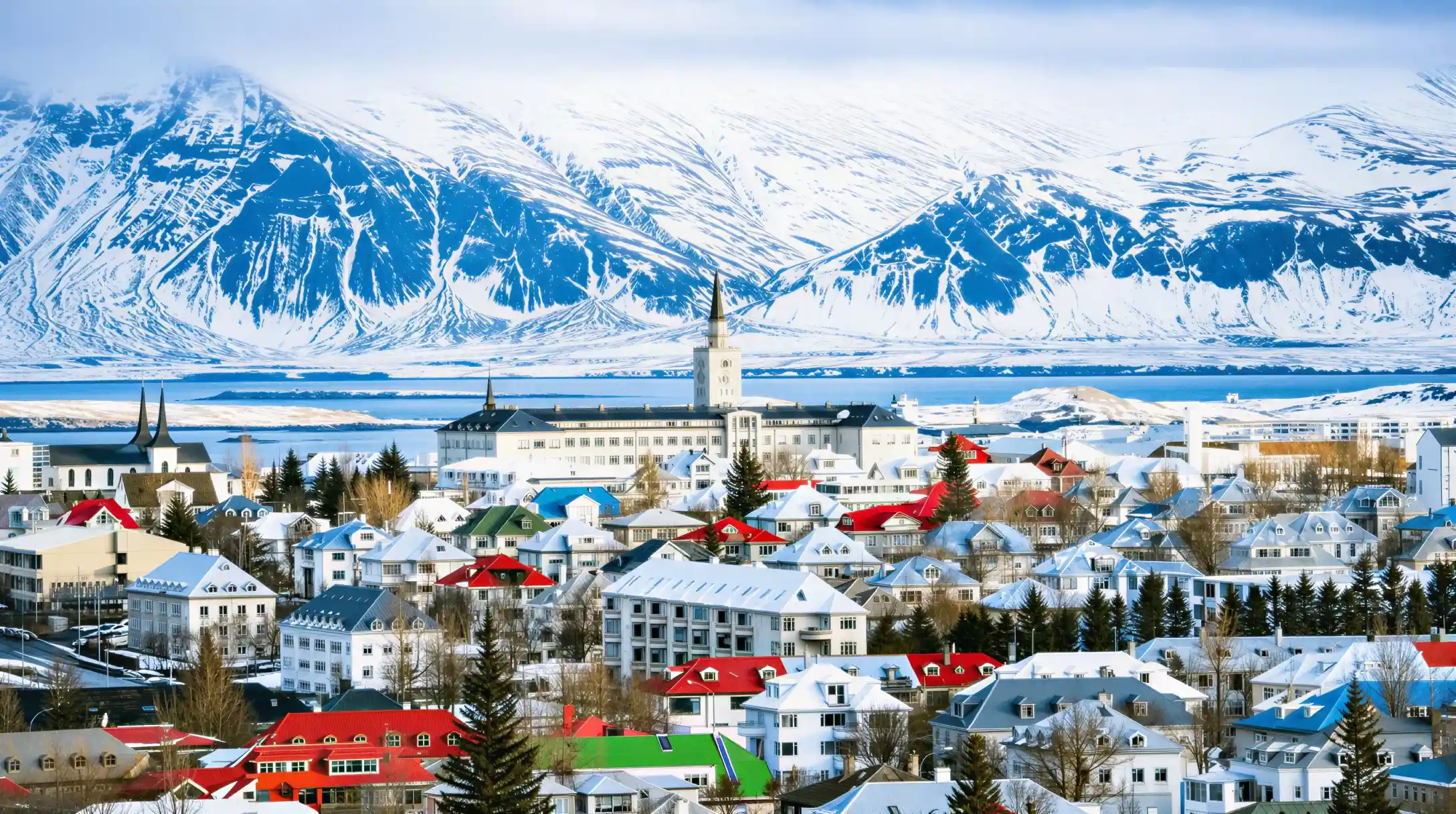
Renting a car in Reykjavik feels like the safe choice, but for the days spent in the city itself it usually sits unused and costs more than it saves. Getting around Reykjavik is mostly a matter of feet and a bus card, because the centre is compact and the parking is not free. Most hotels, restaurants and the main shopping street sit within a short walk of each other, with the Straeto bus network covering the rest of the capital region. A taxi or an airport bus handles the one long trip most visitors actually need, the run to and from Keflavik. The sections below cover fares, distances and where a tour picks travellers up, so the choice between walking, the bus and a taxi is a plain one rather than a guess made at the airport.
 Our pick
Reykjavik: Golden Circle Full-Day Tour with Kerid Crater
Full-day guided coach tour to Thingvellir, Geysir, Gullfoss and Kerid crater
Travellers who want the Golden Circle covered in one organised day without driving
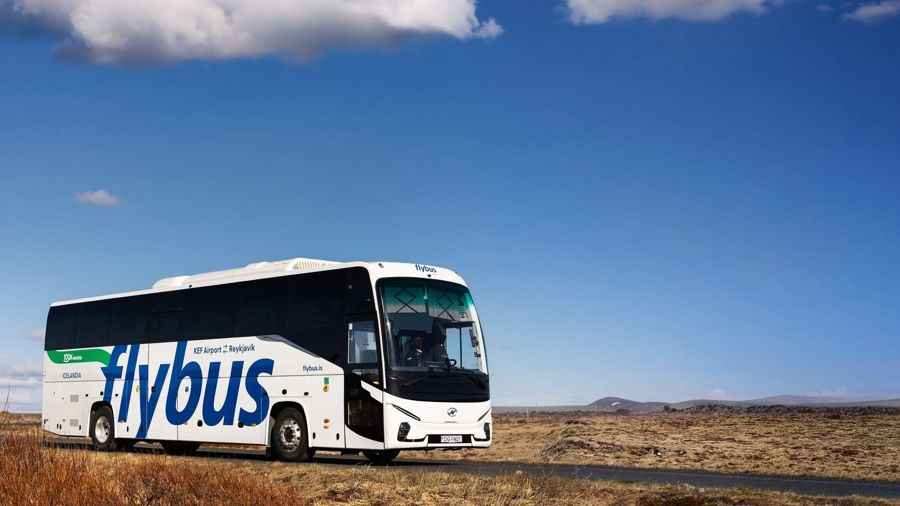
Keflavik Airport (KEF): Bus Transfer to/from Reykjavik
Scheduled coach transfer between Keflavik Airport and Reykjavik
Arrivals who want a seat booked ahead instead of a taxi queue

Reykjavik: South Coast Waterfalls, Black Sand & Glacier Tour
Full-day coach tour to the south coast waterfalls and black sand beach
Travellers who want the south coast covered without a rental car
The bus network and what a ride costs
Visitors often expect a single ticket to cover a full day the way many European cities do, and Reykjavik's own system works differently. A single Straeto fare in Reykjavik costs 690 ISK for an adult, valid for 75 minutes including transfers, so a return trip across town on two buses inside that window still costs one fare rather than two. Children aged 11 and under ride free, and ages 12 to 17 and 67 and over pay a reduced 345 ISK. Tickets are bought and validated through the Klappid app rather than with cash on board, so it is worth installing it before the first ride rather than at the stop.
A reykjavik bus day pass is not a fare category Straeto sells; the 75-minute single fare is the unit the system runs on, and repeat riders buy multiple single fares through the app rather than a flat-rate pass. Planning a route in advance matters more than in a city with a subway, because Reykjavik has no rail system and every connection runs through a bus stop. A reykjavik bus stops map is worth checking against the Klappid app before setting out, since stop names correspond to streets and landmarks rather than numbered lines a visitor already knows.
| Trip | Fare or time |
|---|---|
| Straeto single fare (adult) | 690 ISK, 75 minutes including transfers |
| Straeto single fare (ages 12-17, 67+) | 345 ISK |
| Straeto single fare (11 and under) | Free |
| Flybus, Keflavik to Reykjavik, one way | 3999 ISK |
| Flybus, Keflavik to Reykjavik, return | 7298 ISK |
| Flybus, child 6-15, one way | 2000 ISK |
| Taxi, Keflavik to Reykjavik (Hreyfill, 1-4 passengers) | 22500 ISK |
| Taxi, Keflavik to Reykjavik (Hreyfill, 5-8 passengers) | 29250 ISK |
| Drive time, Keflavik Airport to downtown | 45 min |
| Old town, across | About 1.5 km |
- Fare or time
- 690 ISK, 75 minutes including transfers
- Fare or time
- 345 ISK
- Fare or time
- Free
- Fare or time
- 3999 ISK
- Fare or time
- 7298 ISK
- Fare or time
- 2000 ISK
- Fare or time
- 22500 ISK
- Fare or time
- 29250 ISK
- Fare or time
- 45 min
- Fare or time
- About 1.5 km
Ride-hailing apps and what actually works
A phone with the Uber app already installed is not much use here. Does Reykjavik have Uber is one of the first things a lot of American visitors ask before landing, expecting the same app that works at home, and the answer changes the whole plan for getting to and from the airport. What operates instead is the local taxi fleet, booked by phone, through a taxi company's own app, or picked up directly at a taxi rank. Hreyfill, one of the taxi cooperatives, publishes a fixed fare of 22500 ISK for one to four passengers between Keflavik Airport and Reykjavik, and 29250 ISK for five to eight passengers; a metered ride with another operator can run lower, roughly 15,000 to 25,000 ISK depending on the company and traffic.
For a fixed budget and a scheduled departure, the Flybus coach is the cheaper of the two airport options, priced from 3999 ISK one way to the BSI bus terminal, with a return ticket at 7298 ISK and a child fare of 2000 ISK for ages 6 to 15. A taxi remains faster door to door and useful late at night or with heavy luggage, while the bus suits a traveller happy to walk the last stretch from BSI.
Walking the centre versus driving it
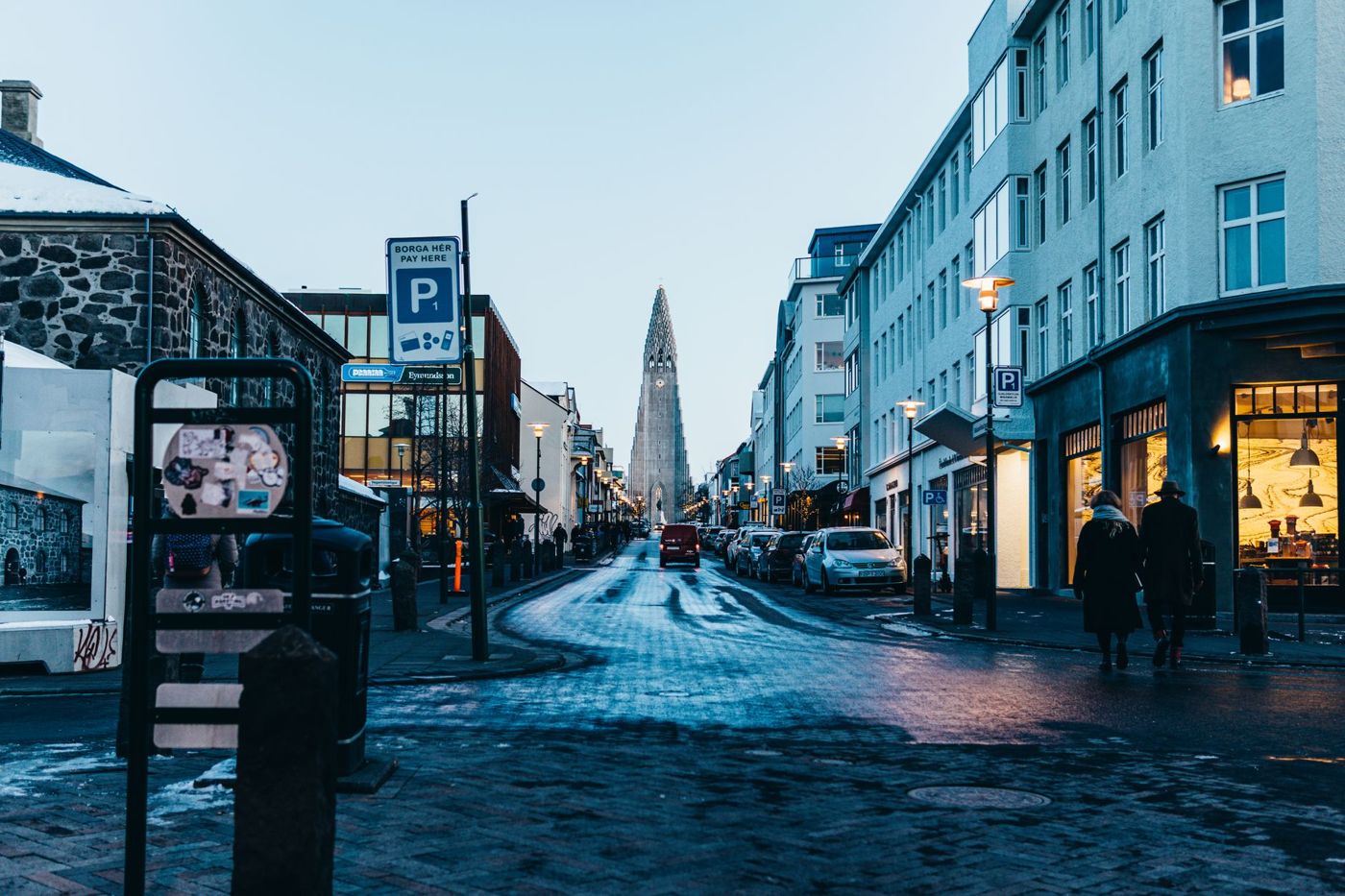
A rental car parked outside a hotel downtown does more sitting than driving, because the sights that matter inside the city are close enough to reach on foot. Is Reykjavik walkable is a fair question for a place this far north, and the answer sits in the numbers: the old town is about 1.5 km across, so a sightseeing bus buys comfort rather than distance once someone is already inside it. Streets are compact, mostly flat near the harbour, and the main shopping street runs in a straight line through the centre, which makes wrong turns hard to make and easy to correct.
How to get around Reykjavik comes down to three tools used in combination rather than one that does everything: walking for the centre, the Straeto bus for anything further out in the capital region, and a taxi or the Flybus for the one long trip to Keflavik. Winter changes the walking calculation more than the distance does, since the city gets only 4.1 hours of daylight around the December solstice compared with 21.2 hours in June, so a short walk after dark is normal rather than a sign of running late.
Finding a stop and a pickup point
A tour confirmation naming a stop number means little without knowing where that stop actually is, and this is where most last-minute confusion happens on a tour morning. A reykjavik bus stop map, whether opened in the Klappid app or checked at a physical stop sign, shows the stop name printed on the post itself, which is the detail worth matching against a booking confirmation the night before rather than the morning of. Many coach tours and airport transfers use a shared pickup point in the city centre rather than a hotel door, and stop 12 is one of the points named on bookings for exactly this reason, serving as a fixed meeting spot rather than a hotel-by-hotel collection round.
Arriving at the right stop with time to spare matters more in Reykjavik than in a city with frequent service on every line, since a missed pickup at a shared stop can mean waiting for the next scheduled run rather than the next train a few minutes later. Checking the stop name against the map the evening before removes the one variable that causes the most missed pickups on tour mornings.
The taxi habit worth keeping
Falling back on a familiar ride-hailing app out of habit is the mistake worth avoiding before the trip rather than during it. Is there Uber in Reykjavik comes up again once travellers are actually on the ground and reaching for their phone after a late dinner or a delayed flight, and the practical answer stays the same: no ride-hailing app operates here, and the taxi fleet, called by phone or a company's own app, or hailed at a rank, fills that role instead. Saving the number of a local taxi company, or the app of one of the cooperatives such as Hreyfill, before arrival avoids the fumbling that happens when a phone shows no cars nearby on an app that has no local drivers to show.
Late at night, in poor weather, or with luggage after a long flight, a taxi is worth the fare over a walk or a wait for the next bus. During the day, inside the centre, the same trip is usually shorter on foot than it would be spent finding a taxi at all.
Common questions
Does Reykjavik have a metro or tram system?
No. The Straeto bus network is the only public transit in the city, and every connection across the capital region runs through a bus stop rather than a rail line.
How much is a taxi from Keflavik Airport to the city centre?
Hreyfill's fixed fare is 22500 ISK for one to four passengers and 29250 ISK for five to eight; other operators running on the meter can come in lower, roughly 15,000 to 25,000 ISK depending on traffic.
Do Straeto buses take cash?
Fares are bought and validated through the Klappid app rather than paid in cash on board, so installing the app before the first ride is worth doing ahead of time.
Is a car necessary for a short stay in the city?
Inside the centre, no. The old town is about 1.5 km across, and a car mostly sits parked while a visitor covers that distance on foot or by bus.