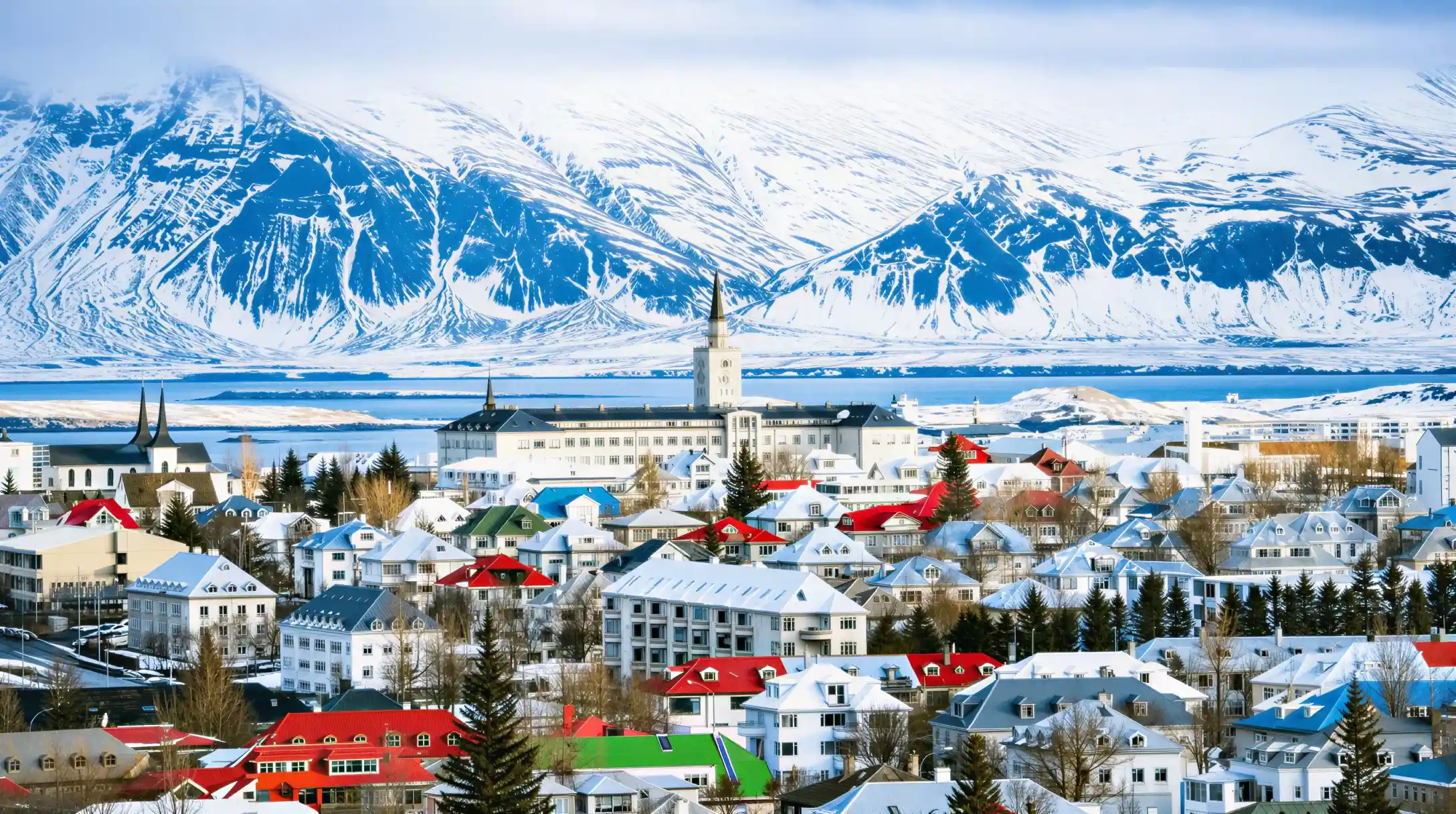
A rented car covers the ring road. It does not cover where to sleep on it, and that is the part campervan rental Reykjavik actually settles: a vehicle that is also a bed removes the search for a room in towns that have few of them. The choice is not just size against budget. It is whether the itinerary planned includes any F-road, because that decision picks the vehicle before anything else does. A two-berth camper suits a coastal loop on paved roads. A 4x4-based motorhome suits a trip that crosses the highlands. Both are rented from Reykjavik, and both come with rules on where they may legally park for the night.
 Our pick
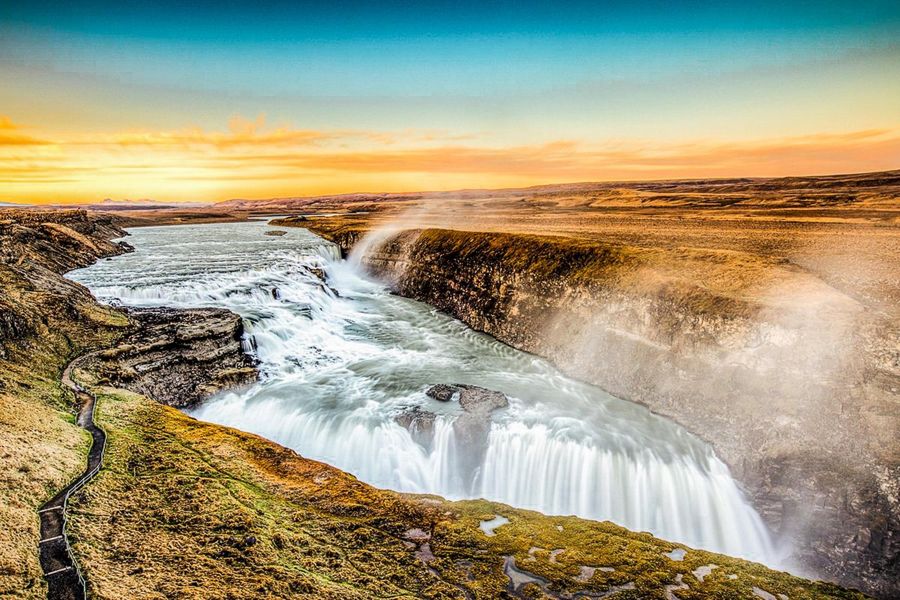
Reykjavik: Golden Circle Full-Day Tour with Kerid Crater
Guided full-day coach route to Þingvellir, Geysir, Gullfoss and Kerið
Readers who want the Golden Circle without driving or sleeping in a vehicle
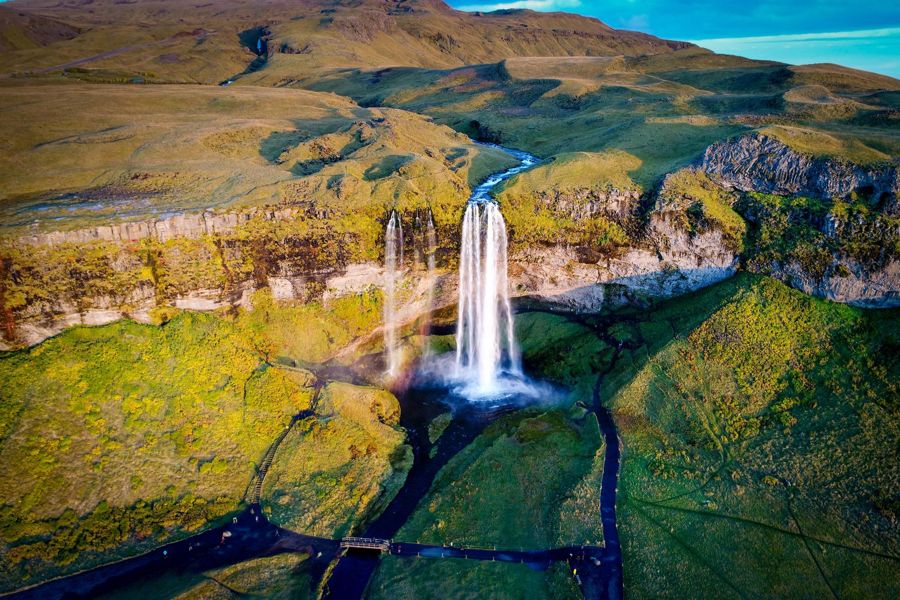
Reykjavik: South Coast Waterfalls, Black Sand & Glacier Tour
Guided day tour to the south coast waterfalls and black sand beach
Readers weighing a guided south coast day against a self-drive camper leg
What a rented camper actually gets you around Reykjavik
Most people renting a campervan Reykjavik picture the ring road as one continuous loop open all year. Route 1 is about 1,300 km, a figure Vegagerðin itself gives only as "more than 1,300 km", and it stays open through winter on the lowland stretches that circle the island. The highland interior is a different network entirely, made of F-roads that connect to Route 1 but are not part of it, and those close every winter and reopen on a schedule the road authority sets each spring, not a fixed calendar date.
A camper booked in Reykjavik is usually a 2x4 vehicle unless the rental specifically lists 4x4 drivetrain, and a 2x4 camper is not permitted on an F-road regardless of driver experience or weather conditions. That single distinction is worth confirming before booking rather than after arriving, because a Reykjavik camper rental listed as a "camper" without a drivetrain spec is very likely the paved-road version. Reading the vehicle spec sheet before the itinerary is the safer order: pick the roads first, then the vehicle that is allowed on them.
Campsite provision follows the same logic as the roads. Towns along the south coast and around Vík have serviced campsites with facilities; the F-road network largely does not, which is one more reason a highland trip needs a vehicle built for it and a plan built around where sites actually exist.
| Route from Reykjavik | One way | Round trip before stops |
|---|---|---|
| Þingvellir | 47.6 km, 47 min | 1 h 34 |
| Geysir | 115.3 km, 1 h 44 | 3 h 28 |
| Gullfoss | 123.1 km, 1 h 52 | 3 h 44 |
| Vík | 186.9 km, 2 h 47 | 5 h 34 |
| Landmannalaugar | 182.4 km, 2 h 57 | 5 h 54 |
| Jökulsárlón | 377.7 km, 5 h 40 | 11 h 20 |
- One way
- 47.6 km, 47 min
- Round trip before stops
- 1 h 34
- One way
- 115.3 km, 1 h 44
- Round trip before stops
- 3 h 28
- One way
- 123.1 km, 1 h 52
- Round trip before stops
- 3 h 44
- One way
- 186.9 km, 2 h 47
- Round trip before stops
- 5 h 34
- One way
- 182.4 km, 2 h 57
- Round trip before stops
- 5 h 54
- One way
- 377.7 km, 5 h 40
- Round trip before stops
- 11 h 20
The size that fits the trip, not the brochure photo
A brochure photo of a large motorhome is not what most itineraries need. An rv rental Reykjavik booking that seats and sleeps a family of five is heavier, wider and slower on the narrower stretches of Route 1 than a two-berth van, and it changes where parking is realistic in towns built before motorhomes existed. Matching berths to the actual number of travellers, rather than renting up for comfort, keeps the vehicle inside what small car parks and campsite pitches can take.
Wild camping outside a designated site is restricted in Iceland, and the restriction applies to a Reykjavik camper van rental exactly as it applies to a tent. A vehicle with a bed in it does not carry an exemption to park and sleep wherever the view is good; the legal option almost everywhere is a serviced or informal campsite, not a layby or a farm gate. That single rule reshapes a route more than vehicle size does, because it fixes the evening stops before the daytime driving is even planned.
Checking a rental's insurance terms before signing matters here too: coverage on gravel and F-road sections is typically excluded or limited compared with paved Route 1 driving, a term set by the rental company rather than a government rule.
{'activity_id': '400146', 'title': 'Keflavik Airport (KEF): Bus Transfer to/from Reykjavik', 'rating': '4.66/5 from 20,988 reviews', 'includes': 'Scheduled bus transfer between Keflavík airport and Reykjavik', 'best_for': 'Readers picking up a campervan in the city rather than at the airport', 'link': '{{AFF_GYG_CAMPERVAN_RENTAL_REYKJAVIK_6}}'}
Reading the F-road ban correctly
The rule sounds simple until a specific road is in question: a motorhome rental Reykjavik agreement that lists the vehicle as 2x4 forbids every F-numbered road on the map, not just the well-known ones like the routes into Landmannalaugar. There is no size or weight exception for a large 2x4 motorhome; the classification is about drivetrain, not dimensions. Safetravel.is publishes the outdoor safety guidance behind this, including river crossings and closures that ICE-SAR responds to when drivers ignore it.
A 10 day itinerary ring road iceland campervan plan that stays on Route 1 and its paved spurs never needs a 4x4 at all, which is worth knowing before paying more for a drivetrain the route does not require. The highland roads that do require it open on dates Vegagerðin sets and publishes each spring, commonly from early to mid June depending on the road and the winter before it, and a plan drawn up in the off-season should treat any highland leg as provisional until that opening is confirmed.
Fuel stops thin out away from Route 1, and a 2x4 camper sticking to the ring road and its paved connectors will find them at roughly the intervals a normal car does; a highland detour changes that math along with everything else.
Choosing a guided day over a self-drive leg
Not every stretch of an iceland camper van tour benefits from being self-driven. The Jökulsárlón run is 377.7 km (234.7 miles) one way, 5 hours 40 minutes each direction and 11 hours 20 minutes round trip before a single stop, a distance that turns a self-drive day into most of the daylight hours available. Booking a guided day tour for that single leg and keeping the camper for shorter, closer stretches is a way to keep a highland-adjacent itinerary from being eaten by driving time.
The Golden Circle sits at the other end of the same trade-off: Þingvellir, Geysir and Gullfoss together make about 3 hours 45 minutes of driving in a loop, short enough that most travellers do it either by camper or by guided coach without much difference in the day.
{'activity_id': '248622', 'title': 'Reykjavik: Whale Watching and Marine Life Cruise', 'rating': '4.50/5 from 11,217 reviews', 'includes': 'Boat cruise from Reykjavik harbour with marine life sightings', 'best_for': 'Readers filling a Reykjavik day before or after picking up a campervan', 'link': '{{AFF_GYG_CAMPERVAN_RENTAL_REYKJAVIK_10}}'}
What a route plan should assume before booking
A campervan tour iceland route that includes both the south coast and a highland stretch is really two trips stitched together: paved driving that any 2x4 camper handles, and F-road driving that legally requires a 4x4. Planning both into one continuous loop without checking which vehicle covers which section is the most common mistake in a first-time itinerary.
Parking fees now apply at most of the free-to-visit natural sites along common camper routes: Þingvellir and Geysir both charge 1,000 ISK, Skógafoss 1,000 ISK from a car park about 500 m out, Seljalandsfoss 900 ISK and Sólheimajökull 750 ISK. Gullfoss remains free to park at. None of these are included in a campervan rental price, and budgeting a small cash or card float for them keeps the daily stops from becoming a surprise.
Insurance exclusions are worth re-reading a second time before a highland leg: rental terms commonly exclude sand and ash damage and limit or exclude gravel and F-road coverage, a term set by the rental company and confirmed on its own booking page rather than assumed from the vehicle class.
Common questions
Can a standard campervan drive Iceland's F-roads?
No. F-roads require a 4x4 vehicle; a standard 2x4 campervan is not permitted on them regardless of the driver's experience.
Is wild camping allowed anywhere along the route?
No. Camping outside a designated or registered site is restricted, and a campervan does not carry an exemption from that rule.
When do the highland F-roads open each year?
Vegagerðin sets and publishes the opening dates each spring, and they vary by road and by the previous winter, so a highland leg planned in advance should be treated as provisional until the dates are confirmed.
Does rental insurance cover F-road driving?
Rental terms commonly exclude or limit coverage for sand, ash and gravel damage, which affects highland driving more than paved Route 1 driving. The terms are set by the rental company and should be read on its own booking page.