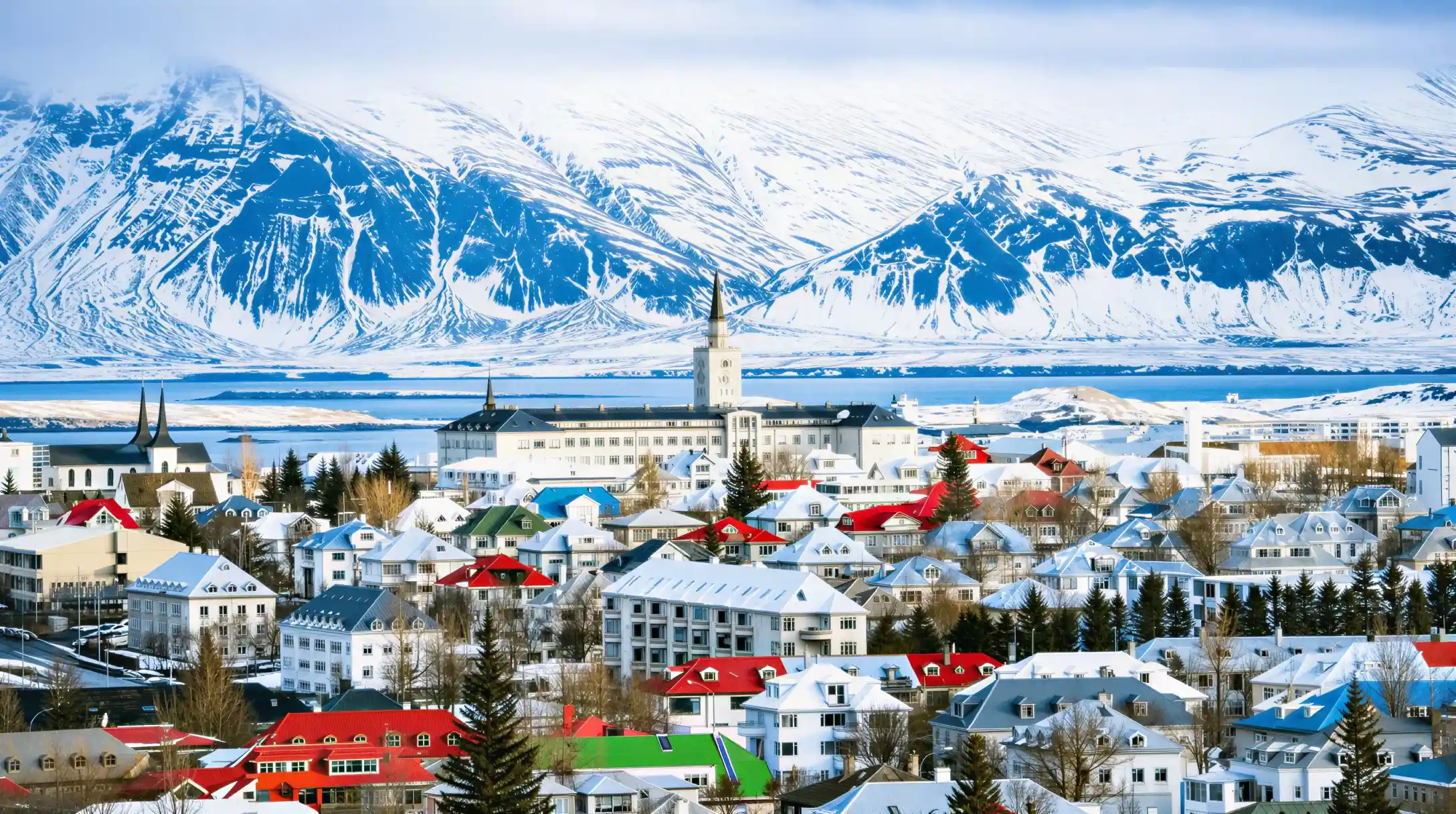
Packing for Reykjavik weather may means planning around a month that can run a cardigan and a puffer jacket within the same afternoon. The average high reaches 10.1 °C (50.2 °F) and the average low sits at 4.0 °C (39.2 °F), a jump from April's 6.9 °C (44.4 °F) high that makes outdoor plans genuinely comfortable for the first time since autumn. This page settles what that swing means for what to wear, what to book and what is still closed. Daylight is long, prices sit below the summer peak, and the puffins are just arriving on the islands offshore, but the highland interior has not opened for the season yet.
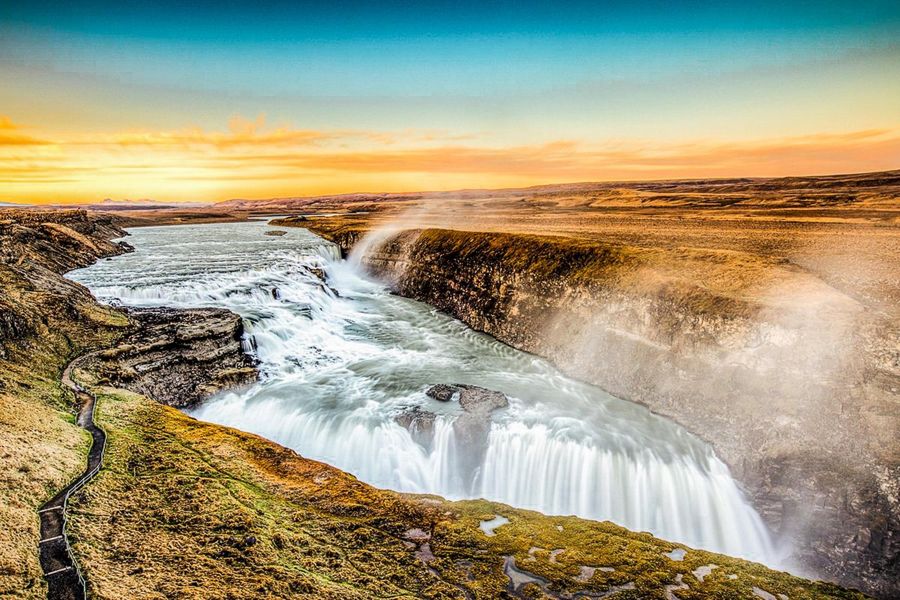 Our pick
Reykjavik: Golden Circle Full-Day Tour with Kerid Crater
Full-day guided coach tour covering Þingvellir, Geysir and Gullfoss, with a stop at Kerið crater
First-time visitors who want the Golden Circle sites covered in a single day without renting a car
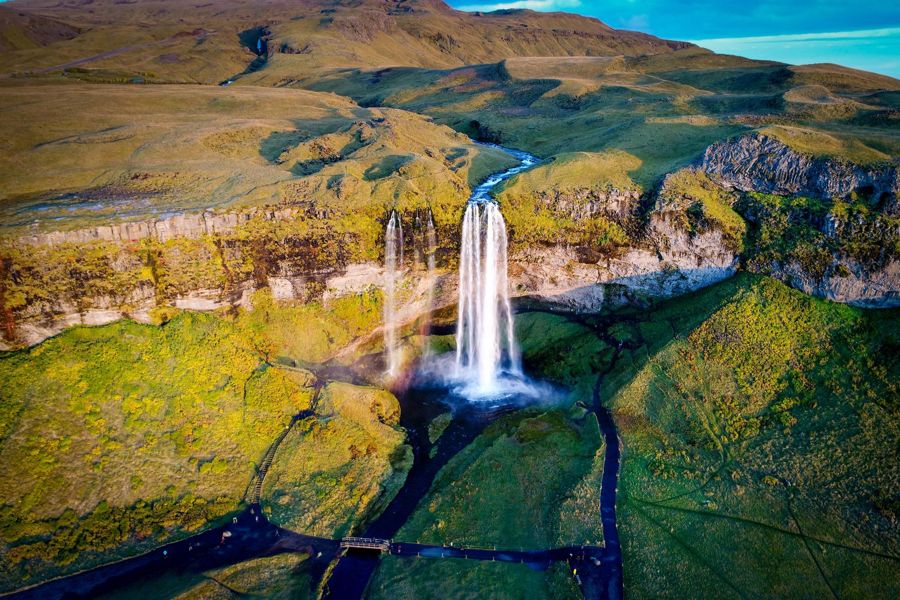
Reykjavik: South Coast Waterfalls, Black Sand & Glacier Tour
Full-day coach tour of the south coast waterfalls, the black sand beach and a glacier viewpoint
Travellers who want the south coast highlights without waiting for the F-roads to open
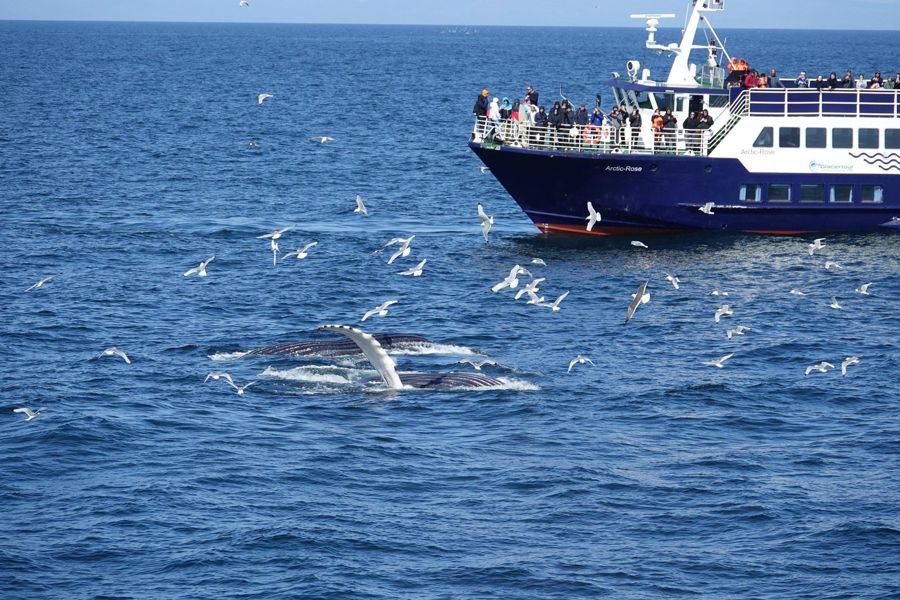
Reykjavik: Whale Watching and Marine Life Cruise
Boat tour from Reykjavik harbour with a marine guide
Visitors timing a trip to the start of the puffin and whale season on the water
What the temperature actually means for a day outdoors
A high of 10.1 °C (50.2 °F) sounds mild on paper, and readers who pack for that number alone tend to arrive underdressed. The low of 4.0 °C (39.2 °F) is the figure that matters more, because it sets the temperature for the first and last hours of any outdoor plan, before the sun has warmed the air or after it starts to drop. Wind off the Atlantic drops the felt temperature further than either number suggests on its own, and a still, sunny afternoon in the city can feel entirely different from an exposed coastal viewpoint an hour later.
Layers do the work that a single heavy coat cannot. A base layer, a mid layer and a wind-resistant outer shell cover the range between a sheltered street in the city and an open crater rim or waterfall platform, where there is nothing to break the wind. Waterproofing matters as much as warmth: May sits between the wetter months either side of it, but a clear forecast in the morning is not a guarantee for the afternoon. Footwear is the other place plans go wrong. Trainers are fine on paved streets downtown and wrong at Kerið or Þingvellir, where paths are gravel, uneven, and sometimes still wet from spring melt.
The rise from April's 6.9 °C (44.4 °F) average high is the more useful comparison than any single day's forecast, because it marks the point in the year when outdoor tours stop being a cold-weather compromise and start being the main reason to come. June's 13.0 °C (55.4 °F) average high is warmer still, but May reaches that comfort threshold at lower prices and thinner crowds.
May climate normals, Reykjavik
- Average high
- 10.1 °C (50.2 °F)
- Average low
- 4.0 °C (39.2 °F)
- April average high, for comparison
- 6.9 °C (44.4 °F)
- June average high, for comparison
- 13.0 °C (55.4 °F)
Booking around what is open and what is not
The highland interior is the single biggest thing visitors get wrong about a May trip. Roads like F208 open around 2 June on average and F225 around 16 June, both dates set year to year by Vegagerðin, so an itinerary built around Landmannalaugar in May is planning for a road that has not opened yet. Everything on the ring road and the standard Golden Circle and south coast routes remains fully accessible, which is where a May trip should focus.
Things to do in Reykjavik in May lean toward the coast and the classic day tours rather than the highlands. Puffins begin arriving on the islands off Reykjavik roughly in May, at the start of a season that runs through August, so a whale watching or coastal boat trip booked for this month has a real chance of a sighting where a February or March booking would not. Daylight is generous enough by this point in spring to fit a full-day Golden Circle or south coast tour with hours to spare either side of it, without the long dark mornings that shape a winter itinerary.
May also sits ahead of the summer price peak, which runs through June, July and August, while still offering weather comfortable enough for a full day outdoors. A reader choosing between a May and a July trip is trading a few degrees of warmth for lower prices and thinner crowds at the same sites.
Rain, wind and the days plans change
A dry forecast for the whole day is not something May in Reykjavik reliably offers. Precipitation is spread through the year rather than concentrated in one wet season, and a plan that assumes a single unbroken stretch of sunshine is the plan most likely to need adjusting. Wind is the more disruptive factor of the two for anything on the water or on an exposed cliff or crater edge, and it can pick up faster than a printed forecast suggests.
Building a loose day rather than a fixed schedule handles this better than trying to outguess the weather. A tour with a coach and a guide, such as a Golden Circle or south coast itinerary, keeps a group moving between sheltered stops even when conditions turn, which is harder to arrange independently on a single rented car with no local knowledge of where to wait out a squall. A whale watching or coastal boat trip is the one most worth checking on the morning of departure, since sea conditions affect a small boat more than a road affects a coach.
None of this means a May trip needs a backup plan for every hour. It means the outer layer belongs in the day bag rather than left at the accommodation, and that a forecast checked the night before is worth checking again in the morning.
May compared with the months either side
| April | 6.9 °C (44.4 °F) | 1.0 °C (33.8 °F) |
| May | 10.1 °C (50.2 °F) | 4.0 °C (39.2 °F) |
| June | 13.0 °C (55.4 °F) | 7.2 °C (44.96 °F) |
- 6.9 °C (44.4 °F)
- 1.0 °C (33.8 °F)
- 10.1 °C (50.2 °F)
- 4.0 °C (39.2 °F)
- 13.0 °C (55.4 °F)
- 7.2 °C (44.96 °F)
Getting from the airport and around the city
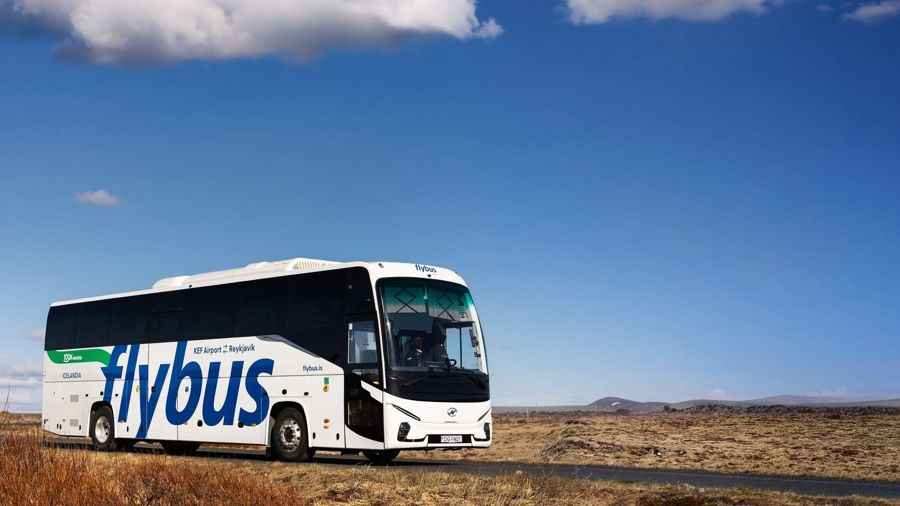
Nearly every international flight lands at Keflavík, 50 km (31 miles) southwest of the city, and the drive into Reykjavik takes about 45 minutes by car or airport bus in normal conditions. May's milder weather removes the winter-driving uncertainty that can stretch that time in December or January, which makes the trip more predictable to plan around, whether that means a scheduled airport bus or a rental car picked up straight at the terminal.
Once in the city, a single Strætó bus fare costs 690 ISK and covers 75 minutes including transfers, which is enough for most point-to-point trips around the centre and out to the pools. A rental car earns its cost on a day trip out to the Golden Circle or the south coast, where public transport does not reach, but is unnecessary for a stay confined to the city itself. Milder May temperatures also make walking a realistic way to cover downtown Reykjavik, something that is a harder sell in the depths of winter.
A US or UK driving licence is valid for a visit, and the roads open at this time of year need no special preparation beyond normal care and attention to a forecast that can shift through the day.
What to pack for a May trip
A waterproof, wind-resistant outer shell is the single item that matters most, more than the thickness of any jacket underneath it. Underneath it, a warm mid layer such as fleece or wool covers the gap between the 4.0 °C (39.2 °F) low and the 10.1 °C (50.2 °F) high, and a base layer handles the difference between a sheltered street and an open coastal path. None of this needs to be heavy winter kit; May's range is milder than the depths of winter, but it is still a range, not a single number.
Footwear should handle gravel, mud and wet grass rather than paved streets alone, since the Golden Circle and south coast sites that dominate a May itinerary are outdoor walking routes, not paved viewpoints. Sunglasses are worth packing too. Daylight hours are long by this point in the year, and low-angle sun off water or wet rock is brighter than the air temperature suggests.
European type F plugs at 230 V mean US appliances need an adapter, and often a converter for anything that is not dual-voltage. Iceland is effectively cashless, so carrying local currency is unnecessary; a card that works contactless covers nearly everything, including the pool and tour payments this page has priced.
Common questions
Is May a good month to visit Reykjavik?
It combines a comfortable average high of 10.1 °C (50.2 °F), long daylight and prices below the June to August peak. The highland interior is still closed, so plans stay focused on the city, the Golden Circle and the south coast.
Do I need a heavy winter coat in Reykjavik in May?
No. A waterproof, wind-resistant shell over a warm mid layer covers the range between the 4.0 °C (39.2 °F) low and the 10.1 °C (50.2 °F) high more effectively than one heavy coat.
Can I drive the highland F-roads in May?
Not reliably. F208 opens around 2 June and F225 around 16 June on average, both set each year by Vegagerðin, so most highland routes are still closed through May.
Will I see puffins in Reykjavik in May?
Puffins begin arriving on the islands off Reykjavik roughly in May, at the start of a season that runs into August, so a boat trip booked for this month has a realistic chance of a sighting.