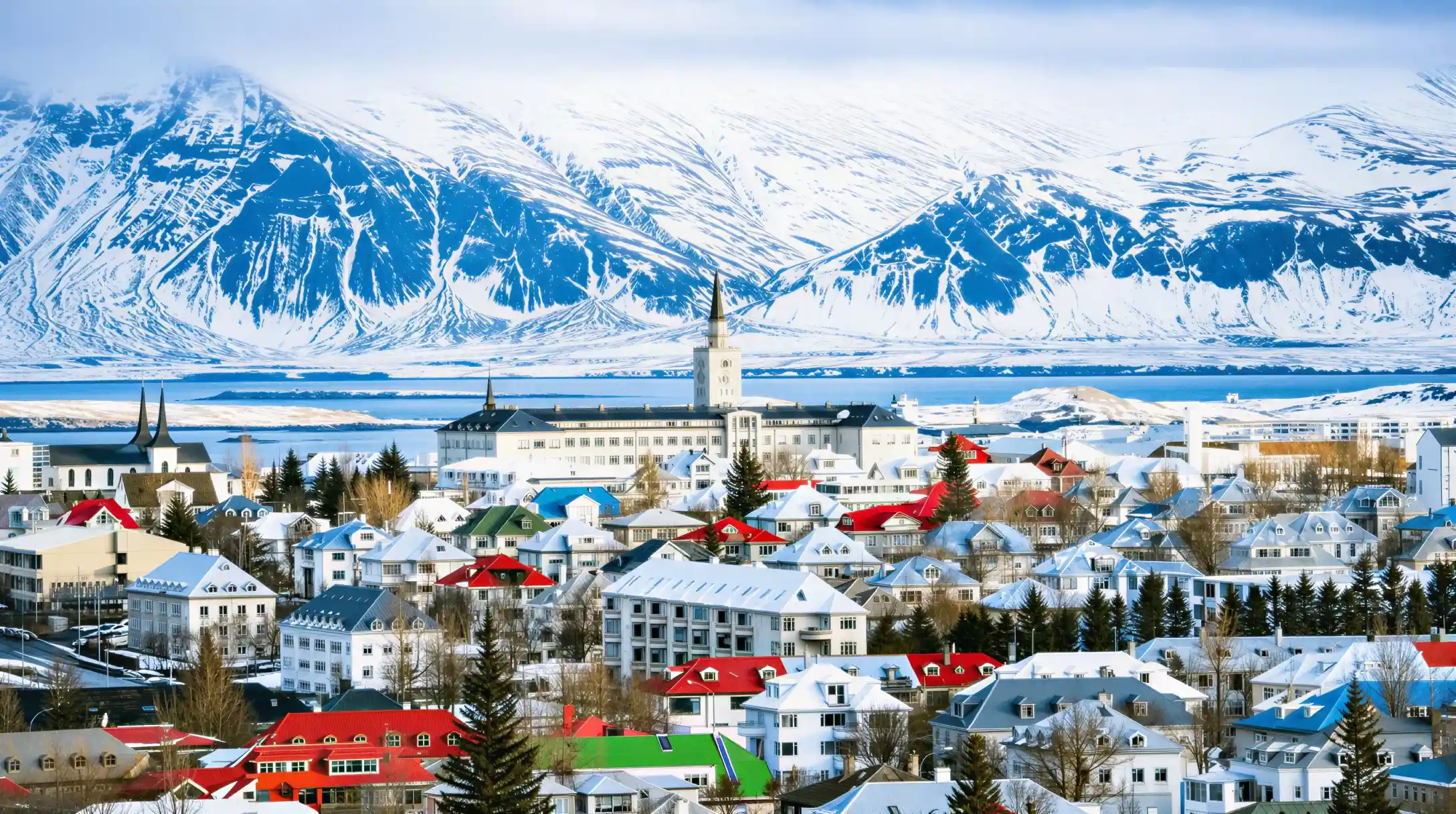
Most people planning Reykjavik in summer picture long light and mild weather and get one half right. June to August brings the year's brightest skies and the busiest hotel weeks, but the temperature rarely climbs far past the mid-teens Celsius, and rain is still a normal part of most days. This page settles what the season actually offers: how much daylight there is, what opens that is closed the rest of the year, and what fills up first. It leaves the day-by-day forecast to the weather pages and sticks to the decisions worth making before a flight is booked.
 Our pick
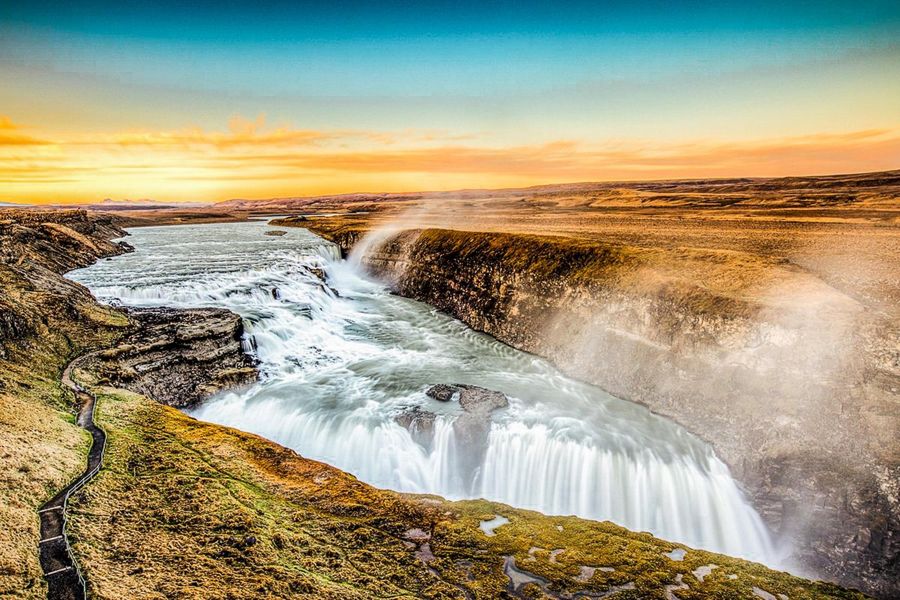
Golden Circle Full-Day Tour with Kerid Crater
Þingvellir, Geysir, Gullfoss and Kerið in one day, guided
First-time visitors who want the classic route covered in a single trip
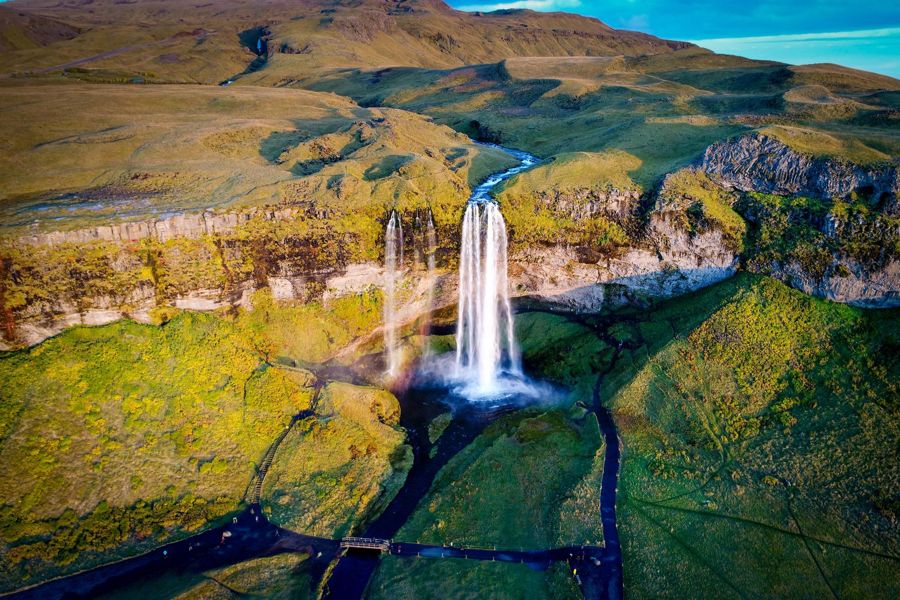
South Coast Waterfalls, Black Sand & Glacier Tour
South coast waterfalls, a black sand beach and glacier scenery, guided
Travellers who want the south coast covered without driving themselves
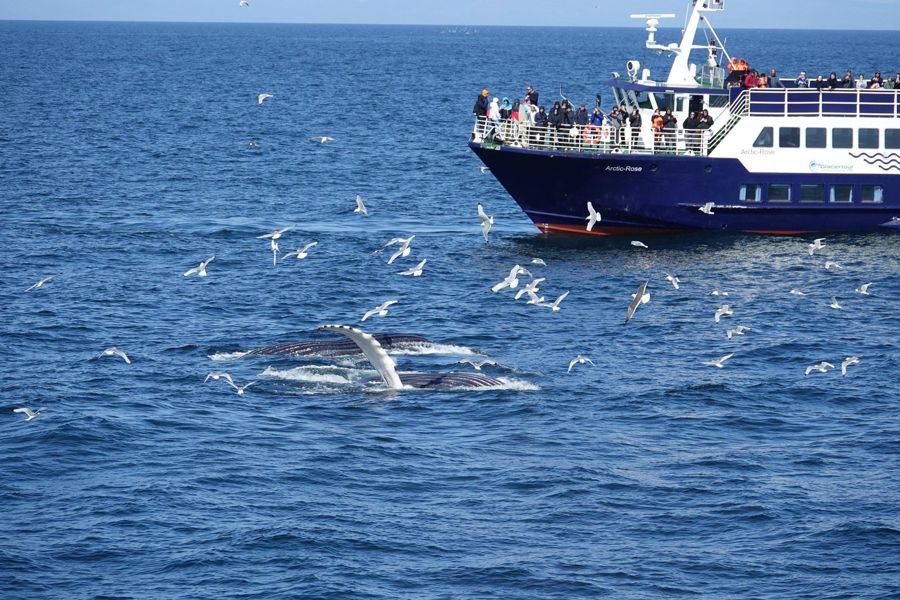
Whale Watching and Marine Life Cruise
A guided boat trip from Reykjavik harbor for whale and marine life sightings
Travellers prioritising a summer boat trip over a bus tour
The harbor is busier than photos suggest
A quiet, empty waterfront is the wrong picture to bring. Reykjavik harbor summer traffic includes whale-watching boats, fishing trawlers and day-trip vessels leaving through the morning and again in the afternoon, and the walkways along it fill with visitors heading to or from a boat. Restaurants and food stalls near the water keep longer hours than in winter, since the extended daylight gives them a longer trading day to work with.
Whale sailings run from Reykjavik year round, but summer carries the strongest schedule and the calmest average conditions for spotting marine life from the deck. Puffins nest on islands off the coast roughly from May to August, and outside those months no boat can show one no matter what a listing promises. Anyone planning a boat trip around puffins specifically should keep it inside that window rather than assuming a summer date guarantees one, since the birds leave the islands by late summer.
Layers still matter on the water even when the town itself feels mild. The wind off the bay drops the felt temperature well below whatever the forecast says for the streets a few hundred metres inland.
Reykjavik summer at a glance
- Average high, June
- 13.0 °C (55.4 °F)
- Average high, July
- 14.9 °C (58.8 °F)
- Average high, August
- 14.1 °C (57.4 °F)
- Average low, July
- 9.1 °C (48.4 °F)
- Daylight, June solstice
- 21.2 hours
- Highland road F208 opens
- around 2 June
Deciding what fits into the daylight
Long evenings make it tempting to overbook a single day, and the extra light does not add extra energy to spend it. Planning things to do in Reykjavik in summer works better around two or three fixed commitments, a boat departure, a day tour, a museum visit, with the rest of the day left loose for walking, since almost everything downtown is reachable on foot and the weather can turn a fixed schedule into a wet one.
Museums, pools and shops keep their normal hours through summer rather than extending them, so a 21-hour day does not mean 21 hours of things open. The geothermal pools are worth building a day around regardless of the forecast, since they operate outdoors year round and summer is simply the easiest season to use one without cold-weather gear.
Day trips out of the city gain the most from the season, since the extra light means a full circuit is possible without racing sunset. A driver leaving Reykjavik in the morning for the south coast or the Golden Circle has far more working hours in July than in November, when the same route has to be timed around a much shorter day.
Daylight by summer month
| June | up to 21.2 hours around the solstice |
| July | still close to 20 hours |
| August | narrowing back toward a normal day length |
- up to 21.2 hours around the solstice
- still close to 20 hours
- narrowing back toward a normal day length
The old town looks different in this light
Photographs taken in winter give a false idea of how the old town reads on the ground. Reykjavik colorful houses summer visits show the corrugated iron facades under nearly twenty-one hours of light rather than the short grey window a December trip allows, and the colours read differently again close to midnight, when the sun sits low and throws long shadows down the side streets. The same houses that look muted in a winter photograph look saturated and sharp-edged in July.
Walking the old town works best without a fixed route. The streets around Laugavegur and the harbor are close enough together that a visitor can cover most of them on foot in an afternoon, doubling back without losing much time. Shops and cafes along these streets keep summer hours that suit the longer days, staying open later into the evening than they do the rest of the year.
Rain remains part of most days even in July and August, and a bright morning is no guarantee of a dry afternoon. A light waterproof layer is worth carrying on a walking day regardless of how clear the sky looks at breakfast.
{'activity_id': '400599', 'title': 'Sky Lagoon Entrance Pass With 7-Step Spa Ritual', 'includes': 'Entry to Sky Lagoon and the full 7-step ritual', 'best_for': 'Travellers who want a geothermal soak without driving out to the Blue Lagoon', 'rating': '4.83/5 from 7,388 reviews', 'link': '{{AFF_GYG_REYKJAVIK_IN_SUMMER_8}}'}
Walking routes that use the light well
A single walking loop rarely covers what a visitor expects it to in one pass. Reykjavik colorful streets summer routes work better split into two shorter walks, one along the waterfront and one through the shopping streets, rather than forced into a single long circuit that leaves the legs tired before the harbor is even reached.
Street art and murals scattered through downtown reward slower walking, since many sit down side streets rather than on the main road. The extended daylight means there is no real rush to finish a walking route before dark, which makes it easier to stop for a coffee or double back for a shop that was closed earlier.
Cars are not a good way to see this part of the city. The old town's narrow streets and limited parking make walking or the local bus the more practical choice, and Strætó's city buses run a normal daytime schedule through summer with a single fare of 690 ISK per ride, covered on the Strætó fare page.
Why the sky never fully darkens
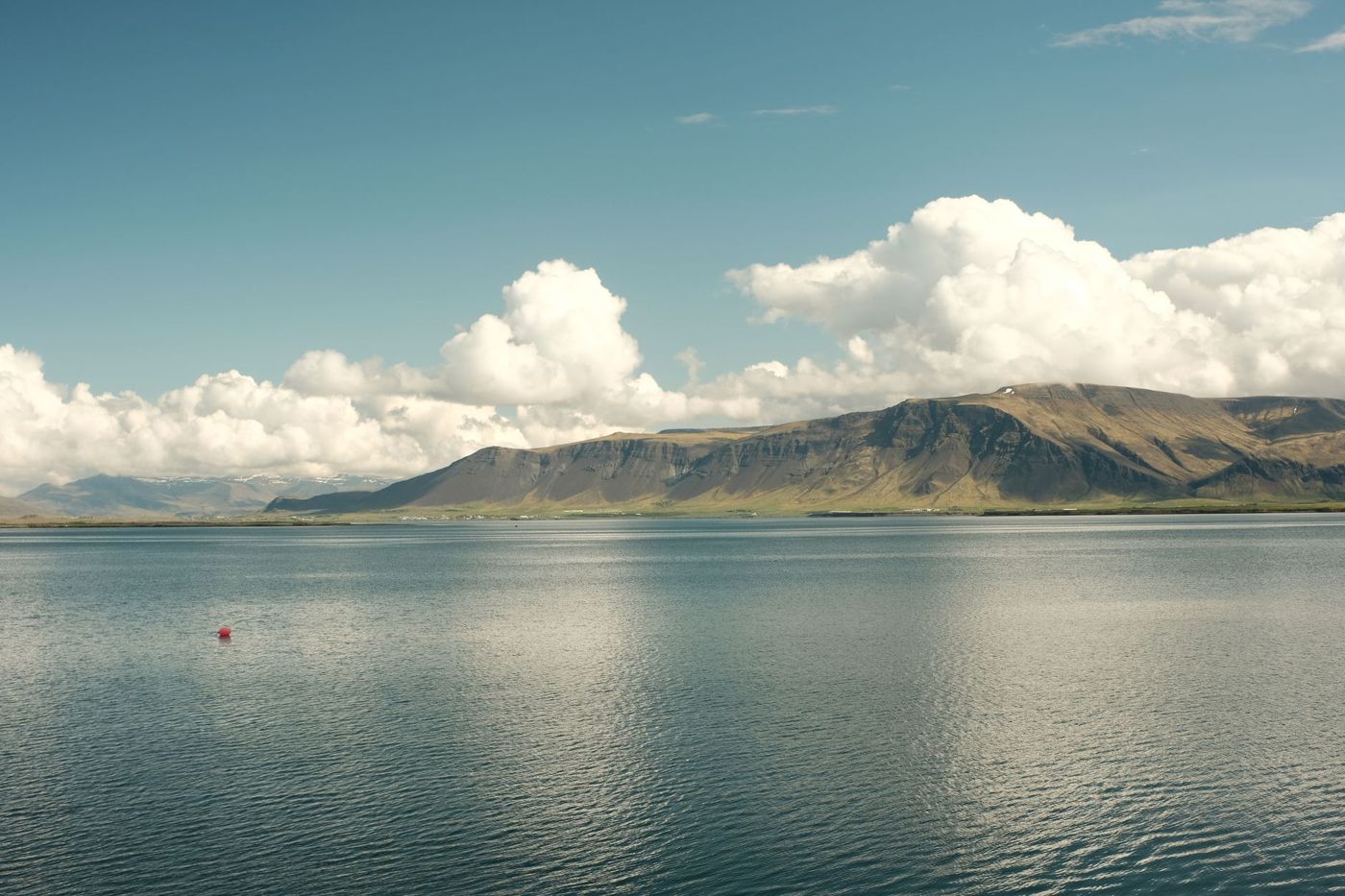
Visitors expecting a sunset to end the day are often still outside at midnight wondering when one will happen. Reykjavik midnight sun conditions around the June solstice mean the sun dips low without fully setting, giving the city about 21.2 hours of daylight and a period locals call the bright night, when the sky stays lit even in the small hours, as tracked by Gaisma's sun almanac for Reykjavik.
This light changes what a normal day looks like. Restaurants and bars can stay busy well past midnight since it never really feels late outside, and a late arrival on an evening flight still lands into daylight rather than darkness. Hotel curtains matter more here than in most cities, and a lighter sleeper is better served checking a room has blackout curtains before booking.
The same light that makes summer evenings feel endless rules out any chance of seeing the northern lights. The display needs a dark sky to be visible at all, and Reykjavik has none to offer between late spring and late summer regardless of geomagnetic activity.
Timing a visit to the church tower
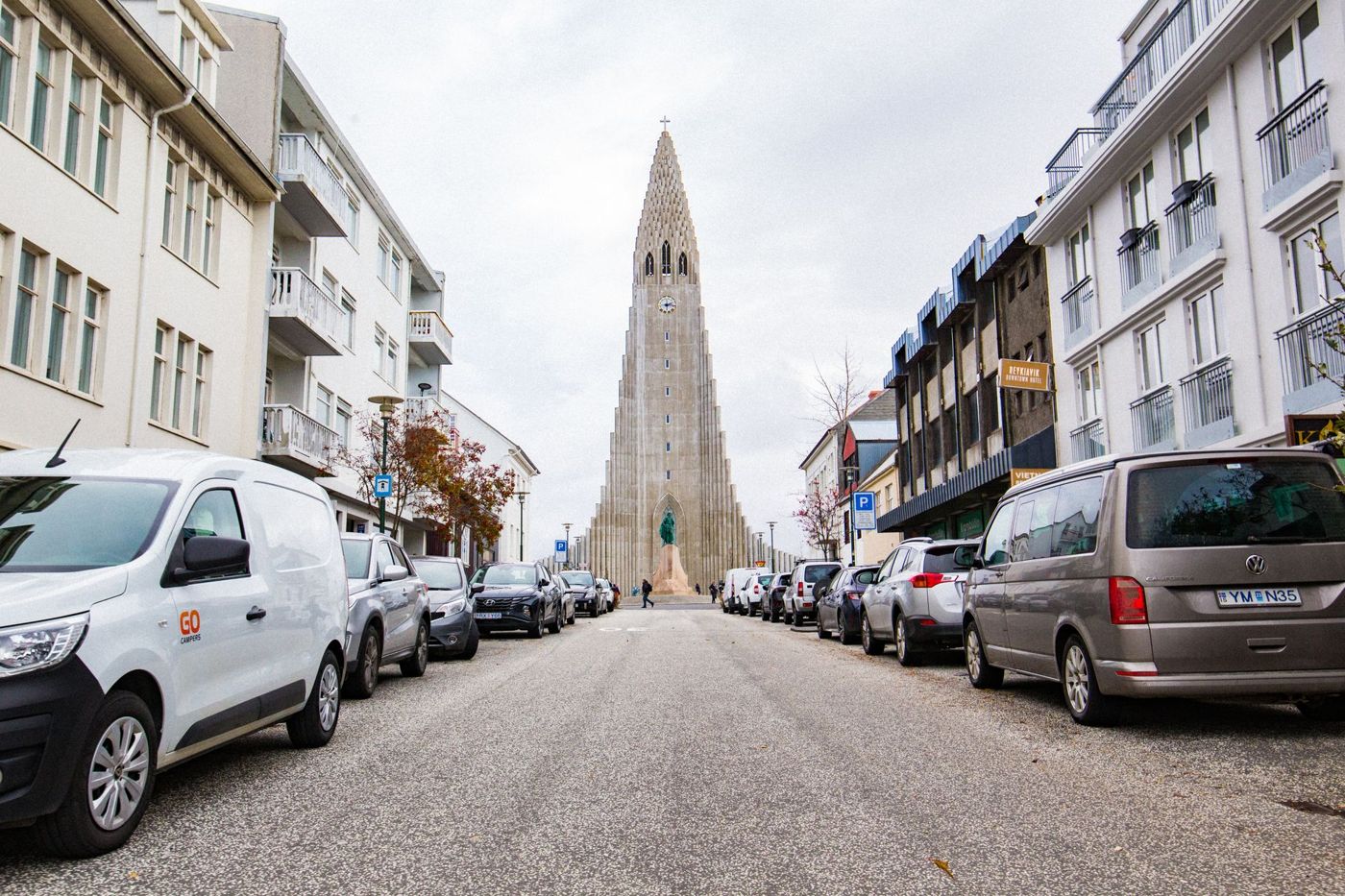
Queues at the city's best-known landmark build through the middle of the day and thin out toward evening, which the long daylight makes an easy trade to make. A Hallgrímskirkja Reykjavik summer visit timed for later in the evening, when the church is still open and the light is still strong, usually means a shorter wait for the tower lift than an arrival at midday.
The tower gives a wide view over the coloured roofs of downtown and out toward the bay, and that view holds for most of the evening thanks to the extended daylight rather than closing down at a fixed sunset. Anyone planning a viewpoint photograph of the city gets more usable hours to work with in July than at almost any other point in the year.
The church itself sits within easy walking distance of the main shopping streets, which makes it simple to fold into the same afternoon as a walk through downtown rather than treating it as a separate trip.
{'activity_id': '67019', 'title': 'Northern Lights Bus Tour with Hot Cocoa', 'includes': 'Guided evening bus tour aimed at northern lights viewing, with hot cocoa', 'best_for': 'Travellers building a trip that spans the shoulder season into darker months', 'rating': '4.27/5 from 14,847 reviews', 'link': '{{AFF_GYG_REYKJAVIK_IN_SUMMER_14}}'}
What the temperature actually does
A traveller packing for a Nordic capital in July often overpacks for cold and underpacks for rain. Reykjavik summer weather runs a fairly narrow range, with average highs of 13.0 °C (55.4 °F) in June, 14.9 °C (58.8 °F) in July and 14.1 °C (57.4 °F) in August, and average lows rarely dropping below about 7 °C (44.6 °F) even at night, according to the Icelandic Meteorological Office. It rarely gets warm by most standards, but it also rarely turns properly cold.
Rain and wind matter more than temperature when deciding what to pack. A waterproof outer layer and a warm layer underneath cover most days, and the wind off the bay can make a mild afternoon feel sharper than the number on a forecast suggests.
This is also the season when the highland interior becomes reachable. Road F208 typically opens around 2 June and F225 around 16 June, and Landmannalaugar's season with Ferðafélag Íslands runs from about 20 June to 15 September, dates set each year by Vegagerðin rather than fixed on a calendar. A trip planned for the highlands before those opening dates is a trip planned for a road that is not open yet.
Common questions
Does it ever get fully dark in Reykjavik in summer?
Around the June solstice the sky stays lit through the night rather than turning fully dark, since the sun barely dips below the horizon. Full darkness returns gradually through July and August.
Is the Blue Lagoon open in summer?
Yes, along with Grindavík, both operating behind lava barriers built around the town and the Svartsengi plant. Entry needs a pre-booked, timed ticket, and summer slots sell out days ahead.
Can the northern lights be seen in June or July?
No. The aurora season runs from late August to mid-April and depends on a dark sky, which Reykjavik does not have during summer regardless of activity levels.
Are the highland roads open the whole summer?
Most open in June and close again by mid-September, with exact dates set each year by Vegagerðin rather than fixed in advance. Checking the current status before a trip is worth doing close to departure.