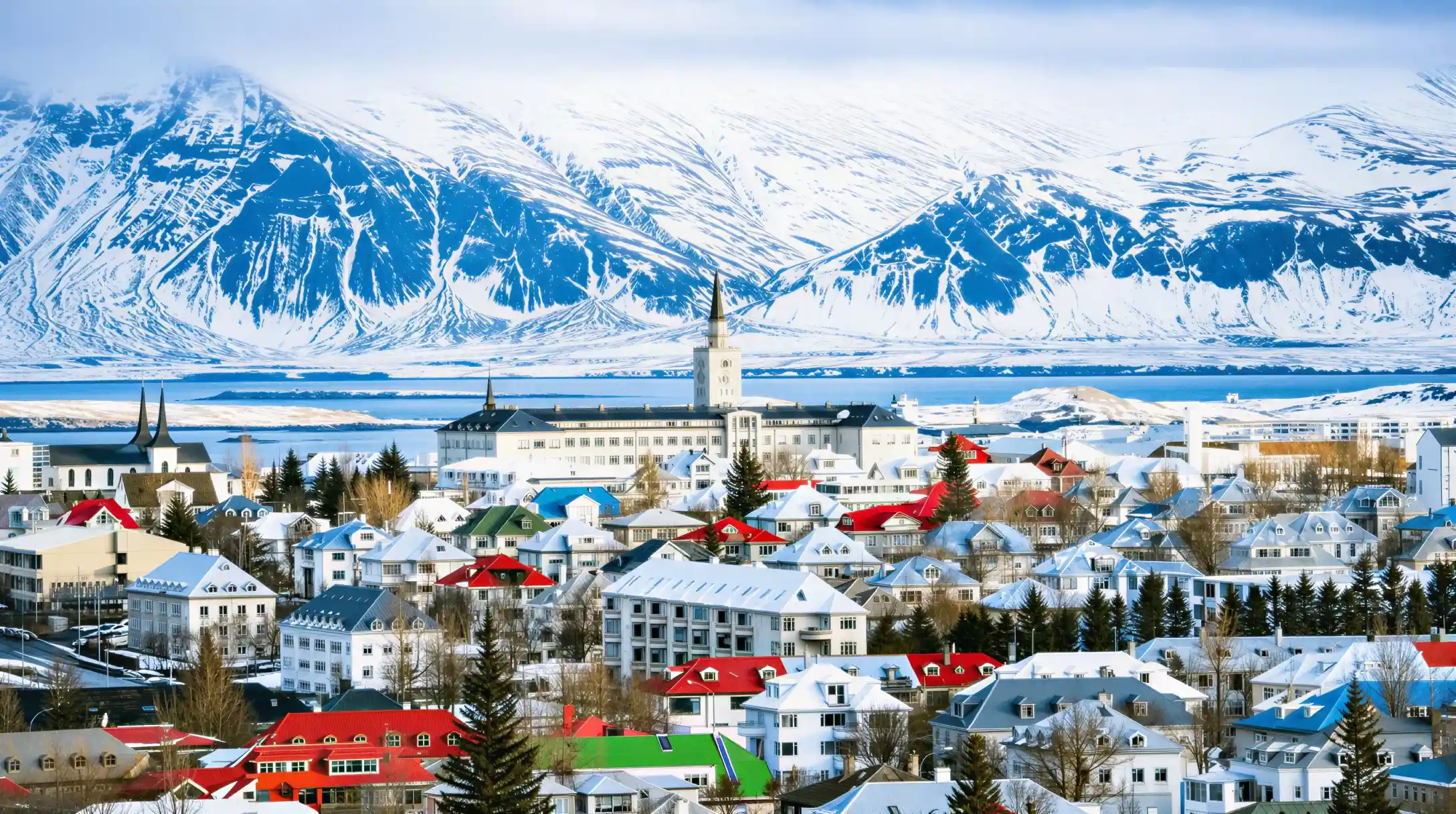
Reykjavik weather July looks generous on paper and reads differently once a traveller tries to book anything inside it. The city's warmest month brings average highs of 14.9°C (59°F) and lows of 9.1°C (48°F), a narrow band that rarely feels like a proper summer to visitors from further south. What the figures do not show is the queue behind them: July is also the busiest month in Reykjavik, and the mild air comes with fuller tours, tighter hotel availability and higher prices across the board. A traveller planning around the temperature alone will get the weather right and the logistics wrong. This page settles both: what July's climate actually does, and what the peak season costs a visitor who has not budgeted for it.
 Our pick
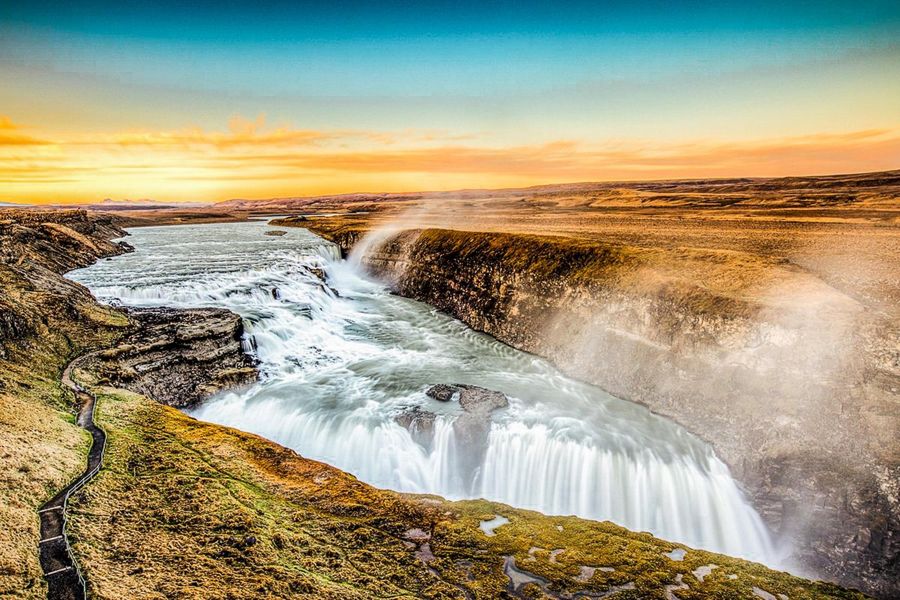
Reykjavik: Golden Circle Full-Day Tour with Kerid Crater
Full-day guided coach tour covering the Golden Circle route and Kerið crater
First-time visitors wanting the classic Golden Circle route in one day
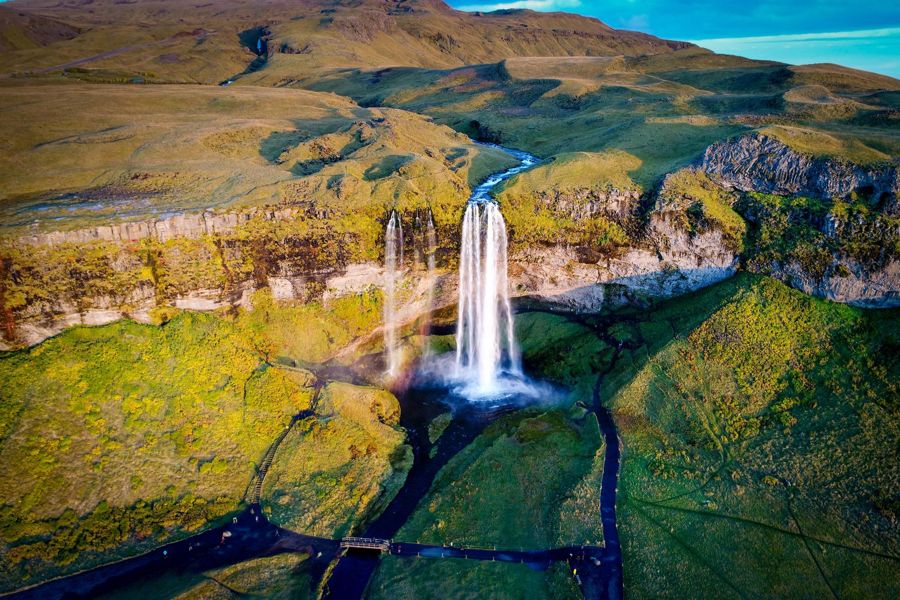
Reykjavik: South Coast Waterfalls, Black Sand & Glacier Tour
Full-day coach tour to south coast waterfalls, black sand beach and glacier viewpoint
Visitors with one day to cover the south coast highlights
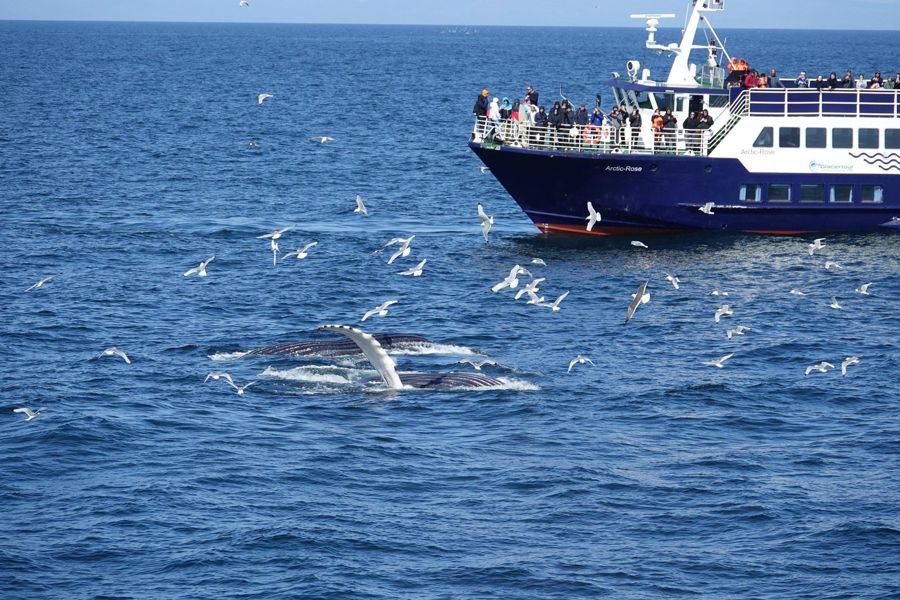
Reykjavik: Whale Watching and Marine Life Cruise
Guided boat cruise from Reykjavik harbour with marine life spotting
Travellers wanting a half-day outing that fits around a July itinerary
What July's temperature actually means for packing
A high of 14.9°C (59°F) sounds like sweater weather to most visitors, and that instinct is correct more often than the word "summer" suggests. The mistake is packing for a single number rather than a range: the average low of 9.1°C (48°F) means mornings and evenings sit closer to 9°C than to 15°C, and a day that opens cool can still climb into the mid-teens by afternoon. Layers do more work here than any single heavy garment. A waterproof shell matters more than warmth on most days, since Reykjavik's July weather moves through cloud, sun and light rain within a few hours rather than holding one pattern all day.
The comparison worth making is not to a warm-weather destination but to the month on either side of it. June's average high sits at 13.0°C (55°F) and August's at 14.1°C (57°F), so July is the warmest of the three but not by a wide margin. A visitor choosing between June and July on temperature alone is choosing between two very similar days. What actually separates the months is daylight and crowding, not degrees. Dressing for outdoor plans, whether a coastal walk or a day tour, means treating 15°C as the ceiling for the day rather than the baseline, and packing accordingly rather than leaving the warm layer at home because the month is called summer.
Booking around the peak, not just the weather
The error most visitors make in July is treating it like any other month with better numbers. It is not: July is the single busiest stretch of the year in Reykjavik, and every part of a trip that depends on availability, from hotel rooms to tour seats, tightens as a result. Booking a room or a popular day tour a week out in July carries real risk of finding it sold out, in a way that the same booking made in April or October usually does not.
Things to do in Reykjavik in July are not scarce, but the good slots for them are. A whale watching cruise or a south coast day tour that runs on a half-empty boat in the shoulder season fills completely in July, and popular departure times go first. The practical fix is ordinary but often skipped: lock in the outings that matter before arrival rather than on the ground, and expect hotel rates in the city to run higher in July than in the months either side of it. The weather does not explain the price difference; the volume of visitors travelling in the same window does.
Daylight and what it changes about a July day
Reykjavik does not go dark in July, and visitors arriving from lower latitudes tend to underestimate how disorienting that is for a normal sleep schedule. The city sits closest to its longest days around the June solstice, when daylight runs to 21.2 hours, and July stays close behind that figure even as the days begin to shorten again. Curtains that block light matter more here than at almost any other destination in this hemisphere, and a traveller who skips packing a sleep mask often finds out why on the first night.
The upside is a genuinely long window for outdoor plans. Evening light that would be gone by 8pm elsewhere is still strong at 10pm in Reykjavik in July, which opens dinner reservations, harbour walks and late tours that would not work in shorter-day months. It also means the usual cues for pacing a day, like fading light as a signal to wind down, do not apply. Travellers who plan a full day of sightseeing followed by a late dinner often find themselves still going well past when their body expects dusk, and should plan rest accordingly rather than by the sky.
Rain, layers and the days that do not go to plan
July is not Reykjavik's wettest month, but it is not dry either, and the 875.9 mm (34.5 in) that falls across an average year does not concentrate itself into a clearly wet or dry season. A visitor who checks a single-day forecast and packs only for that reading is the one caught without a shell when the weather shifts mid-afternoon. Reykjavik's rain in July tends to arrive as short spells rather than all-day washouts, which is a reason to carry a light waterproof rather than to cancel outdoor plans on a forecast alone.
The more common mistake is assuming a poor morning rules out the day. Coach tours and boat cruises in July run on schedule through the kind of light rain that would not close anything at home, and cancellations tend to come from wind or sea conditions rather than drizzle. Checking a tour operator's own policy before departure is worth more than checking the forecast twice, since weather-related changes are handled differently company to company and the forecast itself shifts within the day more often than it holds.
Getting from the airport in the busiest month
Keflavík International Airport (KEF) sits 50 km (31 mi) southwest of the city, and the drive to downtown Reykjavik runs about 45 minutes by car or airport bus under normal conditions. July does not change that drive time, but it does change how full the buses and taxi queues are on arrival, since this is the airport's busiest season alongside the rest of the peak summer months. A Flybus one-way fare to the BSÍ terminal runs from 3,999 ISK, with a fixed Hreyfill taxi fare of 22,500 ISK for one to four passengers into the city.
The mistake worth avoiding is assuming a transfer can be arranged on arrival the way it might be in a quieter month. Queues for buses and taxis are longer in July, and a traveller who has not pre-booked either risks a long wait after a long flight. Booking a fixed transfer ahead of arrival removes that variable entirely, and it is one of the few parts of a July trip to Reykjavik that costs nothing extra to plan in advance.
Common questions
Does it get dark in Reykjavik in July?
Not fully. July stays close to the June solstice figure of 21.2 hours of daylight, so nights stay bright rather than dark.
Is July too crowded to visit Reykjavik?
It is the busiest month, which means booking tours and hotels ahead of arrival matters more than in the shoulder seasons, but it does not make a visit impractical.
How much warmer is July than June in Reykjavik?
Only slightly. July's average high of 14.9°C (59°F) is about two degrees above June's 13.0°C (55°F), a difference most visitors will not notice day to day.
What should I pack for Reykjavik in July?
Layers and a waterproof shell rather than heavy warm clothing. Mornings and evenings sit closer to the average low of 9.1°C (48°F) than to the daytime high.