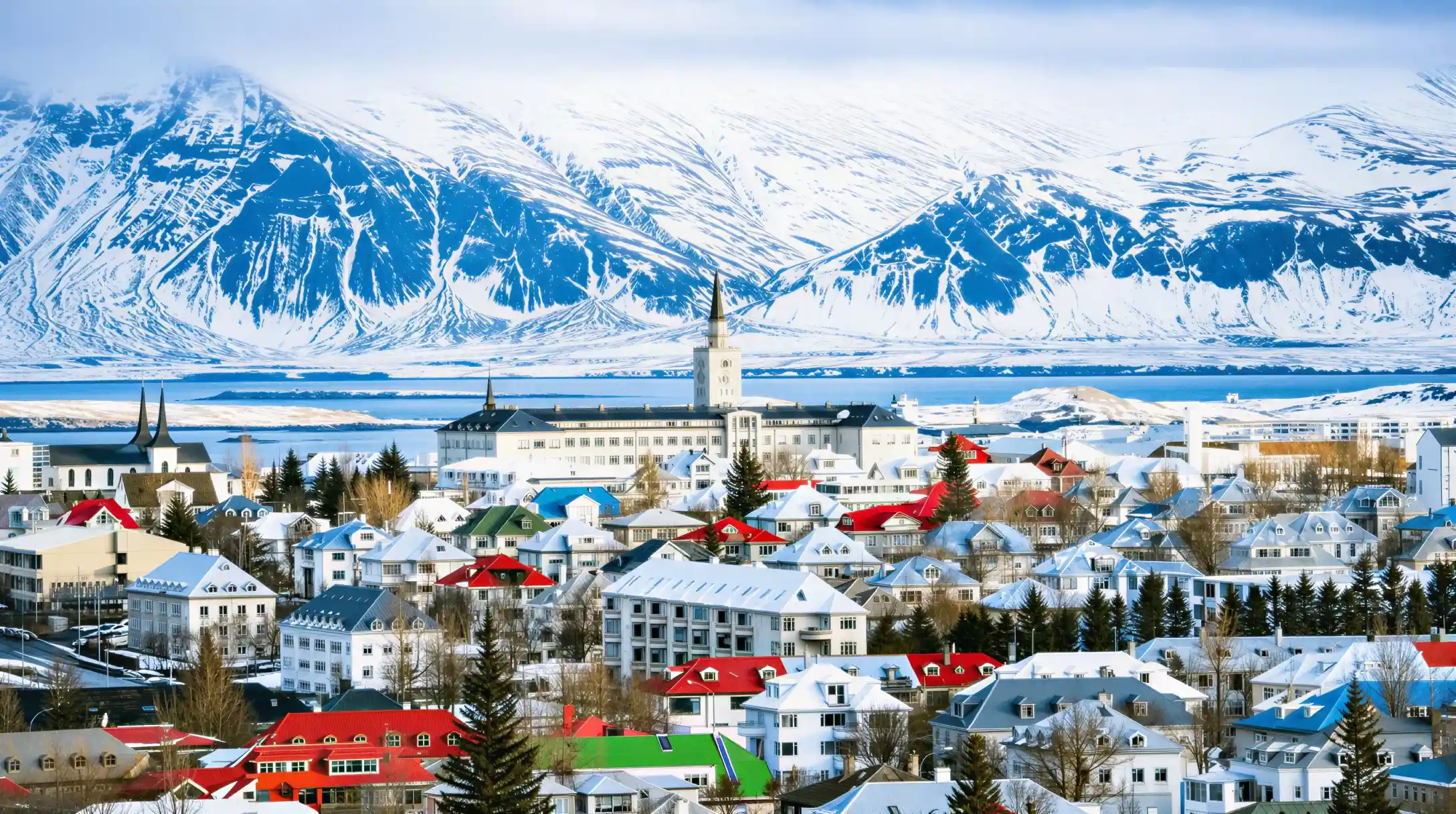
Packing for a single Iceland forecast is the wrong instinct for this month. Reykjavik weather april swings between a bright, near-spring afternoon and a returning squall inside the same day, and travellers who bring only a winter coat or only a light jacket end up buying a layer they did not plan for. The average high reaches 6.9°C (44.4°F) and the average low sits at 1.0°C (33.8°F), a real step up from March but still cold enough for ice on shaded pavements some mornings. This page settles what the month's averages actually are and what they mean for a visit, not what to do with the rest of a trip.
 Our pick
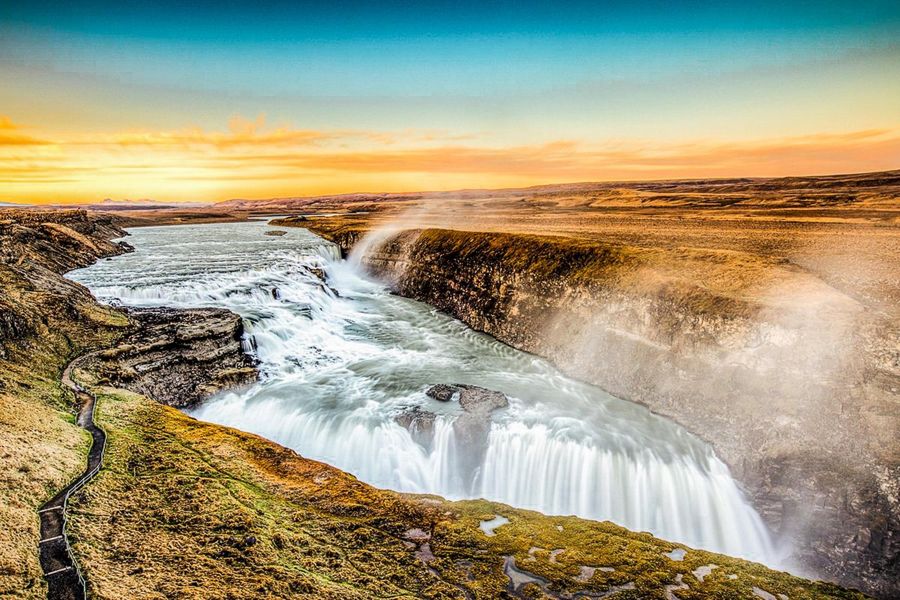
Reykjavik: Golden Circle Full-Day Tour with Kerid Crater
Full-day coach tour covering the Golden Circle route and Kerid Crater
A first full day out of the city while roads outside the highlands are open
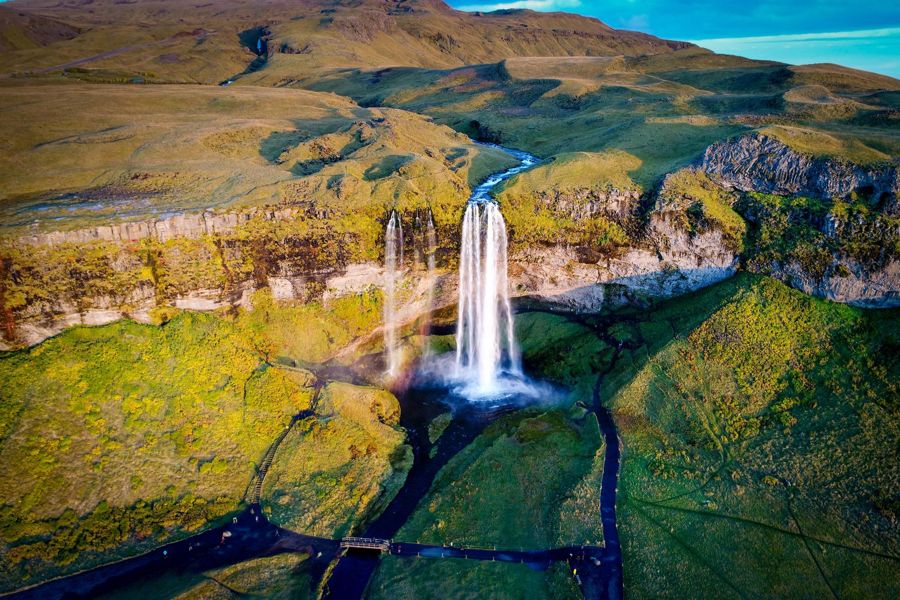
Reykjavik: South Coast Waterfalls, Black Sand & Glacier Tour
Day tour of south coast waterfalls, the black sand beach and a glacier stop
Travellers who want the south coast covered on a fixed schedule
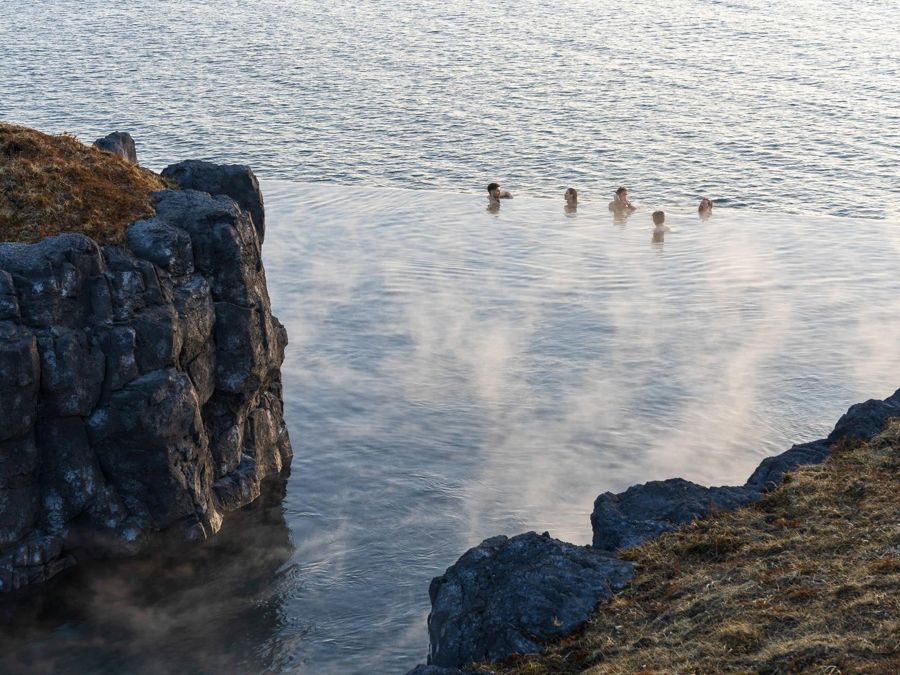
Reykjavik: Sky Lagoon Entrance Pass With 7-Step Spa Ritual
Timed entry to Sky Lagoon and the seven-step spa ritual
An evening indoors when the afternoon forecast turns
The number that misleads people most
A high of 6.9°C (44.4°F) reads like a cool spring day at home, and it can be, for an hour. The same afternoon can drop toward the 1.0°C (33.8°F) average low if cloud cover breaks and the wind picks up off the water, and Reykjavik's coastal position means that wind arrives with little warning. Layering, not a single heavy coat, is what the range actually calls for: a base layer, a fleece or wool mid-layer, and a waterproof, windproof shell that goes on and off through the day.
Rain is the other figure worth sitting with before a bag gets packed. The Icelandic Meteorological Office's 1991-2020 normals put average annual precipitation at 875.9 mm (34.5 in) across the year, spread over enough days that a single dry-looking forecast for April is not a guarantee of a dry afternoon. A visitor who checks only the temperature and skips a waterproof layer is the most common mismatch this month produces.
Daylight is the change that actually defines April against the months either side of it. The city moves quickly from the short, dark days of midwinter toward the near-constant light of June, when the solstice gives 21.2 hours of daylight against just 4.1 hours in December, according to sun-path data from Gaisma. By late April the evenings are long enough that a full day of sightseeing no longer has to end at four in the afternoon, the way it does in December.
None of this makes April simple to plan around. It is a month of averages moving fast in one direction, with enough day-to-day variation that a single week can carry a hard frost and a mild, walkable afternoon within days of each other.
| Month | Average high | Average low |
|---|---|---|
| March | 4.2°C (39.6°F) | -1.3°C (29.7°F) |
| April | 6.9°C (44.4°F) | 1.0°C (33.8°F) |
| May | 10.1°C (50.2°F) | 4.0°C (39.2°F) |
- Average high
- 4.2°C (39.6°F)
- Average low
- -1.3°C (29.7°F)
- Average high
- 6.9°C (44.4°F)
- Average low
- 1.0°C (33.8°F)
- Average high
- 10.1°C (50.2°F)
- Average low
- 4.0°C (39.2°F)
Where April sits between two seasons
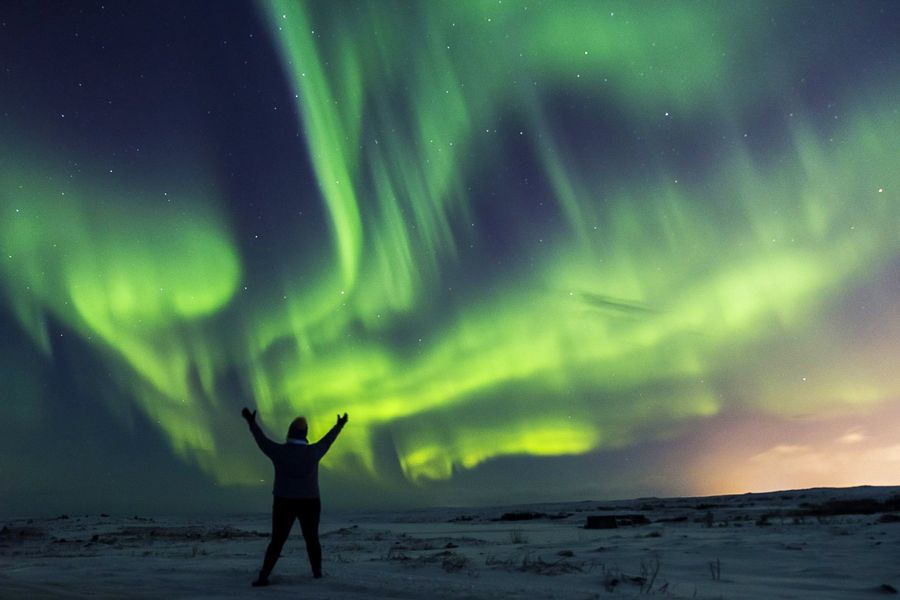
Travellers booking around the aurora often assume the lights run all year, when the season is bounded by darkness rather than by the aurora itself, and the Icelandic Meteorological Office marks the window as running from late August to mid-April. A trip in the first half of April can still catch a display on a clear, dark night; a trip in the back half of the month is arriving after the season has effectively closed, because the nights are no longer dark enough for long enough.
Easter in Reykjavik falls inside this same stretch most years and changes the shape of a visit more than the temperature does. Museums, some restaurants and smaller shops shift to holiday hours around the dates, and the city's usual weekday rhythm gives way to a quieter, more holiday-paced few days. Booking accommodation and any fixed-time tickets ahead of the holiday avoids the scramble that a last-minute Easter booking usually runs into.
The other seasonal boundary worth knowing before a route gets planned is the highland roads, which are still shut in April. Vegagerðin opens routes like F208 and F225 in June on average, so anything built around Landmannalaugar or the interior belongs in a summer itinerary, not this one. April's roads are the ring road and the lowland routes, which is still enough for a full trip.
Fitting the month to a plan
A common mistake is treating April like early summer because the highs finally clear freezing, then building a schedule around long outdoor days the month cannot yet support. Daylight is expanding fast, but the average low of 1.0°C (33.8°F) still means mornings and evenings call for a proper layer, and any outdoor plan should have an indoor backup for the hours when rain or wind sets in.
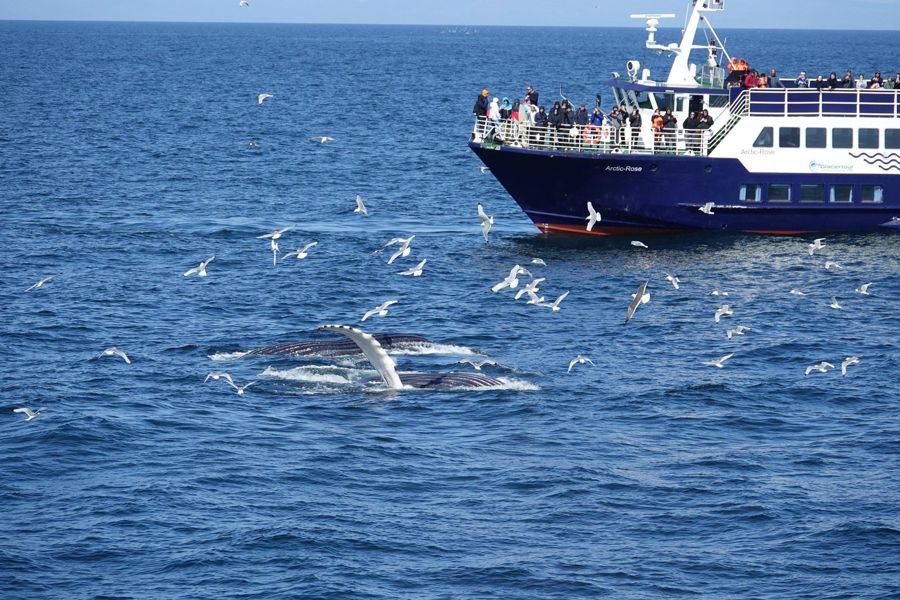
Things to do in Reykjavik in April lean toward a mix of city sights and short excursions rather than one long push into the interior. The Golden Circle route and the south coast waterfalls are both reachable on a day tour without touching the closed highland roads, and a geothermal lagoon works as well on a cold, clear evening as it does on a wet one. Whale watching sailings run year-round with a summer skew, so April sits on the quieter, less crowded side of that season rather than its peak.
The airport connection is worth planning early regardless of what fills the rest of the trip. Keflavík Airport sits about 45 minutes from downtown Reykjavik by car or airport bus in normal conditions, and April's weather is unpredictable enough that building in a little extra time before a flight is a reasonable habit rather than overcaution.
What the averages do not show
A monthly average flattens a month that can hold both a hard frost and a mild, sunny afternoon within the same week. The 6.9°C (44.4°F) high and 1.0°C (33.8°F) low are useful for packing decisions, not for predicting any single day, and a forecast checked a day or two ahead will always beat the seasonal average for what to actually wear outside.
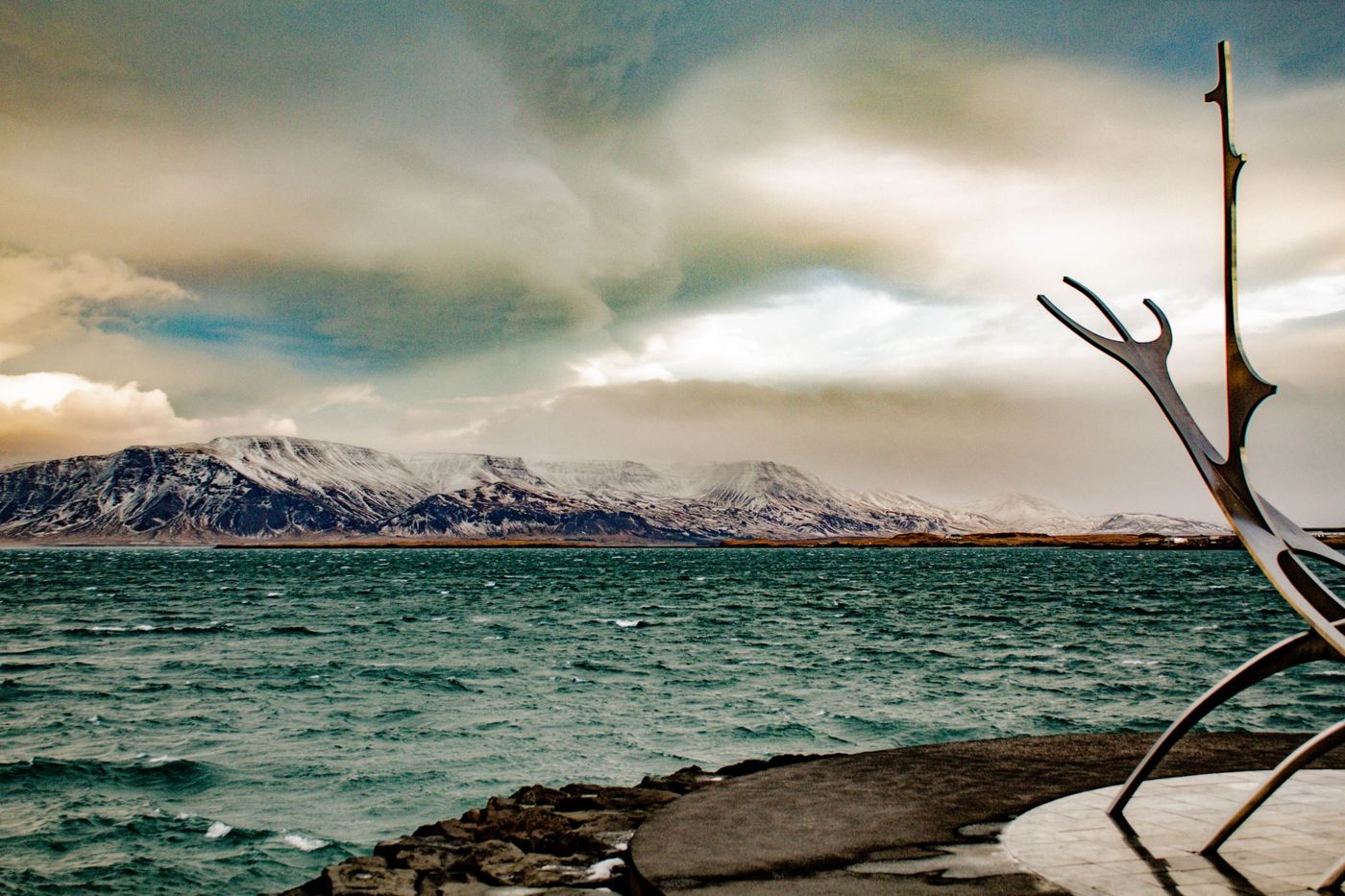
Wind matters as much as the thermometer reading. Reykjavik's coastal position means a still, mild-feeling morning can turn blustery within an hour, and a wind that would be a minor nuisance inland cuts through a light jacket quickly here. A shell layer that blocks wind, not just rain, earns its space in the bag more than an extra jumper does.
Ground conditions lag behind the air temperature. Even as daytime highs push toward 7°C (44.6°F) by late April, shaded pavements, trailheads and anything that held snow through March can still carry ice into the morning hours, and footwear with real grip is worth having even on a day that looks entirely spring-like by early afternoon.
Building the trip around the month
The averages point toward a specific kind of April visit: layered rather than heavy, flexible on any single day's plan, and split between city time and day tours rather than a push into terrain that is not open yet. A trip that leans on the city's museums, pools and restaurants for the wetter hours, with day tours booked for whichever days the forecast favours, tends to survive the month's swings better than a rigid, hour-by-hour itinerary.
Currency and entry rules do not change with the season. Iceland runs effectively cashless, and a foreign card covers nearly everything without ISK in hand. Travellers from the United States and the United Kingdom need no visa for stays up to 90 days in a 180 day period, a rule the US State Department and the UK FCDO both confirm, though it is worth checking the US State Department's Iceland page and the UK FCDO's travel advice for Iceland before departure, since the two occasionally differ on details like driving and insurance.
None of that is specific to April, but it removes one more variable from a month that already asks a visitor to plan around shifting weather rather than a fixed picture of it.
Common questions
Is April too cold to visit Reykjavik?
The average high is 6.9°C (44.4°F) and the average low is 1.0°C (33.8°F), cool but well above the winter lows. A layered jacket and waterproof shell handle the range comfortably.
Can the northern lights still be seen in April?
The season runs from late August to mid-April, so the first half of the month can still deliver a clear, dark-enough night for a display. By the back half of April the nights are too light for reliable viewing.
Are the highland roads open in April?
No. Roads like F208 and F225 typically open in June, so any route through the interior belongs later in the season, not in April.
Does it rain a lot in Reykjavik in April?
The city's annual average is 875.9 mm (34.5 in) of precipitation spread across many days of the year, so a dry-looking forecast is not a guarantee for the whole day.