Most visitors assume Reykjavik food means an expensive sit-down dinner, and that assumption is what makes the trip feel costlier than it needs to be. The city runs on a cheaper, faster layer underneath the restaurants: a hot dog stand by the harbour, bakeries that open before the first tour bus leaves, and a fish stew that costs a fraction of a plated dinner. This page settles what to actually order and what it costs, in USD first and ISK alongside, so a reader can plan a food budget before landing rather than guessing at the airport. It does not cover where to sit down for a full meal, which belongs on the restaurant and breakfast pages. Reykjavik food splits cleanly into three tiers: the hot dog and bakery counter, the traditional dishes served in casual kitchens, and the sit-down restaurant trade that the Eurostat figures below show is genuinely expensive by European standards. Knowing which tier a dish belongs to is most of the budgeting work done.
 Our pick
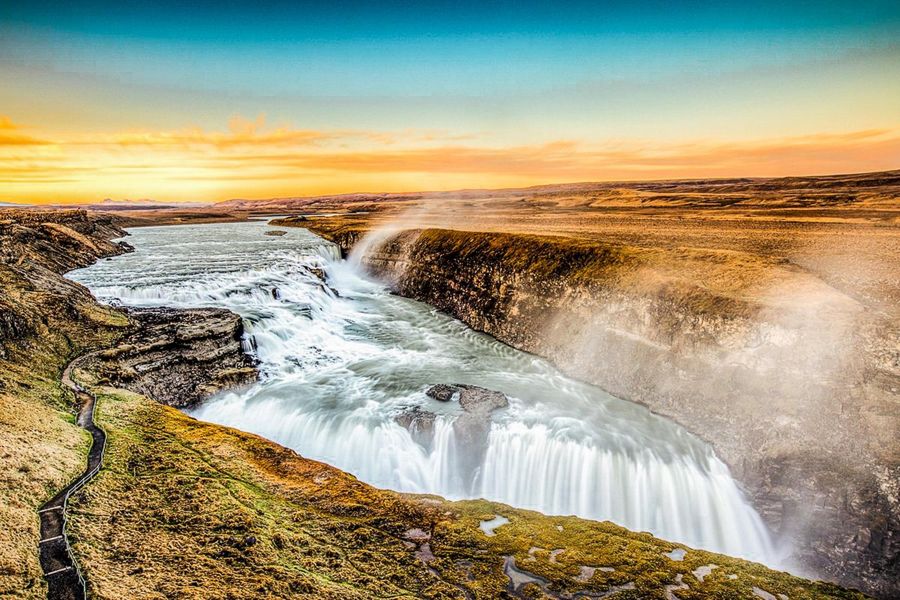
Reykjavik: Golden Circle Full-Day Tour with Kerid Crater
A full day covering the Golden Circle route with a stop at Kerid Crater
Travelers who want the Golden Circle sights covered in a single guided day
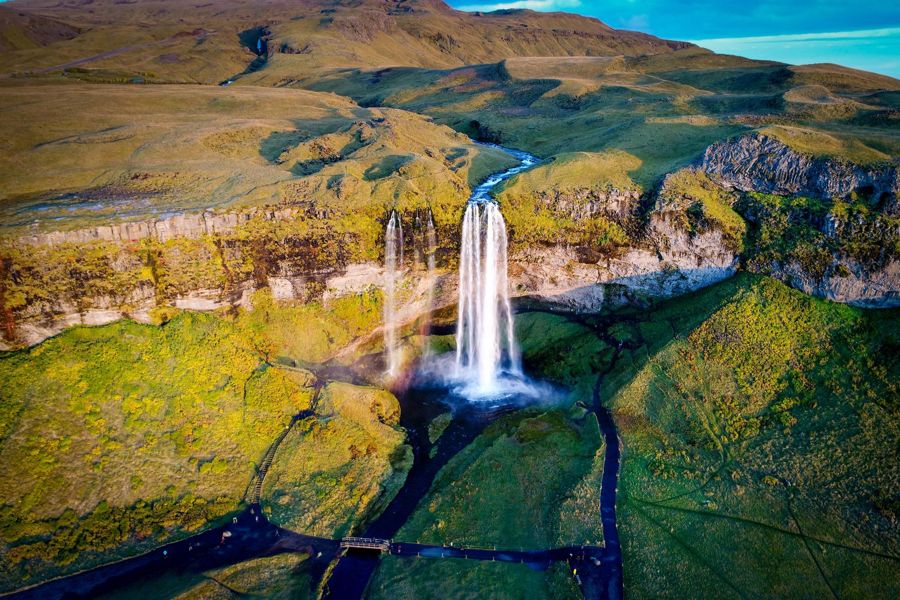
Reykjavik: South Coast Waterfalls, Black Sand & Glacier Tour
A day tour to the south coast waterfalls, black sand beach and a glacier stop
Travelers building a full day around the south coast rather than eating downtown
What downtown actually serves
A reader picturing Reykjavik food as one style of cooking is missing how much of it is now shared kitchens under one roof rather than single restaurants. A reykjavik food hall groups several independent stalls, from Icelandic staples to noodle bars and burger counters, in one seating area, so a group with different appetites can order separately and sit together. This matters for a short trip: it removes the usual problem of one member of the group being unable to find anything on a single restaurant's menu.
Icelandic cuisine Reykjavik style is built on what the North Atlantic and the sheep farms actually produce, which is fish, lamb and dairy, rather than on imported staples. Lamb and cod dominate the traditional dishes described further down this page, and dairy shows up constantly in the form of skyr, a fresh cheese eaten like a dessert or a breakfast. None of this is exotic or ceremonial; it is what a working kitchen in a small North Atlantic capital cooks when it is not adapting to a visitor's expectations, and the plainness of it is the point.
Tap water in Reykjavik is free and drinkable everywhere, drawn from natural springs and safe straight from the tap, which removes one recurring cost from a food budget: there is no reason to buy bottled water at a restaurant table or from a shop.
- Hot dog with everything, Baejarins Beztu
- 880 ISK
- Hot dog and a Coke, the combo Icelanders track
- 1330 ISK
- Sandholt breakfast, cheapest plate
- 1390 ISK
- Sandholt brunch plates
- 2690 to 3290 ISK
- Filter coffee, central bakery-cafe
- 650 ISK
- VAT on restaurant food and hotel rooms
- 11 percent
- Iceland restaurant and hotel price level vs EU27
- 167.3 (EU27 = 100)
Where to eat without booking ahead
A common mistake is assuming every casual meal in Reykjavik needs a reservation, when much of the everyday eating in this city happens at a counter with no booking at all. Food halls in Reykjavik are walk-in by design: order at whichever stall looks right, find a table, and nobody checks for a reservation. This is the fastest route to a varied meal for a group that cannot agree on one cuisine.
Bakeries fill the same walk-in role earlier in the day. Braud & Co, at Frakkastigur 16 below Hallgrimskirkja, opens at 06:30 and stays open to 17:00 daily, which makes it the practical stop for anyone leaving on an early tour or arriving off a night flight. Sandholt, on Laugavegur at number 36, is a sit-down bakery-cafe open 07:30 to 18:00 every day, with a full breakfast and lunch menu rather than a counter-only setup.
For anyone self-catering rather than eating out at all, the city's own tourist board names Bonus, Kronan and Pris as the cheapest supermarket chains, with Bonus its best-known discount option and Kronan generally considered one of the most affordable grocery chains in the country.
- Baejarins Beztu, Tryggvagata stand, hours Sun to Wed
- 09:00 to 01:00
- Baejarins Beztu, Tryggvagata stand, hours Fri to Sat
- 09:00 to 06:00
- Baejarins Beztu, Austurstraeti 10-11 branch
- open 24 hours
- Braud & Co, Frakkastigur 16, daily hours
- 06:30 to 17:00
- Sandholt, Laugavegur 36, daily hours
- 07:30 to 18:00
- Hotel breakfast service window
- 07:00 to 10:00
- Restaurant and cafe price inflation, 12 months to August 2026
- about 4.9 percent
Judging quality without a menu in hand
Ratings and star counts do not translate well from a home country to a small capital where much of the best food in Reykjavik is sold from a stand with no seating and no printed menu. The harbour hot dog stand has no menu online at all: the order is spoken, not read, and the choice comes down to how it is topped rather than which dish to pick. Judging it by restaurant conventions, a wine list, tablecloths, a hostess, misses what makes it good, which is that it has been doing one thing since 1937 and doing it fast.
The same applies to the traditional dishes covered further down this page. Lamb soup and fish stew are judged locally by how close they are to a home kitchen's version, not by presentation, and both are usually the cheapest hot sit-down meal available rather than a special-occasion order. A reader expecting fine dining prices for these dishes will be surprised at how modest they are next to a restaurant tasting menu.
Price is the more reliable signal of what tier a place sits in. Iceland's price level for restaurants and hotels was measured at 167.3 against an EU27 average of 100 for 2024, meaning eating out here runs well above the EU average. That figure applies to sit-down restaurant trade broadly; the hot dog stand and the bakery counters sit well underneath it.
{'activity_id': '400599', 'name': 'Reykjavik: Sky Lagoon Entrance Pass With 7-Step Spa Ritual', 'rating': '4.83/5 from 7,388 reviews', 'includes': 'Entry to Sky Lagoon and its seven-step spa ritual', 'best_for': 'Travelers wanting a half-day break between meals rather than another meal itself', 'link': '{{AFF_GYG_ICELANDIC_FOOD_8}}'}
Budgeting for food in Reykjavik works better as a daily allowance than as a per-meal guess, because the range between a hot dog and a restaurant dinner is wide. A coffee at a central bakery-cafe runs to 650 ISK, a bakery breakfast plate starts around 1,390 ISK, and a hot dog with everything is 880 ISK, so a full day of counter food and bakery stops can sit well under the cost of one restaurant dinner. VAT on restaurant food and on hotel rooms is set at 11 percent, the reduced rate that Iceland applies to catering and food for human consumption rather than the standard 24 percent rate charged elsewhere.
Restaurant and cafe prices have not stood still. Statistics Iceland's own price index for restaurants, cafes and similar places rose from 98.5 to 103.3 over the twelve months to August 2026, a rise of about 4.9 percent, with limited-service counters, takeaways and stands, rising faster than full-service restaurants over the same period. A reader pricing a trip several months out should treat any figure on this page as a floor rather than a fixed number, and expect the counter and stand prices to move fastest.
None of this changes where the cheap tier sits relative to the expensive one. The hot dog stand and the bakery counters remain the affordable end of Reykjavik food regardless of how fast the sit-down restaurant trade moves, because they are priced and run differently, off a walk-up counter rather than a table service model.
The dishes worth ordering by name
Ordering traditional icelandic food Reykjavik style means knowing three dishes by name before sitting down, since menus rarely explain them in English beyond a single line. Kjotsupa, lamb soup, is made with tender lamb, potatoes, carrots and turnips, a staple especially in the cold months and typically the cheapest hot sit-down meal available in the city.
Plokkfiskur is the fish stew locals actually eat rather than a dish staged for visitors: boiled cod or haddock, mashed potato and onion, creamy rather than brothy, and usually served with rugbraud, a dense rye bread baked using geothermal heat that adds a slightly sweet contrast to the savoury stew.
Skyr is the one most visitors get wrong by name. It is often described as a cross between yoghurt and cheese, smooth in texture with a slightly tangy flavour, but it is technically a fresh cheese rather than a yoghurt. It sits in every supermarket chiller next to the regular dairy, priced as a grocery item rather than a specialty food, which makes it one of the easiest traditional items to try without seeking out a restaurant at all.
The stand everyone means when they say hot dog
There is one Reykjavik hot dog stand that dominates every recommendation, Baejarins Beztu Pylsur, and it has traded from the harbour area since 1937. The original stand is on Tryggvagata, 101 Reykjavik, opposite Harpa, open 09:00 to 01:00 Sunday to Wednesday, 09:00 to 02:00 on Thursday, and 09:00 to 06:00 Friday and Saturday, the late Friday and Saturday hours covering the crowd leaving the bars, which is also when the queue is longest. A second branch at Austurstraeti 10-11, a short walk away and on the same street the business started on, is open 24 hours every day and is the option when the harbour stand is shut or the line is too long.
The order to know is 'eina med ollu', one with everything: raw onion, crispy fried onion, ketchup, sweet brown mustard and remoulade, on a lamb, pork and beef sausage in a soft bun. It costs 880 ISK, and the combo of one hot dog with a Coke, the pairing Icelanders themselves use to track prices, runs to 1,330 ISK. A hot dog with mustard only has its own name here, the Clinton, after Bill Clinton took his that way on a 2004 visit and the name stuck.
{'activity_id': '400146', 'name': 'Keflavik Airport (KEF): Bus Transfer to/from Reykjavik', 'rating': '4.66/5 from 20,988 reviews', 'includes': 'A bus transfer between Keflavik Airport and Reykjavik', 'best_for': 'Travelers timing an arrival around the bakery and hot dog stand hours listed above', 'link': '{{AFF_GYG_ICELANDIC_FOOD_14}}'}
Deciding what to eat is deciding what to skip
Deciding what to eat in Reykjavik in a short trip usually means picking a handful of dishes rather than trying everything on offer, since the traditional list is short and the rest of the menu is closer to what is eaten at home. Start with the hot dog, since it costs little and takes minutes, then use one meal for kjotsupa or plokkfiskur, since both are cheap, filling and unmistakably local rather than adapted for a visitor.
Skyr fits anywhere in a day since it is sold cold in every supermarket and needs no sit-down meal to try. Fermented shark, hakarl, is the one dish worth describing honestly rather than as a stunt: it is sold in Reykjavik supermarkets, has a strong ammonia-like smell and a taste that can be genuinely challenging, and the shark meat is toxic when fresh, which is why it is fermented and then hung to dry for several months before it is eaten. It is often taken with a shot of brennivin alongside it, and trying a small piece from a supermarket counter costs far less than ordering it as a specialty plate in a restaurant.
A short list beats an ambitious one. Two or three traditional dishes, one hot dog, and skyr as a snack cover the range of Icelandic cooking without turning every meal of the trip into a research project.
Common questions
What does 'eina med ollu' mean at the hot dog stand?
It means one hot dog with everything: raw onion, crispy fried onion, ketchup, sweet brown mustard and remoulade, on a lamb, pork and beef sausage. It costs 880 ISK at Baejarins Beztu Pylsur.
Is fermented shark actually eaten, or just sold as a novelty?
It is sold in ordinary Reykjavik supermarkets rather than only as a tourist item. It has a strong ammonia smell and a challenging taste, since the shark meat is toxic fresh and is fermented and dried for months before it is eaten, often with a shot of brennivin.
Is skyr a yoghurt?
It is often described as a cross between yoghurt and cheese but is technically a fresh cheese. It has a smooth texture and a slightly tangy flavour and is sold in every supermarket chiller.
How much more expensive is eating out in Reykjavik than in continental Europe?
Iceland's price level for restaurants and hotels was measured at 167.3 against an EU27 average of 100 for 2024, meaning eating out costs well above the EU average.
Are the hot dog stand's prices likely to have changed by the time of a trip?
Restaurant and cafe prices in Iceland rose about 4.9 percent over the twelve months to August 2026, with counter and takeaway prices rising faster than full-service restaurants, so treat any price on this page as a floor rather than fixed.